
March 23, 2014
Paternity Suit
Don’t be misled by the title. This is not another round of speculation about who should be proclaimed the rightful “Father of GPS.”
By Inside GNSS
Global Navigation Satellite Systems Engineering, Policy, and Design
Don’t be misled by the title. This is not another round of speculation about who should be proclaimed the rightful “Father of GPS.”
By Inside GNSS
With the optimism of college-bound seniors touring the Ivy League, GPS managers have been weighing options to dramatically change the GPS constellation. Now, after studying the costs, considering the benefits, and assessing the funding climate, officials have made the starkly fiscal decision to stick close to home and take a few extra years to finish.
By Dee Ann Divis
Aviation officials are looking at combining data from the Air Force’s planned GPS ground system with services from other monitoring systems — or even relying on other systems entirely — to save money on monitoring the GPS civil signals.
By Inside GNSS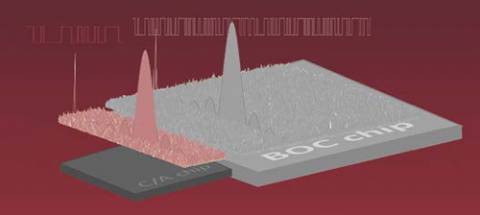
In this article, we will take a look at the various GNSS signals from the perspective of their cost-benefit tradeoffs. First, we’ll look at the evolution of consumer GPS architecture to date — where acquisition speed and sensitivity have been the main drivers of receiver architecture. That architecture has evolved rapidly to take full advantage of the characteristics of the GPS C/A code.
By Inside GNSS
The Air Force is slowing GPS modernization and dropping part of the funding for dual launch of satellites, said defense officials describing the President’s Fiscal Year 2015 (FY15) budget on Wednesday (March 5, 2014).
Air Force Undersecretary Eric Fanning said the Air Force would continue to “honor our investments and obligations” regarding the Global Positioning System but would “reprofile” the GPS III program so that it meets constellation sustainment demands.
By Inside GNSS
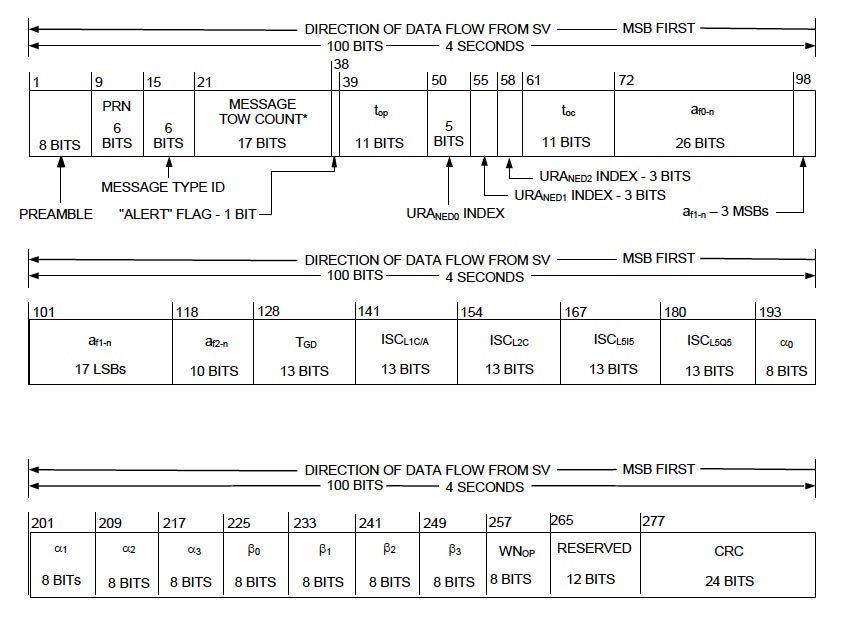 Message Type 30: satellite clock data, and corrections for ionospheric and group delay. From IS–GPS–200G
In a Federal Register notice issued today (March 5, 2014), the U.S. Department of Transportation (DoT) invited public comments on U.S. Air Force plans to implement preoperational L2C and L5 civil navigation (CNAV) messages on GPS Block IIR-M and IIF satellites next month.
By Inside GNSS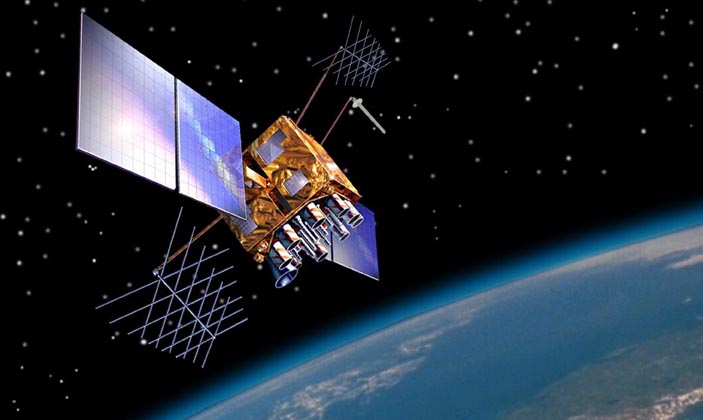
Modifications in the battery charging protocol of on-orbit GPS satellites are expected to substantially extend the mission life of the spacecraft — a particularly timely development as technical and financial difficulties have raised doubts about keeping the system’s next-generation Block III satellites on schedule for launch readiness.
By Inside GNSS
Lawmakers overseeing the Coast Guard approved language this week that would stop the agency from dismantling facilities needed for eLoran, a proposed system that has gained wide support as a backup in case GPS signals are jammed, blocked, spoofed, or otherwise rendered unusable.
In “markups” or adjustments to language in the FY 2015 Coast Guard authorization bill, a House transportation subcommittee proposes to halt the tearing down of stations in the Coast Guard’s old Loran-C navigation system, which was turned off in 2010.
By Inside GNSS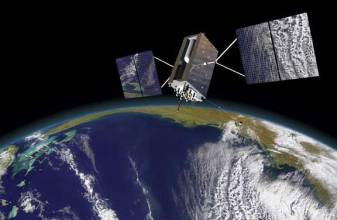
The fifth GPS Block IIF satellites is scheduled for launch from Cape Canaveral on February 20 after concerns regarding a 2012 launch anomaly led the Air Force to scrub a planned launch last fall. A Delta IV M+ will carry the spacecraft into orbit.
Additional GPS IIF launches this year are tentatively set for May (Delta IV M+) and July (Atlas V rocket). The last GPS launch (GPS IIF-4) took place on May 13, 2013.

The GPS program sustained a cut of more than six percent from the levels in the president’s proposed budget for Fiscal Year 2014 (FY14), increasing the likelihood that the Next Generation Operational Control System (OCX) will be delayed and putting pressure on budgets in future years to make up for cuts to modernization efforts.
By Inside GNSS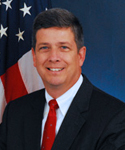 John Porcari
The U.S. Department of Transportation (DoT) is asking the Air Force to cancel its plan to add navigation data to two key civil GPS signals this year, saying they are concerned that the approach and “nonstandard engineering tools” military officials plan to use could put GPS users at risk.
By Inside GNSS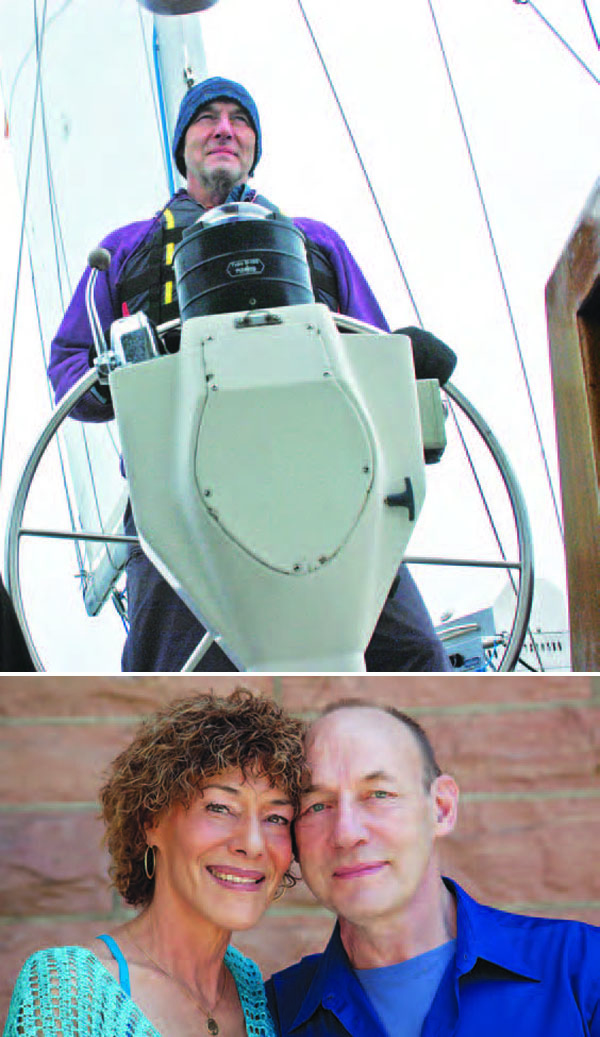 Weiss at the helm during sailboat outing to San Juan Islands (top), Marc Weiss and wife, Pam (bottom)
SIDEBAR: Marc Weiss’ Compass Points
In a career spanning nearly the entire history of GNSS-enhanced metrology, Marc Weiss has been a key participant in projects that laid the foundation for accurate synchronization of atomic clocks around the world.
By Inside GNSS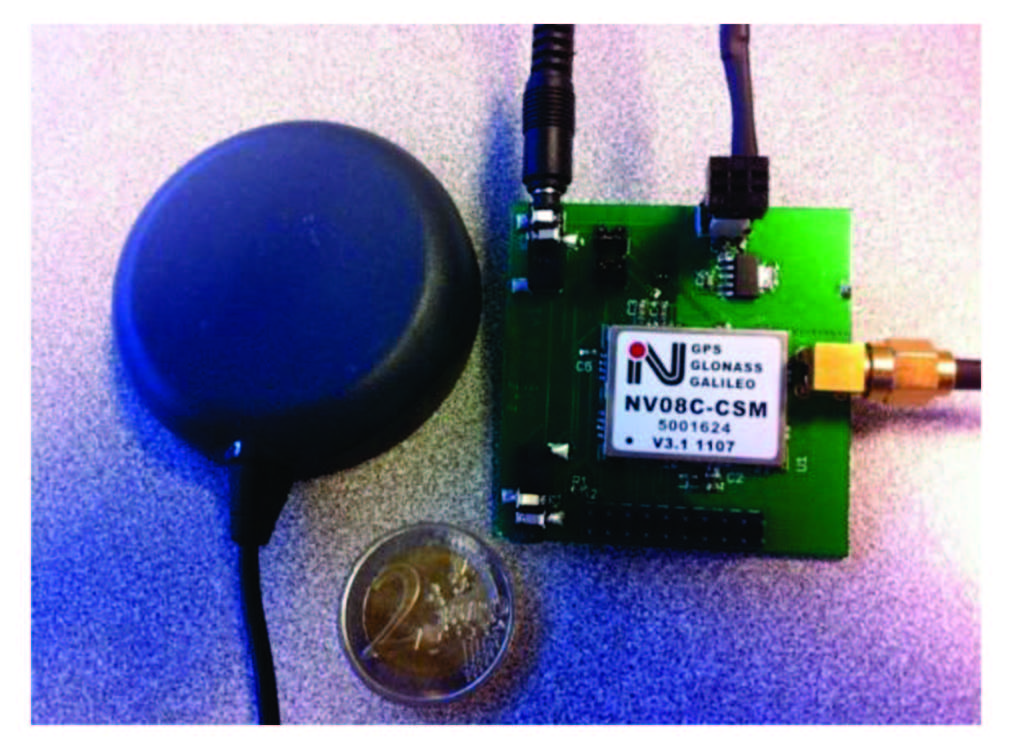 Receiver (on the right) and antenna (on the left) comprised the on-board unit used in both data collections
Working Papers explore the technical and scientific themes that underpin GNSS programs and applications. This regular column is coordinated by Prof. Dr.-Ing. Günter Hein, head of Europe’s Galileo Operations and Evolution.
By Inside GNSS