SBAS and RNSS

JAXA Selects Spirent Simulator for QZSS Receiver Testing

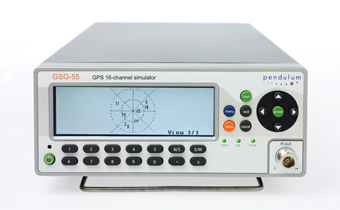
Spirent Communications’ Positioning Technology Division, Paignton, UK, has announced that the Japanese Aerospace Exploration Agency (JAXA) has selected Spirent’s GSS8000 Multi-GNSS Constellation Simulator to support further development of the Quazi-Zenith Satellite System (QZSS) program.

Responsible for the development of the initial QZSS user equipment, JAXA is using the GSS8000 to verify QZSS receiver performance.

Read More >

By Inside GNSS
January 18, 2011

Galileo Mid-Term Review Foresees €1.9 Billion in Additional Costs

Antonio Tajani, EC Vice-President. EC photo

A European Commission (EC) communication sent to the European Parliament and European Council today (January 18, 2011) estimates that completing a fully operational capability (FOC), 30-satellite Galileo system and the European Geostationary Navigation Overlay Service (EGNOS) will cost an additional €1.9 billion above the €3.4 billion already allocated.

Read More >

By Inside GNSS
[uam_ad id="183541"]
January 9, 2011

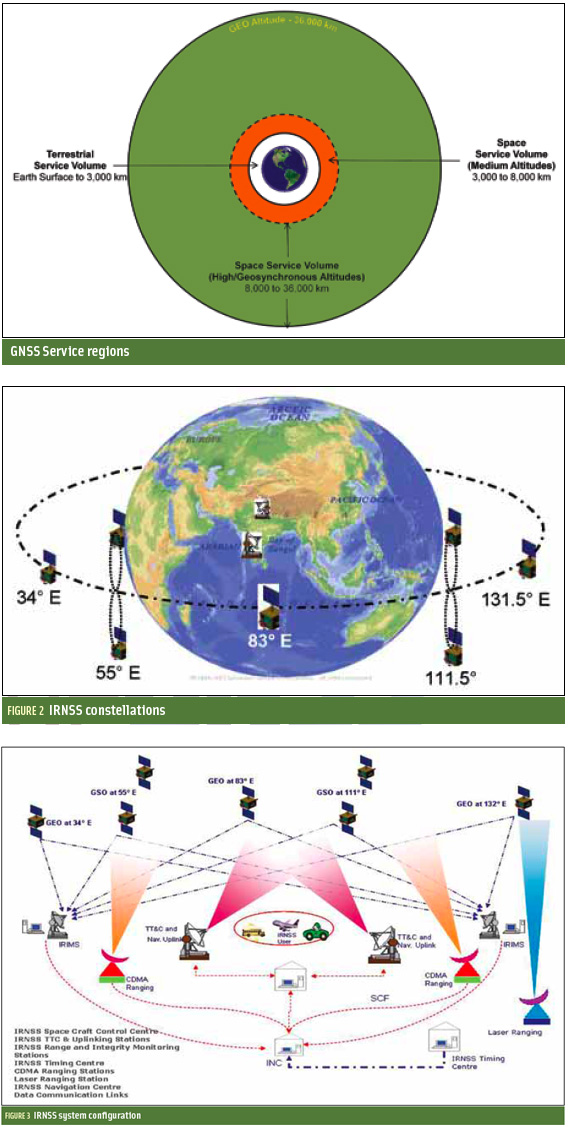
Indian Regional Navigation Satellite System

FIGURES 1, 2 & 3

For the complete story, including figures, graphs, and images, please download the PDF of the article, above.

In satellite navigation, a GNSS receiver must account for several sources of error such as relativistic effects, atmospheric propagation delay, offset of satellite clocks from system time and satellite ephemeris. In order to accurately compute user position, velocity, and time (PVT), these errors need to be predicted/estimated precisely.

Read More >

By Inside GNSS
December 22, 2010

GMV Will Launch Fully Hosted Software GPS Receiver at Mobile World Congress

GMV will launch the SRX-10, a software GPS receiver for mass-market applications, at this year’s GSMA Mobile World Congress, scheduled February 14–17 in Barcelona, Spain.

As a fully hosted solution, all SRX-10 receiver functions — even signal acquisition and tracking — can be hosted on a general purpose CPU with only the requirement of adding on a low cost RF front-end, according to the company.
The company cites other benefits offered by its new software receiver, particularly its substantial flexibility and upgradeability.

Read More >

By Inside GNSS
December 1, 2010

European Space Council Backs Galileo; 2011 Funding Still Unresolved

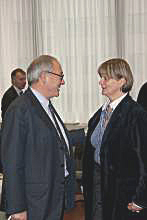
ESA Director General Jean-Jacques Dordain and European Space Council co-chair Sabine Laruelle, Belgian science minister. Photo: ESA – S. Corvaja

While funding and technical issues continue to roil the waters at the program and operational level, Galileo and the European Geostationary Navigation Overlay Service (EGNOS) have received a strong reaffirmation of support from the highest levels of the European Union (EU) and the European Space Agency (ESA).

Read More >

By Inside GNSS
[uam_ad id="183541"]
November 7, 2010

Munich Satellite Navigation Summit 2011

Residenz entrance, familiar to Munich Satellite Navigation Summit attendees.

The 2011 Munich Satellite Navigation Summit will take place from March 1 through 3 in Der Residenz, the palace of the old Bavarian royal family and now home to four museums. 

The event features high-level discussions about all of the world’s navigation satellite systems. It is organized by the Institute of Geodesy and Navigation at University FAF Munich.

The technical program begines with a plenary presentation on "GNSS in Balance," followed by a Bavarian State Reception.

Read More >

By Inside GNSS
November 2, 2010

Asia Oceania Regional Workshop on GNSS

Thailand’s largest island and a popular tourist destination

The 2nd Asia Oceania Regional Workshop on GNSS will be held in Melbourne, Australia, on November  21–22, in the two days before the Asia-Pacific Regional Space Agency Form (APRSAF) annual meeting in the city.

The free event will take place at the Royal Melbourne Institute of Technology (RMIT) University in Storey Hall at 342 Swanston Street. Registration is required on the event website.

Read More >

By Inside GNSS

Space Reflecto 2010

The first workshop on passive reflectometry using radiocom space signals is organized by two technical competence centers (CCT) of the French space agency, CNES. They are signal and images processing (TSI) and Position datation by satellite (PDS).

It will take place on December 1 2010 at the Institut Aero Spatial in Toulouse, France.

Read More >

By Inside GNSS
1 33 34 35 36 37 41
IGM_e-news_subscribe