A: System Categories

Evaluating the Performance of Navigation Payloads
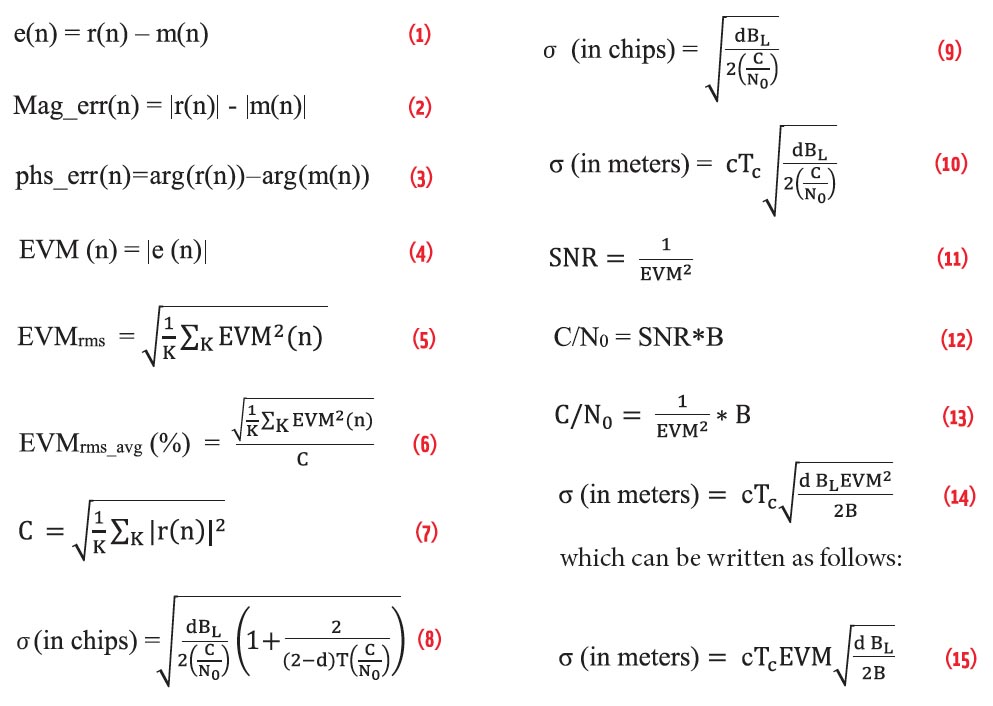
As a navigation satellite transmits multiple signals on single frequency (e.g., Open Service and Restricted Service over L5 Band), these are combined on a common carrier to comprise a composite signal. This composite signal passes through navigation payload subsystems such as an up-converter, traveling wave tube amplifier (TWTA), filters, and so on. These subsystems may introduce adverse effects on the signal, such as amplitude and phase distortion, nonlinear effects, gain imbalance, IQ imbalance, and phase noise.

Read More >

By Inside GNSS

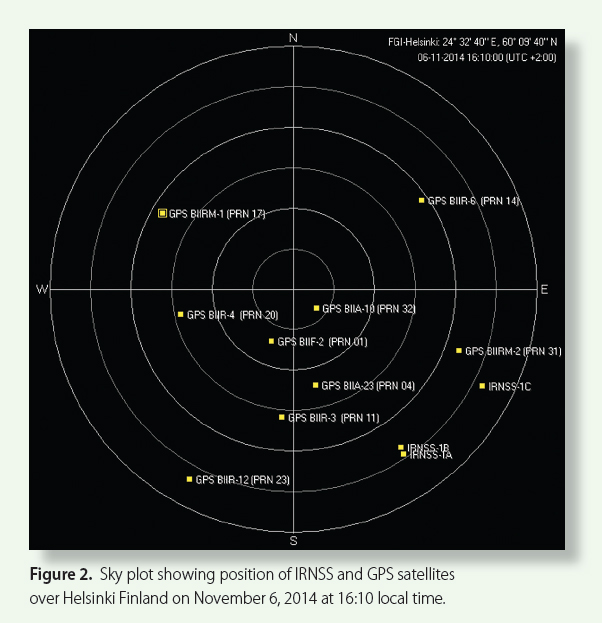
Tracking IRNSS Satellites

Figure 2: Sky plot showing position of IRNSS and GPS satellites over Helsinki Finland on November 6, 2014 at 16:10 local time.

The Indian Regional Navigation Satellite System (IRNSS)] is designed as a stand-alone regional navigation system with a primary service area extending up to 1,500 kilometers from the Indian land mass. Finland lies north of 60°N latitude more than 5,000 kilometers away from India, as shown in Figure 1 (see photo at the top of this article).

Read More >

By Inside GNSS

Higher Aspirations for GNSS

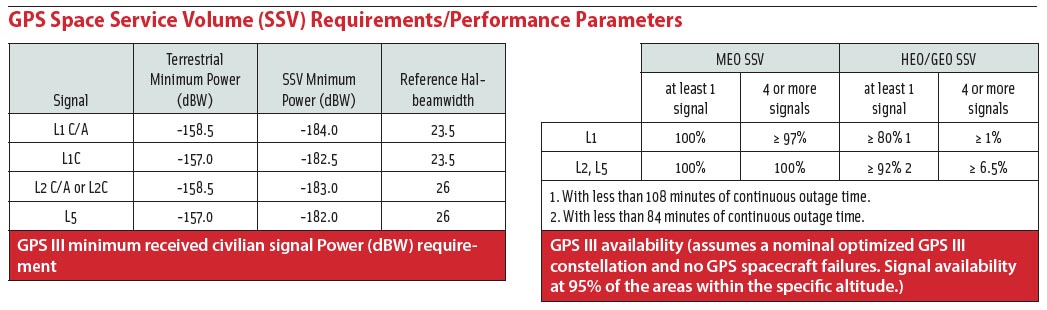
GPS Space Service Volume (SSV) Requirements/Performance Parameters

New space missions such as the robotic repair and recovery of damaged or errant communication satellites may become possible with the aid of an emerging class of receivers that is able to use GPS signals for navigation in orbits thousands of kilometers above the middle Earth orbit (MEO) GPS constellation itself.

Read More >

By Dee Ann Divis
[uam_ad id="183541"]

EU and Russia: Lost in Space?

Russia’s involvement in the Ukraine crisis has turned much of public opinion in the West against that country, in particular souring the relationship between the European Union (EU) and Russia. And, while the ceasefire signed in September technically is still in force, the EU-Russia rift is far from smoothed over.

Read More >

By Peter Gutierrez
November 14, 2014

First GPS III Launch Slips to FY17

GPS III core structure at Lockheed Martin facility. Lockheed Martin photo

The launch of the first GPS III satellite could slip to as late as March 2017, further delaying a modernization program that already has been pushed back repeatedly by budget cuts and technical problems.

“The first GPS III launch is tentatively considered for the first half of FY17, based on booster availability and Air Force launch priorities,” a spokesman for the Space and Missile Systems Center told Inside GNSS.

Read More >

By Inside GNSS
[uam_ad id="183541"]

Topcon Engineers Track New GLONASS Signal

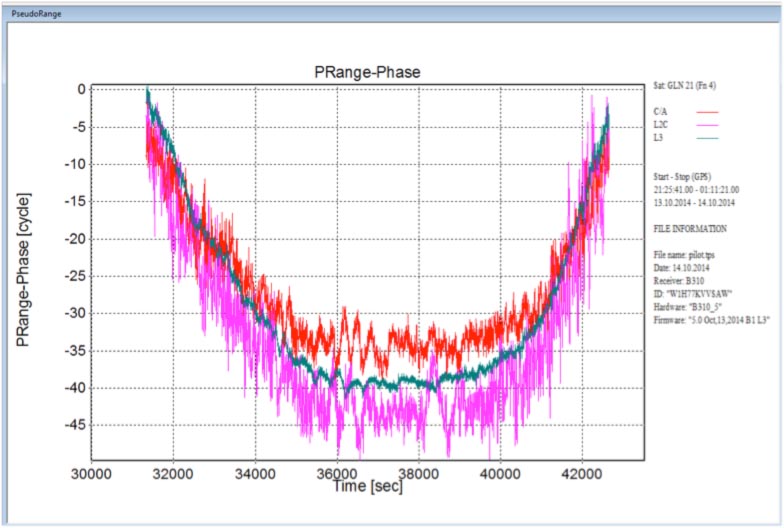
Implementation of code-Phase structures for GLONASS signals ?/?, L2C and L3

Topcon Positioning Group has announced that its latest GNSS reference receiver has tracked a new signal from the GLONASS constellation.

The GLONASS-M 55 satellite was launched in June and is equipped
with an experimental payload capable of transmitting CDMA signals in the
Russian GNSS system’s L3 frequency band centered at 1202.025 MHz. According to the company, Topcon engineers successfully tracked the signal using the NET-G5
receiver during a series of recent tests at the Topcon Technology Center
in Moscow, Russia.

Read More >

By Inside GNSS
November 10, 2014

ESA Will Attempt to Improve Orbits of Errant Galileo Satellites

The European Space Agency (ESA) announced plans today (November 10, 2014) to implement a series of maneuvers to reposition one of two Galileo full operational capability (FOC) satellites left in the wrong orbit this summer, as a prelude to its health being confirmed.
 
The aim is to raise the lowest point of the satellite’s orbit — its perigee — to reduce the radiation exposure from the Van Allen radiation belts surrounding Earth, as well as to put it into a more useful orbit for navigation purposes.
 

Read More >

By Inside GNSS
November 6, 2014

Tallysman Launches Smart GPS-GLONASS Antenna

Tallysman has introduced the TW5340 “smart” antenna that pairs Tallysman‘s Accutenna technology with STMicroelectronics’ Teseo II GNSS receiver.

The TW5340 is a multi-constellation GNSS antenna that provides simultaneous GPS/GLONASS/SBAS reception and is designed for use in professional grade applications such as precision timing, network synchronization, or low-current  and tracking/positioning applications.

Read More >

By Inside GNSS
IGM_e-news_subscribe