A: System Categories

March 28, 2016

Up in the AIRR

Anyone who has sat through several iterations of a slide presentation by the Federal Aviation Administration (FAA) can’t help but wonder if there isn’t a better way to do things.

As speakers flip through an exhaustively vetted series of PowerPoint slides, squeezing out a new bullet point or two from one version to the next six months later, watching paint dry seems like a more productive — and briefer — use of one’s time. The agency sometimes brings a whole new meaning to the concept of geological time.

Read More >

By Dee Ann Divis
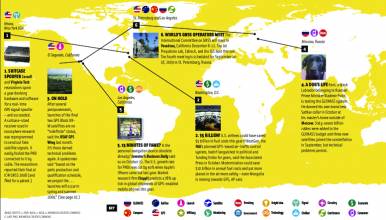
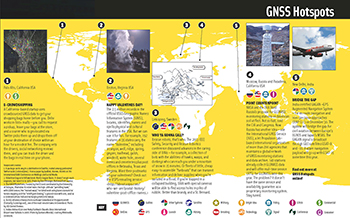
GNSS Hotspots | March 2016

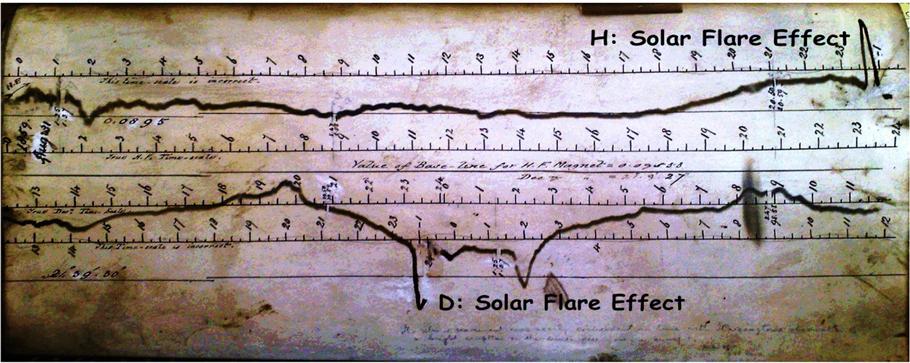
One of 12 magnetograms recorded at Greenwich Observatory during the Great Geomagnetic Storm of 1859
1996 soccer game in the Midwest, (Rick Dikeman image)
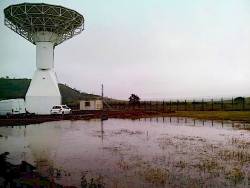
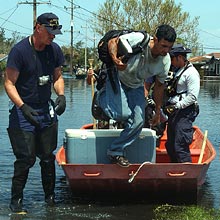
Nouméa ground station after the flood
A pencil and a coffee cup show the size of NASA’s teeny tiny PhoneSat
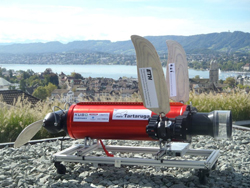
Bonus Hotspot: Naro Tartaruga AUV
Pacific lamprey spawning (photo by Jeremy Monroe, Fresh Waters Illustrated)
“Return of the Bucentaurn to the Molo on Ascension Day”, by (Giovanni Antonio Canal) Canaletto
The U.S. Naval Observatory Alternate Master Clock at 2nd Space Operations Squadron, Schriever AFB in Colorado. This photo was taken in January, 2006 during the addition of a leap second. The USNO master clocks control GPS timing. They are accurate to within one second every 20 million years (Satellites are so picky! Humans, on the other hand, just want to know if we’re too late for lunch) USAF photo by A1C Jason Ridder.
Detail of Compass/ BeiDou2 system diagram
Hotspot 6: Beluga A300 600ST

Dangerous Games in Rio, Animal Trackers, Chinese Logistics and The Radiation Club

Read More >

By Inside GNSS
March 27, 2016

Galileo & EGNOS Evolution

Prof. Dr. Günter Hein

A global navigation satellite system seems like such solid thing, like the pyramids, perhaps, or a mountain. Permanent, fixed, immutable.

Nor is this surprising. After all, GNSS distinguishes itself from many other technologies of the moment by its grounding in a large and widespread infrastructure: a master control station, launch facilities, far-flung monitoring stations, the space segment with dozens of massive satellites that can operate 20 years or more as did a recently retired GPS Block IIA spacecraft.

Read More >

By Günter W. Hein
[uam_ad id="183541"]
March 18, 2016

GLONASS and PNT in Russia

The legal and regulatory framework of the Russian Federation covers not only the GLONASS system, but the country’s overall positioning, navigation and timing (PNT) system as well.

The term PNT is a synonym for navigation activities as defined in the Federal Law on Navigation Activities. The PNT system in the Russian Federation is defined as the combination of administrative and technical means that provide spatial and time data to all user groups, with GLONASS as a key element.

Read More >

By Ingo Baumann

How Privatizing Air Traffic Control Could Affect Satellite Navigation’s Role in Aviation

The satellite-based NextGen program is in trouble — no question about it.

The Federal Aviation Administration (FAA) air traffic modernization effort will likely cost triple its original $40-billion program budget and need an extra decade — until 2035 or beyond — to reach completion, according to 2014 testimony by Department of Transportation (DoT) Inspector General Calvin Scovel.

Read More >

By Dee Ann Divis

March 16, 2016

DGON Inertial Sensors and Systems 2016

At the 2015 symposium

The German Institute of Navigation’s (DGON) 2016 symposium on inertial sensors and systems, ISS, and gyro technology will take place in Tulla Hall at the Karlsruhe Institute of Technology (KIT) on September 20 and 21.

As modern systems for navigation, localization and guidance are increasingly making use of supporting data from non-inertial sensors, the conference particularly appreciates papers on hybrid systems, those that fuse inertial with GNSS, visual, infrared, radar or other sensors.

Read More >

By Inside GNSS

OriginGPS Shrinks Multi-GNSS Module

OriginGPS has launched its Multi Micro Spider multi-GNSS module, which features a 5.6 x 5.6-millimeter footprint and 2.65-millimeter height.

Like its predecessor, the Multi Micro Hornet (which measured 10 x 10 x 6.1 millimeters), the ORG4033 uses MediaTek’s MT3333 and is positioned for applications that require minimal power consumption and ultra-small form factors, ranging from wearables to drones. Unlike the Hornet, the Multi Micro Spider supports Europe’s Galileo system as well as GPS, GLONASS, and BeiDou.

Read More >

By Inside GNSS
[uam_ad id="183541"]

Air Force Considers Shifting GPS III Ground Control to Enterprise Ground Services

As the contractor for the new GPS ground system works its way through a make-or-break 90-day evaluation period, the U.S. Air Force (USAF) is weighing whether it should look at leapfrogging past that program and shifting control of the newest GPS satellites to a new common ground system for Air Force space assets.

The Next-Generation Operational Control System or OCX, currently under development by Raytheon, is essential to integrating the GPS III satellites into the U.S. GNSS constellation and operating them at their full potential.

Read More >

By Inside GNSS

PNT ExCom to Write Requirements for GPS Backup

Harold Martin, director of National Coordination Office for PNT, at Munich SatNav Summit 2016

Addressing a long-unfulfilled presidential mandate, the Space-Based Positioning, Navigation, and Timing (PNT) Executive Committee (ExCom) has taken on reponsibility for initiating a process to identify and develop requirements for a complementary national PNT, in effect, a backup system to GPS in case of outages from natural or man-made events.

Read More >

By Inside GNSS

GNSS Leaders Reveal Plans at Munich Summit

Representatives of the world’s GNSS providers outlined the current plans and progress of their systems at the 2016 Munich Satellite Navigation Summit in Germany.

BeiDou has entered its transition period from Phase II to Phase III, with test and validation of the next phase with its new signal structures and frequencies taking place through the second half of 2017, said Jun Shen, deputy director for International Research at the China Satellite Navigation Office. In the meantime, “there will be a coexisting of Phase II/III BeiDou signals.

Read More >

By Inside GNSS
March 10, 2016

India Successfully Launches IRNSS 1F into Orbit

The Indian Space Research Organization (ISRO) announced the successful launch today (March 10, 2016) of the sixth satellite in the Indian Regional Navigation Satellite System (IRNSS).

IRNSS-1F lifted off at 4:01 p.m. IST from the Sriharikota rocket port in Andhra Pradesh on board the Polar Satellite Launch Vehicle (PSLV-C32). The 1,425-kilograpm spacecraft will be placed in geostationary orbit at 32.5 degrees East longitude.

Read More >

By Inside GNSS
IGM_e-news_subscribe