
EU Responds to Call for Action on GNSS Interference
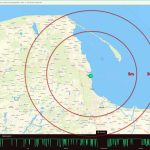
Led by Lithuania, 17 nations called upon the European Union (EU) to take action on GNSS interference originating in Russia and Belarus.
By Dana A. GowardLed by Lithuania, 17 nations called upon the European Union (EU) to take action on GNSS interference originating in Russia and Belarus.
By Dana A. GowardSafran Electronics & Defense unveiled two next-generation navigation solutions at the Paris Air Show designed to counteract the global surge in GNSS interference and spoofing: the Skylight dual-mode GNSS receiver and the BlackNaute embedded PNT system.
By Inside GNSSThe International Air Transport Association (IATA) and the European Union Aviation Safety Agency (EASA) have published a comprehensive plan to mitigate the risks stemming from global navigation satellite system (GNSS) interference. The plan was part of the conclusions of a jointly-hosted workshop on the topic of GNSS interference.
By Inside GNSSThales, a European leader in resilient navigation, has announced a major €55 million investment to strengthen its industrial sites in Châtellerault and Valence, France. This investment, which will be made between 2025 and 2028, will meet the growing demand for high-performance navigation solutions, both civilian and military, and will strengthen its sovereign and cutting-edge industrial base.
By Inside GNSSSpoofing detection and mitigation through multi-sensor integration.
By Inside GNSSHuld s.r.o. and the University of West Bohemia in Pilsen have developed a new hardware and software platform capable of generating accurate and stable timing information with a high level of integrity and availability. The system merges multiple timing sources and detects inconsistencies among inputs.
By Peter GutierrezNew service delivers high-precision positioning for precision agriculture, UAVs, and autonomous robotics designed for use with the u-blox ZED-X20P GNSS receiver.
By Inside GNSSThe multinational technology company GMV has just presented the latest results for the project known as LUPIN (Enabling High-Performance PNT in the Lunar Environment), after carrying out field testing from April 27th to May 8th in the municipality of La Oliva, on the Spanish island of Fuerteventura.
By Inside GNSSThe EGNSS MATE project, led by Swiss Federal Railways (SBB), has developed and tested new map-assisted sensor fusion algorithms, using European GNSS (Galileo) and other sensor data to safely estimate train position, velocity and time information.
By Peter GutierrezAt the 2025 Munich Satellite Navigation Summit, René Kleessen, Program Director for European Space Agency (ESA) Projects at the German Space Agency (DLR), delivered a precise and pointed message on Germany’s work to increase the resilience of positioning, navigation, and timing (PNT) technologies.
By Peter GutierrezIn a key step forward for NATO’s capabilities in electromagnetic warfare, a new prototype sensor, developed by the NATO Communications and Information Agency (NCIA) completed a key round of testing. The system, called GANDALF 4, has successfully undergone series of tests in a specialized testing facility at the NATO Support and Procurement Agency (NSPA).
By Inside GNSSThe advanced navigation architecture explored combines multi-sensor fusion and resilient PVT techniques.
By Inside GNSSAt the 2025 Munich Satellite Navigation Summit, Ramsey Faragher, Director and CEO of the UK Royal Institute of Navigation, delivered a sobering assessment of satellite navigation vulnerabilities based on findings of the ‘Operational Performance of Satellite Navigation Systems’ (OPS) report.
By Peter Gutierrez