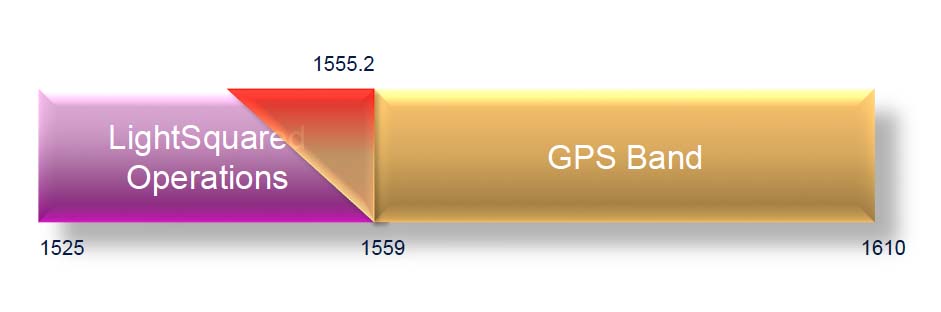
The International Civil Aviation Organization (ICAO) is calling for urgent action to protect civilian aircraft from an expanding set of military threats, including GNSS radio frequency interference.
GNSS interference is named alongside long-range weapons systems, counter-UAS, and advanced air defense technologies as risks that international law alone has proven insufficient to address.
ICAO Secretary General Juan Carlos Salazar made the assessment at the opening of the 2026 World Overflight Risk Conference in Valletta, Malta, telling delegates that emerging military capabilities are creating an environment where civilian aircraft face heightened risk of being targeted or caught in crossfire. “We must now reach beyond the boundaries of aviation as we have known it,” Salazar said.
Salazar pointed to the recent Middle East crisis as both a demonstration of the aviation industry’s adaptability and evidence of the limits of operational workarounds. More than ten states partially or fully closed their airspace during the escalation, and while ICAO’s regional contingency frameworks helped coordinate rerouting, the Secretary General characterized these measures as costly and temporary rather than solutions to the underlying security threats.
The organization is pressing states to take three immediate steps: share threat intelligence rapidly when activities pose risks to civilian aircraft, strengthen risk assessment mechanisms and decision-making timelines, and improve coordination between military and civilian authorities to prevent misidentification. ICAO is also finalizing a Global Crisis Management Framework and updating its Manual Concerning Safety Measures relating to Military Activities and its Risk Assessment Manual for Civil Aircraft Operations Over or Near Conflict Zones.
Salazar grounded the legal case in ICAO Assembly Resolution A42-4 and Article 3 bis of the Chicago Convention, which explicitly prohibits the use of weapons against civilian aircraft, while acknowledging that the framework has not kept pace with regional conflict.