
Main Categories

January 6, 2009

PCTEL Acquires Wi-Sys

PCTEL, Inc., announced today (January 5) that it has acquired Wi-Sys Communications Inc., an Ottawa, Ontario, Canada–based company that specializes in GPS antenna and receiver technology. PCTEL will pay $2.1 million for Wi-Sys and plans to fully integrate the latter company’s operations into its Antenna Products Group (APG).

Read More >

By Glen Gibbons
January 5, 2009

Juliana Blackwell To Direct National Geodetic Survey, Oversee Spatial Reference System

Juliana P. Blackwell (NOAA photo)

Juliana P. Blackwell has taken up responsibilities as the new director of the National Geodetic Survey (NGS), where she will oversee the nation’s spatial reference system.

Blackwell takes up the post after serving for the past three years as chief of the NGS Observation and Analysis Division. She is the first woman to head the nation’s oldest federal science agency, established by President Thomas Jefferson in 1807 as the Survey of the Coast.

Read More >

By Glen Gibbons
[uam_ad id="183541"]
December 29, 2008

Applanix Upgrades POS, POSpac Products

Applanix Corporation has launched the POSPac MMS (Mobile Mapping Suite) 5.2, the latest release of its GNSS-aided inertial post-processing software for mobile mapping and surveying applications in multiple environments.

Applanix has announced that its POS AV products now support on-board OmniSTAR XP real-time differential GPS corrections using a purpose-built GNSS+L-band aircraft antenna and an embedded BD960 GNSS receiver.

Read More >

By Glen Gibbons

Build Your Own GPS Contest

Canadian GNSS manufacturer Baseband Technologies, Inc., has launched a “Build Your Own GPS Contest,” inviting would-be designers to submit brief written ideas for applications of the company’s software-based GPS receiver technologies.

Contest entrants write 500-word descriptions of an original proposal, suggestion, or hypothetical project may include images that help illustrate their concept. The deadline for entries is March 15, 2009.

Read More >

By Glen Gibbons
December 26, 2008

Russia Launches Three More GLONASS-M Space Vehicles

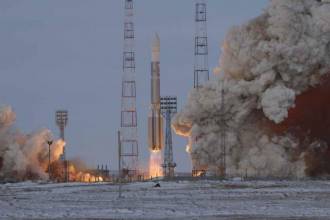
Proton with three GLONASS-Ms

The Russian Federal Space Agency (Roscosmos) successfully launched a Proton-M rocket and three GLONASS-M satellites at 10:53 a.m. (GMT) on December 25 from the Baikonur spaceport in Kazakhstan.

The spacecraft were placed into orbital plane 1 on the GLONASS constellation, where they will occupy slots 2, 3, and 8, according to the Roscosmos Information-Analytical Center.

Read More >

By Glen Gibbons
[uam_ad id="183541"]
December 7, 2008

NovAtel Announces GNSS Smart Antenna for Machine Guidance

NovAtel has announced its new SMART-AG antenna, an L1 GPS + GLONASS receiver plus antenna system housed in a single, low profile, rugged enclosure, designed for manual guidance and auto steer installations.

SMART-AG features 14 GPS L1 channels, 12 GLONASS L1 channels, and two additional channels for satellite-based augmentation systems (SBAS) as well as two NMEA 0183 compatible RS-232 serial ports, an NMEA2000 compatible CAN port, plus built-in mounting magnets.

Read More >

By Inside GNSS
November 25, 2008

OnPOZ Precision Positioning Releases new GNSS Post-Processor with GLONASS Compatibility

OnPOZ Precision Positioning, a VGI Solutions division, has announced its new EZSurv GNSS Post-Processing version that offers full compatibility with GLONASS satellite signals.

According to the Montreal, Quebec, Canada–based company, EZSurv is compatible with most of the raw GNSS data formats on the market. The software computes high-accuracy geodetic results, enabling seamless data postprocessing among different brands of GNSS receivers and as a companion software for high-precision GNSS OEM receivers.

Read More >

By Glen Gibbons

QZSS Progress Spurs Spirent Simulator Capability

QZS-1 Satellite

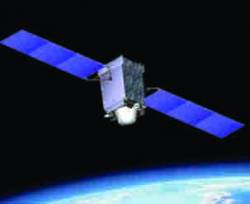
Encouraged by continuing progress on Japan’s Quasi Zenith Satellite System (QZSS), Spirent Communications has announced that its GSS8000 simulation system now supports QZSS in addition to GPS, Galileo, GLONASS, and satellite-based augmentation systems (SBAS) — reportedly the first RF constellation simulator to do so.

Read More >

By Glen Gibbons
IGM_e-news_subscribe