GNSS Solutions Tutorials (held before ION GNSS 2009)
A series of GNSS tutorials and seminars will be held on Monday, September 21 and Tuesday, September 22, before the Institute of Navigation conference, ION GNSS 2009
By Inside GNSSA series of GNSS tutorials and seminars will be held on Monday, September 21 and Tuesday, September 22, before the Institute of Navigation conference, ION GNSS 2009
By Inside GNSS
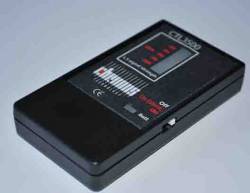
Chronos Technology, of Lydbrook, Gloucstershire, United Kingdom, has introduced its CTL3500 Interference Monitor, a low-cost, handheld, battery-operated device designed to detect the presence of too much GPS power or non-GPS signals and interference broadcasting on the L1 channel.
By Inside GNSS
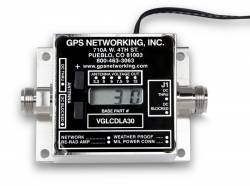
GPS Networking, of Pueblo, Colorado, has launched the VGLCDLA30RPDC, a variable gain GPS in-line amplifier with LCD display and push button control.
Featuring a range of 0–30 dB, the VGLCDLA30RPDC’s push button control can increase or decrease gain in increments of 1 dB, enabling operators to make precise adjustments quickly and view the output power at any given time for more efficient testing.
The unit operates on 110VAC or 220 VAC transformer (wall mount) and 240 VAC (United Kingdom). Connector options include types N, SMA, TNC, and BNC.
By Inside GNSS
Stallion Range Center, White Sands Missile Range, New Mexico, site of JAMFEST exercisesThe 746th Test Squadron (746 TS) will offer authorized GPS users another in its series of JAMFEST training scenarios November 2–6 at at White Sands Missile Range, New Mexico.
Introduced in May 2004, JAMFEST provides a realistic GPS jamming environment for testing GPS-based navigation systems. Since its inception, JAMFEST has hosted a diverse customer base, including multi-service Department of Defense (DoD) groups, defense contractors, and civil organizations with objectives ranging from training personnel in GPS-denied or –degraded conditions to characterizing the performance of prototype advanced anti-jam technologies against operationally realistic threats.
By Inside GNSS
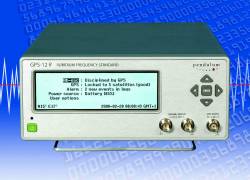
Pendulum Instruments, Stockholm, Sweden, has introduced four new options for the company’s GPS-12 Portable Frequency Standard family.
First released in 2006, the GPS-12R, a portable GPS controlled rubidium Frequency Standard with battery backup power, supplies a variety of standard frequencies for general metrology (1, 5, and 10 MHz), base station test (13 MHz) and telecom (E1/T1 clock/data).
By Inside GNSS
The Radio Technical Commission for Maritime Services (RTCM) has completed a revision (Version 2.0) of its standard for Networked Transport of RTCM via Internet Protocol (Ntrip).
Designated as RTCM Standard 10410.1, Among other things, the new standard defined by RTCM’s Special Committee 104 (SC104) provides a protocol for streaming differential correction data or other kinds of Global Navigation Satellite System (GNSS) data to stationary or mobile users over the Internet.
By Inside GNSS
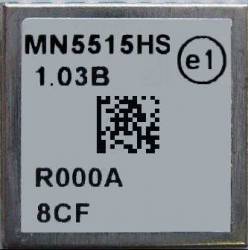
Micro Modular Technologies (MMT), of Irvine, California, has introduced its MN5515HS GPS receiver module, a low-power, 20-channel GPS receiver module based on the SiRFstarIII GPS receiver chipset.
The MN5515HS has a reported cold-start acquisition sensitivity of –145dBm and tracking sensitivity of –159dBm.
By Inside GNSS
746th Test Squadron commander Lt. Col. Amy McCain dedicates an exhibit with Director Randall Hayes of the New Mexico Museum of Space History in Alamogordo. A tradition of testing of navigation systems and missile components began for the 746th Test Squadron (746 TS) in 1959 and continued as it reached its golden anniversary in May 2009.
By Inside GNSS
The GPS Wing has announced that the Raytheon Modernized User Equipment (MUE) team has achieved live satellite M-code tracking with an MUE receiver.
The team has developed modernized versions of the Avionics GPS Receiver Application Module and Ground Based GPS Receiver Applications Module (GB-GRAM) receivers under MUE receiver development contracts awarded to three companies in June of 2006. M-code signals from Block IIR GPS satellites were acquired using a Raytheon GB-GRAM-M.
By Inside GNSS
CSR plc and SiRF Technology Holdings Inc., have completed the merger between SiRF and a wholly owned subsidiary of CSR.
By Inside GNSS
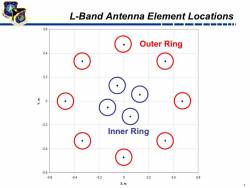
GPS satellite L-band antenna elementsThe GPS Wing is reaching out to receiver manufacturers and the user community to gather comments on the SVN49 signal anomaly and the Air Force’s provisional solution to the problem.
Despite earlier news reports suggesting that the problem, which has kept the latest GPS satellite from being declared operational, was on its way to being solved, a GPS Wing spokesperson characterized the remedy of altering the satellite’s broadcast orbital position (ephemeris) and time as only a “partial fix.” Indeed, high-precision dual-frequency users, such as those in the International GNSS Service, may continue to encounter difficulties in handling the SVN49 signal.
By Inside GNSS
FAA graphicGNSS manufacturer NovAtel Inc., of Calgary, Alberta, Canada, has received a new contract from the Federal Aviation Administration (FAA) to develop the next-generation GPS Wide Area Augmentation System (WAAS) reference receiver (the “GIII” receiver). The three-year contract is worth up to US$9.7million.
By Inside GNSS
When GPS reference receivers at the European Space Operations Center (ESOC) detected a 150-meter error in the broadcast ephemerides (orbital position) for the latest GPS satellite — Space Vehicle Number 49 or SVN49 — scientists there assumed that a problem had arisen with the spacecraft’s navigation payload.
After all, coupled with an apparent 500-nanosecond clock error, the ephemerides could produce many kilometers of errors for navigation receivers.
By Inside GNSS