Main Categories

June 23, 2010

Russian Company Offers ‘Preliminary’ Specifications for GLONASS CDMA Signal
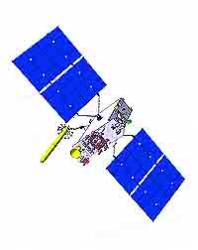
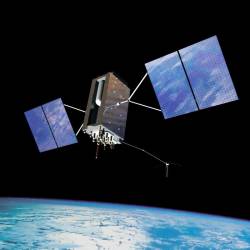
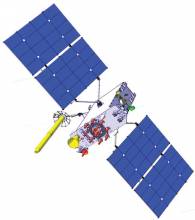
Illustration of GLONASS-K satellite

A provisional specification for the planned GLONASS CDMA signal has been defined and is available to receiver manufacturers interested in experimenting with the demonstration signal that will be broadcast from the GLONASS-K satellite to be flight-tested later this year.

Mark Shmulevich, head of business development for Russian Space Systems (RSS), extended the offer at the Asia Pacific Economic Cooperation GNSS Implementation Team (APEC-GIT) meeting in Seattle, Washington, this week. RSS is an amalgamation of 10 former Russian federal state unitary enterprises — that is, government corporations — and other Russian institutes and agencies established last year, with the former Russian Institute of Space Device Engineering (RISDE) serving as the lead.

Read More >

By Inside GNSS
June 22, 2010

Lockheed Martin Team Completes Requirements Review for GPS IIIB Program

Lockheed Martin has announced successful completion of a key requirements review for the GPS IIIB satellite series under the U.S. Air Force’s next-generation GPS III Space Segment program.

Lockheed Martin Space Systems, Newtown, Pennsylvania, is working under a $3 billion development and production contract from the U.S. Air Force to produce up to 12 GPS IIIA satellites, with first launch projected for 2014. The contract includes a Capability Insertion Program (CIP) designed to mature technologies and perform rigorous systems engineering for the future IIIB and IIIC increments planned as follow-on procurements.

Read More >

By Inside GNSS

Generating Carrier Phase Measurements

Q: What is the carrier phase measurement? How is it generated in GNSS receivers?

A: Simply put, the carrier phase measurement is a measure of the range between a satellite and receiver expressed in units of cycles of the carrier frequency. This measurement can be made with very high precision (of the order of millimeters), but the whole number of cycles between satellite and receiver is not measurable.

Read More >

By Inside GNSS
[uam_ad id="183541"]

Testing Multi-GNSS Equipment

FIGURE 1: Single- and multi-channel simulators, GPS/Galileo (on top) and GPS/GLONASS software receiver USB front end with controlled power source

For the complete story, including figures, graphs, and images, please download the PDF of the article, above.

Testing procedures comprise an important element in the development, manufacturing, and integration of GNSS devices. Essentially, everybody involved in GNSS will be involved in or affected by testing at one time or another.

Read More >

By Inside GNSS

GLONASS CDMA

For the complete story, including figures, graphs, and images, please download the PDF of the article, above.

The decades of successful exploitation of satellite navigation systems GPS and GLONASS have confirmed their unique status as a basic resource for reliable worldwide, all-weather, all-season, round-the-clock positioning and timing. Nevertheless, the permanently widening sphere of their practical applications — as well as challenging requirements emerging from potential new users — give these systems a momentum for further evolution and progress.

Read More >

By Inside GNSS
[uam_ad id="183541"]

On the Air

With the launch of the Delta IV rocket on May 27 from Cape Canaveral Air Force Station the first satellite (space vehicle number 62 or SVN62) of the latest GPS generation Block IIF (F, for “follow-on”) was carried into earth orbit — a major step with roots in the past.

Eight years ago in August 2002 the United States decided in coordination with the International Telecommunication Union (ITU-R) to transmit a new civil signal on a third frequency known as L5.

Read More >

By Inside GNSS
June 18, 2010

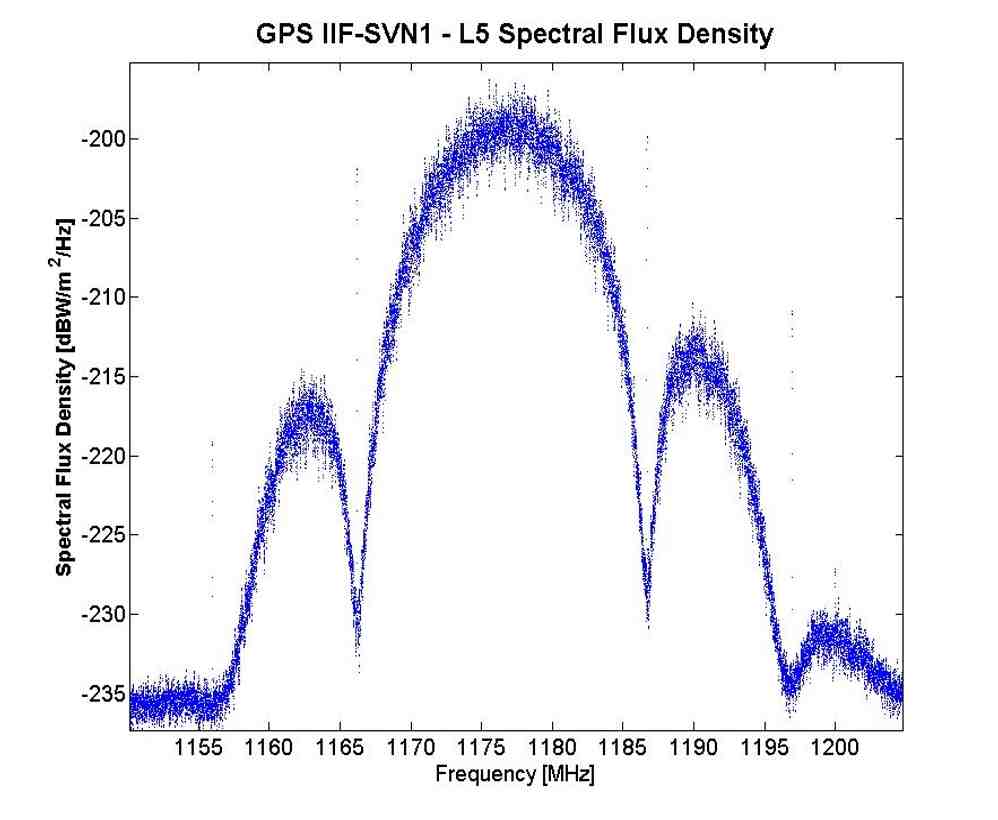
First Look at GPS L5 Signal

GPS L5 Signal Spectrum. German Aerospace Center image

The German Aerospace Center (DLR) has tracked and recorded the first operational L5 GPS signal as transmitted by the first GPS Block IIF satellite launched on May 27. The accompanying spectral image of the signal was received at about 15:10 UTC (GMT) today (June 17, 2010).

Read More >

By Inside GNSS
June 15, 2010

ITT Passes GPS III Nav Component CDR

ITT Corporation has announced that it passed a key milestone last month with successful completion of the critical design review (CDR) for the Mission Data Unit (MDU) the company is developing as part of the navigation payload for the U.S. Air Force’s GPS III program.

Read More >

By Inside GNSS
June 7, 2010

DLR, Stanford Track First GPS IIF Signals; Tests Begin on L5

GPS IIF SV1 Spectral Flux Density on L1. DLR figure

[Updated June 10] The U.S. Air Force announced today (June 10) that it has begun
testing the new operational L5 signal transmitted by the first GPS IIF satellite (space vehicle 1 or SV1 — designated SVN-62 in the overall GPS system), which was launched May 27.

On June 7, 2010, a team of experts from the German Aerospace Center (DLR) and Stanford University in California reported results of their tracking of the first navigation signals from the satellite, the pseudorandom noise code 25 (PRN25) on L1 and L2 — C/A and P(Y).

Read More >

By Inside GNSS
IGM_e-news_subscribe