
Main Categories

GPS Modernization on Agenda for June Space-Based PNT Advisory Board Meeting

The National Space-Based Positioning, Navigation, and Timing (PNT) Advisory Board will meet in Arlington, Virginia, on Thursday, June 9 and Friday June 10. The sessions are open to the public.

Among the agenda items are GPS modernization, interoperability with other GNSS systems, and future challenges to PNT service providers and users, such as protecting the emerging role of PNT in cyber networks, including the need for backups.

Read More >

By Inside GNSS

May 25, 2011

Spirent GPS/GNSS Simulation Training Conference

Near Hotel Oranje (hotel photo)

Spirent engineers will lead a two day training conference on the company’s simulation equipment at Hotel Oranje in Noordwijk, Netherlands on June 21 and 22 2011.

The conference will consist of 11 training sessions followed by 4 hands-on workshops.

Topics include:

Read More >

By Inside GNSS
[uam_ad id="183541"]
May 24, 2011

Septentrio Announces AsteRx-m ‘Ultra-Compact’ GPS/GLONASS RTK Receiver

Septentrio has announced plans to release the AsteRx-m, a low-power GPS/GLONASS dual-frequency RTK receiver that is smaller than a credit card.

The new board, which will begin shipping in the third quarter of 2011, is aimed specifically at integration in handheld devices, mobile computing platforms, and other solutions requiring high accuracy combined with low power in applications where space is at a premium. The new receiver covers the functionality range from GPS-L1 only to full GPS-GLONASS L1-L2

Read More >

By Inside GNSS

Hemisphere Reports Revenue Jump, Profit for Q1 2011

Steve Koles, president & CEO, Hemisphere GPS

Hemisphere GPS, Inc., has reported revenue growth of 41 percent and a return to profitability in the first quarter of 2011 for the three months ending March 31.

For the quarter, the Calgary, Alberta, Canada–based company generated $21.2 million in total revenues, compared to US$15.1 million in the first quarter of 2010. Revenues from all market segments increased in the first quarter of this year.

Read More >

By Inside GNSS

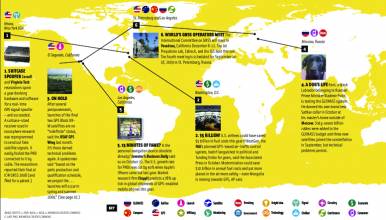
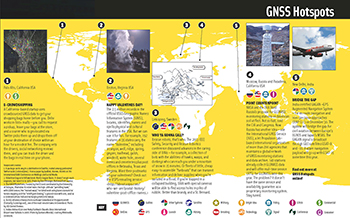
GNSS Hotspots | May 2011

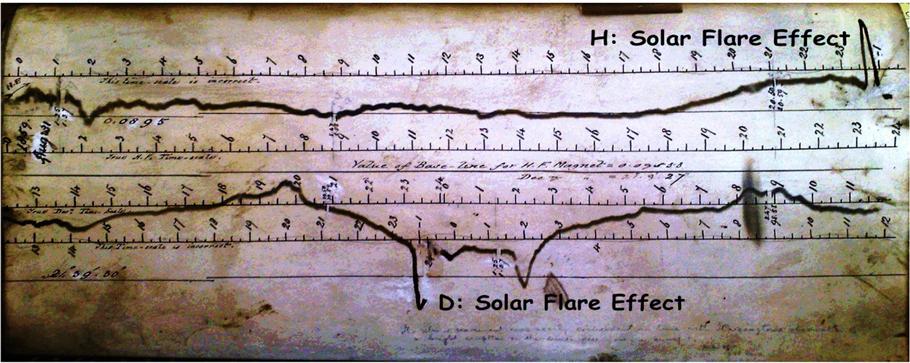
One of 12 magnetograms recorded at Greenwich Observatory during the Great Geomagnetic Storm of 1859
1996 soccer game in the Midwest, (Rick Dikeman image)
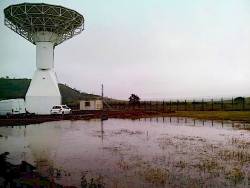
Nouméa ground station after the flood
A pencil and a coffee cup show the size of NASA’s teeny tiny PhoneSat
Bonus Hotspot: Naro Tartaruga AUV
Pacific lamprey spawning (photo by Jeremy Monroe, Fresh Waters Illustrated)
“Return of the Bucentaurn to the Molo on Ascension Day”, by (Giovanni Antonio Canal) Canaletto
The U.S. Naval Observatory Alternate Master Clock at 2nd Space Operations Squadron, Schriever AFB in Colorado. This photo was taken in January, 2006 during the addition of a leap second. The USNO master clocks control GPS timing. They are accurate to within one second every 20 million years (Satellites are so picky! Humans, on the other hand, just want to know if we’re too late for lunch) USAF photo by A1C Jason Ridder.
Detail of Compass/ BeiDou2 system diagram
Hotspot 6: Beluga A300 600ST

1. DON’T BLAME GPS
Humboldt-Tolyabe National Forest, Nevada USA
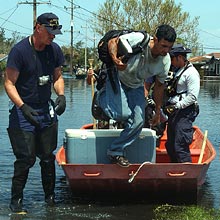
√ In the Pacific Northwest, in-car navigators often indicate “short cuts” through wilderness mountains—with tragic results. One victim survived 49 days before rescue in May. (Reports blamed GPS – not digital maps or wireless communication.) GPS.GOV straightens out misperceptions, for those who need a guardian angel, but just get a signal.

Read More >

By Inside GNSS
[uam_ad id="183541"]
May 20, 2011

China Plans Another Eight Compass/BeiDou Lanches by End of 2012

Ran Chengqi

According to a May 19 People’s Daily report, China will launch another eight Beidou navigation satellites before the end of next year.

Speaking at the second Chinese Satellite Navigation Academic Annual Meeting in Shanghai on May 18, Ran Chengqi, the director of the Chinese Satellite Navigation Administrative Office, said the overall testing of the Compass/BeiDou satellite navigation system will be finished on Oct. 10, 2011.

Read More >

By Inside GNSS

Homeland Security Steps Up to Protect GPS (But Not from LightSquared)

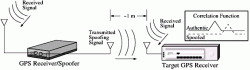
After a long series of fits and starts, the Department of Homeland Security is tackling the issue of interference to the GPS signal. The agency has launched a study to assess the risks to GPS service from a variety of sources — a study that, at least on paper, will lead to a plan to mitigate interference.

Unfortunately, the effort will not directly address the one potential problem consuming the thoughts of the GPS community — widespread receiver overload from the high-powered mobile broadband service proposed by the Virginia firm LightSquared.

Read More >

By Dee Ann Divis
IGM_e-news_subscribe