Main Categories

Trimble to Acquire Fugro’s OmniSTAR DGPS Service

Omnistar DGPS world map

Trimble announced on March 16 that it has entered into a definitive agreement to acquire certain assets related to the OmniSTAR GNSS signal corrections business from Fugro N.V.

The acquisition is expected to significantly expand Trimble’s worldwide ability to provide correction services for a broad range of land-based applications in addition to OmniSTAR’s current focus in agriculture. Fugro’s offshore marine business is unaffected.

Read More >

By Inside GNSS

EGNOS Activates Safety of Life Service

EGNOS-equipped cockpit

On March 2, ESSP (the European Satellite Services Provider) declared the safety-of-life (SoL) signal from the European Geostationary Navigation Overlay Service (EGNOS) officially available for use by aviation, following European Commission (EC) authorization to provide the service.

Similar to the U.S. Federal Aviation (FAA) Administration’s Wide Area Augmentation System (WAAS), EGNOS transmits real-time corrections to GPS signals over a large expanse of Europe and north Africa.

Read More >

By Inside GNSS
[uam_ad id="183541"]

Lockheed’s GPS III Team completes Key Flight Software Milestone

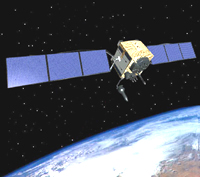
GPS III satellite. Lockheed Martin illustration

Lockheed Martin announced today (March 15, 2011) that the team it leads in developing the U.S. Air Force’s next-generation GPS III satellites has successfully completed the program’s first major flight-software integration milestone at the company’s software integration laboratory in Newtown, Pennsylvania.

Read More >

By Inside GNSS
March 14, 2011

Japan Researchers Use GPS Permanent Array to Find Large Position Shifts From Devastating Earthquake

Based on data from Japan’s GPS Earth Observation Network System (GEONET), researchers at the Geospatial Information Authority of Japan (GSI) reported today (March 14, 2011)  that the 9.0 magnitude Tohoku earthquake on March 11 in northeast Japan caused an estimated displacement of between roughly 6 and 28 meters along two fault blocks totaling nearly 400 kilometers (248 miles).

Read More >

By Inside GNSS

GNSS Receiver Clocks

Q: Does the magnitude of the GNSS receiver clock offset matter?

A: It is well known that GNSS receiver clocks drift relative to the stable atomic time scale that ultimately defines a particular GNSS system in the first place. GNSS receiver manufacturers, however, try to limit the magnitude of the time offset to within some predefined range.

Read More >

By Inside GNSS

Integer Aperture Estimation

For the complete story, including figures, graphs, and images, please download the PDF of the article, above.

Integer carrier-phase ambiguity resolution is the key to fast and high-precision GNSS positioning and navigation. It is the process of resolving the unknown cycle ambiguities of the carrier-phase data as integers. Once this has been done successfully, the very precise carrier-phase data will act as pseudorange data, thus making very precise positioning and navigation possible.

Read More >

By Inside GNSS
[uam_ad id="183541"]

Coherent Integration Time Limits

Equation: signal variance for a “ring of scatterers” model

Indoor GNSS propagation environments are characterized by multiple reflected signal paths (multipath) terminating at the receiver. Consequently, the received signal’s amplitude, phase, and perceived angle of arrival attributes vary randomly as the receiver moves. This has created significant interest among receiver designers and manufacturers to develop powerful processing for GNSS handsets such that these can operate effectively in indoor faded environments.

Read More >

By Inside GNSS

The Civilian Battlefield

Figures 1 & 2

For the complete story, including figures, graphs, and images, please download the PDF of the article, above.

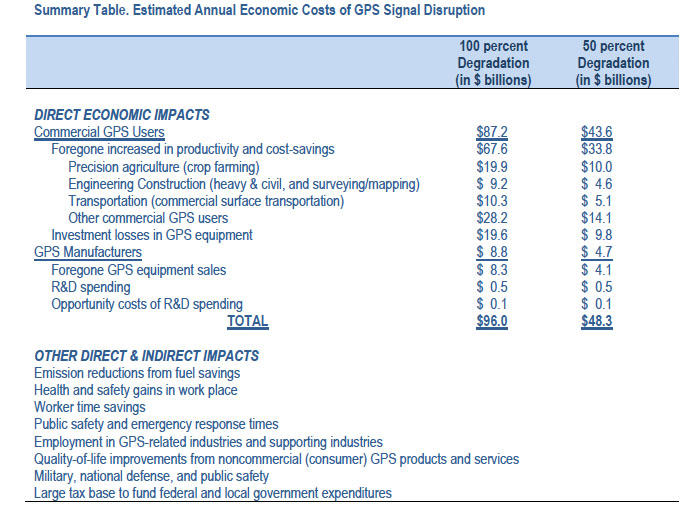
Growing dependence on GNSS for positioning, navigation, and timing (PNT) has raised a parallel concern about the potential risks of signal interference. The popular press has recently highlighted accounts of car thieves using GPS jammers, solar flares pumping out L-band radiation, and faulty television sets causing havoc to GPS receivers across an entire harbor.

Read More >

By Inside GNSS

GNSS Inside Mobile Phones

Figure 1 & Table 1

For the complete story, including figures, graphs, and images, please download the PDF of the article, above.

Recent years have seen GPS receivers built in as a standard feature in many consumer products. A growing number of mobile phones, personal navigation devices, netbooks and tablets are equipped with GPS receiver chips and navigation software that enable consumers to navigate from A to B or find their nearest coffee shop. According to Berg Insight, annual shipments of GPS-equipped mobile phones are estimated to reach 960 million devices in 2014.

Read More >

By Inside GNSS
IGM_e-news_subscribe