
March 23, 2014
Paternity Suit
Don’t be misled by the title. This is not another round of speculation about who should be proclaimed the rightful “Father of GPS.”
By Inside GNSS
Global Navigation Satellite Systems Engineering, Policy, and Design
Don’t be misled by the title. This is not another round of speculation about who should be proclaimed the rightful “Father of GPS.”
By Inside GNSS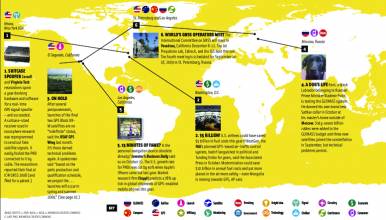
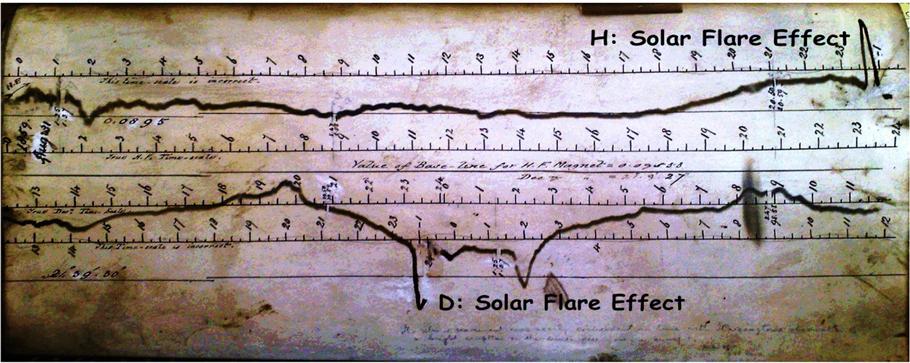 One of 12 magnetograms recorded at Greenwich Observatory during the Great Geomagnetic Storm of 1859
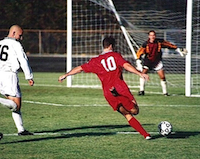 1996 soccer game in the Midwest, (Rick Dikeman image)
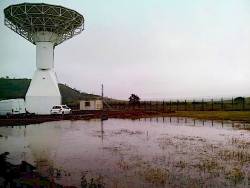 Nouméa ground station after the flood
 A pencil and a coffee cup show the size of NASA’s teeny tiny PhoneSat
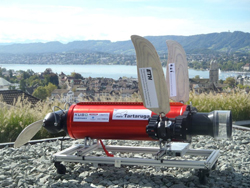 Bonus Hotspot: Naro Tartaruga AUV
 Pacific lamprey spawning (photo by Jeremy Monroe, Fresh Waters Illustrated)
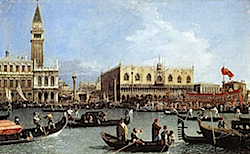 “Return of the Bucentaurn to the Molo on Ascension Day”, by (Giovanni Antonio Canal) Canaletto
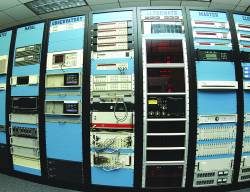 The U.S. Naval Observatory Alternate Master Clock at 2nd Space Operations Squadron, Schriever AFB in Colorado. This photo was taken in January, 2006 during the addition of a leap second. The USNO master clocks control GPS timing. They are accurate to within one second every 20 million years (Satellites are so picky! Humans, on the other hand, just want to know if we’re too late for lunch) USAF photo by A1C Jason Ridder.
 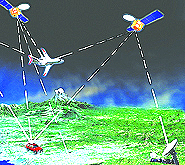 Detail of Compass/ BeiDou2 system diagram
 Hotspot 6: Beluga A300 600ST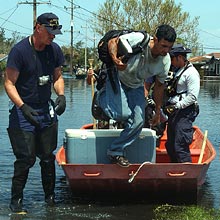
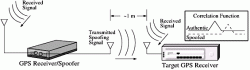
1. WHAT’S LOVE GOT TO DO WITH IT?
Detroit, Michigan USA

With the optimism of college-bound seniors touring the Ivy League, GPS managers have been weighing options to dramatically change the GPS constellation. Now, after studying the costs, considering the benefits, and assessing the funding climate, officials have made the starkly fiscal decision to stick close to home and take a few extra years to finish.
By Dee Ann Divis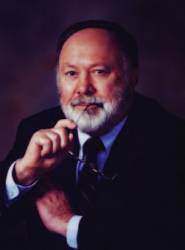
 A. J. Van Dierendonck
The world’s GNSS systems are entering a phase of transformation — modernization of existing systems (the U.S. Global Positioning System and Russia’s GLONASS) and development of new systems (China’s BeiDou and Europe’s Galileo) that benefit from the lessons learned from the original GNSSs.
Notable among the modernization initiatives is an interest in implementing new satellite signal designs. These include the GPS L5, L2C, and L1C signals as well as those signals designed for Galileo and BeiDou. GLONASS designers are also working on modernized signals.
By Inside GNSS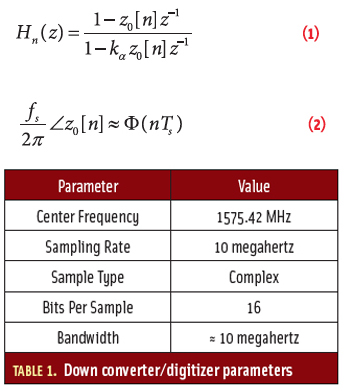 Article Equations
Working Papers explore the technical and scientific themes that underpin GNSS programs and applications. This regular column is coordinated by Prof. Dr.-Ing. Günter Hein, head of Europe’s Galileo Operations and Evolution.
By Inside GNSS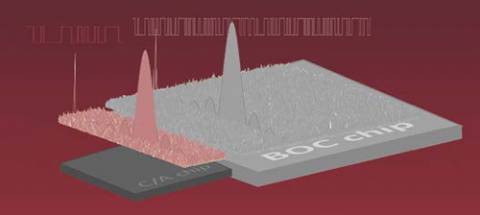
In this article, we will take a look at the various GNSS signals from the perspective of their cost-benefit tradeoffs. First, we’ll look at the evolution of consumer GPS architecture to date — where acquisition speed and sensitivity have been the main drivers of receiver architecture. That architecture has evolved rapidly to take full advantage of the characteristics of the GPS C/A code.
By Inside GNSS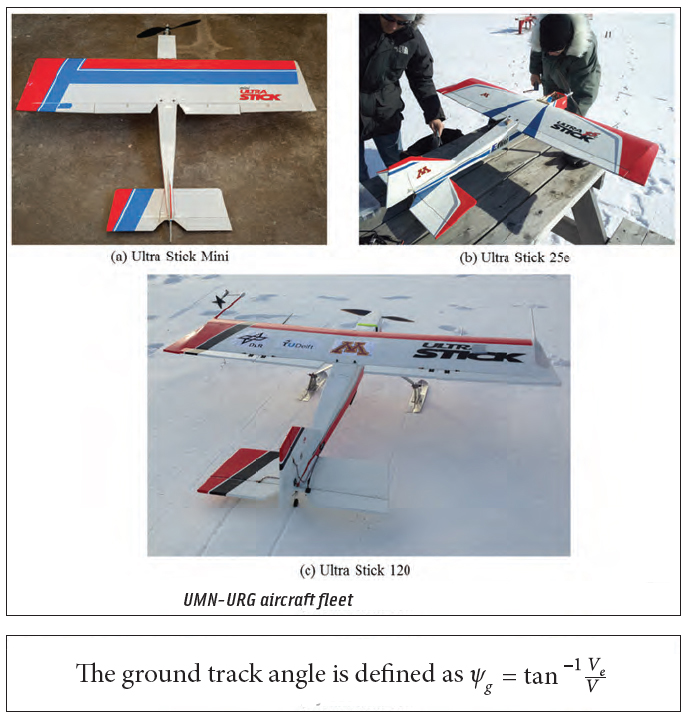
Unmanned aerial vehicles or UAVs comprise a category of aircraft that fly without a human operator onboard. They are more popularly referred to by the misleading moniker “drones,” which masks the wide variety in their design and capability.
By Inside GNSS
A number of user conferences for customers of Hexagon AB’s precise measurement brands and products will be combined in the Swedish corporation’s fourth international conference this summer.
It will take place at MGM Grand Hotel and Casino in Las Vegas, Nevada from June 2 through June 5, 2014.
Registration is now open. Early bird rates end April 25, 2014.
By Inside GNSS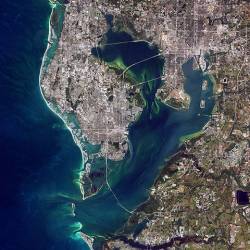 Satellite image of Tampa Bay, Florida, USA.
 The tenth annual GEOINT Symposium and exhibition will take place on April 14-17 2014 at the Tampa Convention Center in Tampa, Florida.
Registration is now open.
The symposium’s theme is “Operationalizing Intelligence for Global Missions.”
By Inside GNSS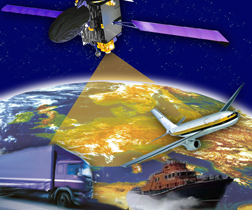

The ENAC (Ecole Nationale de l’Aviation Civile) course "GNSS: Principles, Augmentations and Evolutions of EGNOS" will be held at the ENAC Administrative Head Office in Toulouse, France on May 12 – 23, 2014.
Registration is now open.
By Inside GNSS Vienna, Austria
The Symposium to Strengthen the Partnership with Industry will be held on Monday, February 17, during the second week of the fifty-first session of the Scientific and Technical Subcommittee of the United Nations Committee on the Peaceful Uses of Outer Space, and will happen in parallel to the planning meeting to the Ninth Meeting of ICG and its Providers’ Forum, at the Vienna International Centre in Vienna, Austria.
By Inside GNSS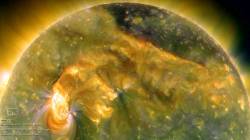
The annual Space Weather Workshop will take place on April 8-11 2014 at Millennium Hotel in Boulder, Colorado.
Registration is now open. Sunday, March 23 is the registration and abstract submission deadline.
This meeting will bring together customers, forecasters, vendors, government agencies and researchers of space weather information.
By Inside GNSS

NavtechGPS Spring GNSS Training 2014 will take place April 1-4, at Loews Annapolis Hotel in Annapolis, Maryland, USA.
Register by February 15 and get a $100 Discount for 4-Day Courses.
By Inside GNSS