Spirent Launches Multi-GNSS Constellation Simulator

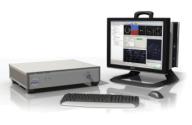
Spirent Communications has launched its GSS6700 Multi-GNSS Constellation Simulator with test test capability GPS, GLONASS, and the planned European Galileo system.
By Inside GNSS
Spirent Communications has launched its GSS6700 Multi-GNSS Constellation Simulator with test test capability GPS, GLONASS, and the planned European Galileo system.
By Inside GNSSComments submitted to the Office of the U.S. Trade Representative (USTR) suggest that the Galileo program is finally nearing a decision on commercial use of specifications for its Open Service (OS), but U.S. officials remain concerned that this nation’s equipment manufacturers not be placed at a competitive disadvantage. Meanwhile, Galileo simulators appear to finally be reaching receiver manufacturers, despite the absence of official approval.
By Inside GNSS
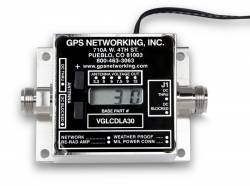
GPS Networking, of Pueblo, Colorado, has launched the VGLCDLA30RPDC, a variable gain GPS in-line amplifier with LCD display and push button control.
Featuring a range of 0–30 dB, the VGLCDLA30RPDC’s push button control can increase or decrease gain in increments of 1 dB, enabling operators to make precise adjustments quickly and view the output power at any given time for more efficient testing.
The unit operates on 110VAC or 220 VAC transformer (wall mount) and 240 VAC (United Kingdom). Connector options include types N, SMA, TNC, and BNC.
By Inside GNSS
The Radio Technical Commission for Maritime Services (RTCM) has completed a revision (Version 2.0) of its standard for Networked Transport of RTCM via Internet Protocol (Ntrip).
Designated as RTCM Standard 10410.1, Among other things, the new standard defined by RTCM’s Special Committee 104 (SC104) provides a protocol for streaming differential correction data or other kinds of Global Navigation Satellite System (GNSS) data to stationary or mobile users over the Internet.
By Inside GNSS
CSR plc and SiRF Technology Holdings Inc., have completed the merger between SiRF and a wholly owned subsidiary of CSR.
By Inside GNSS
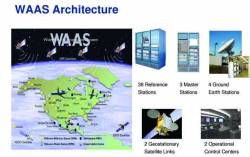
FAA graphicGNSS manufacturer NovAtel Inc., of Calgary, Alberta, Canada, has received a new contract from the Federal Aviation Administration (FAA) to develop the next-generation GPS Wide Area Augmentation System (WAAS) reference receiver (the “GIII” receiver). The three-year contract is worth up to US$9.7million.
By Inside GNSS
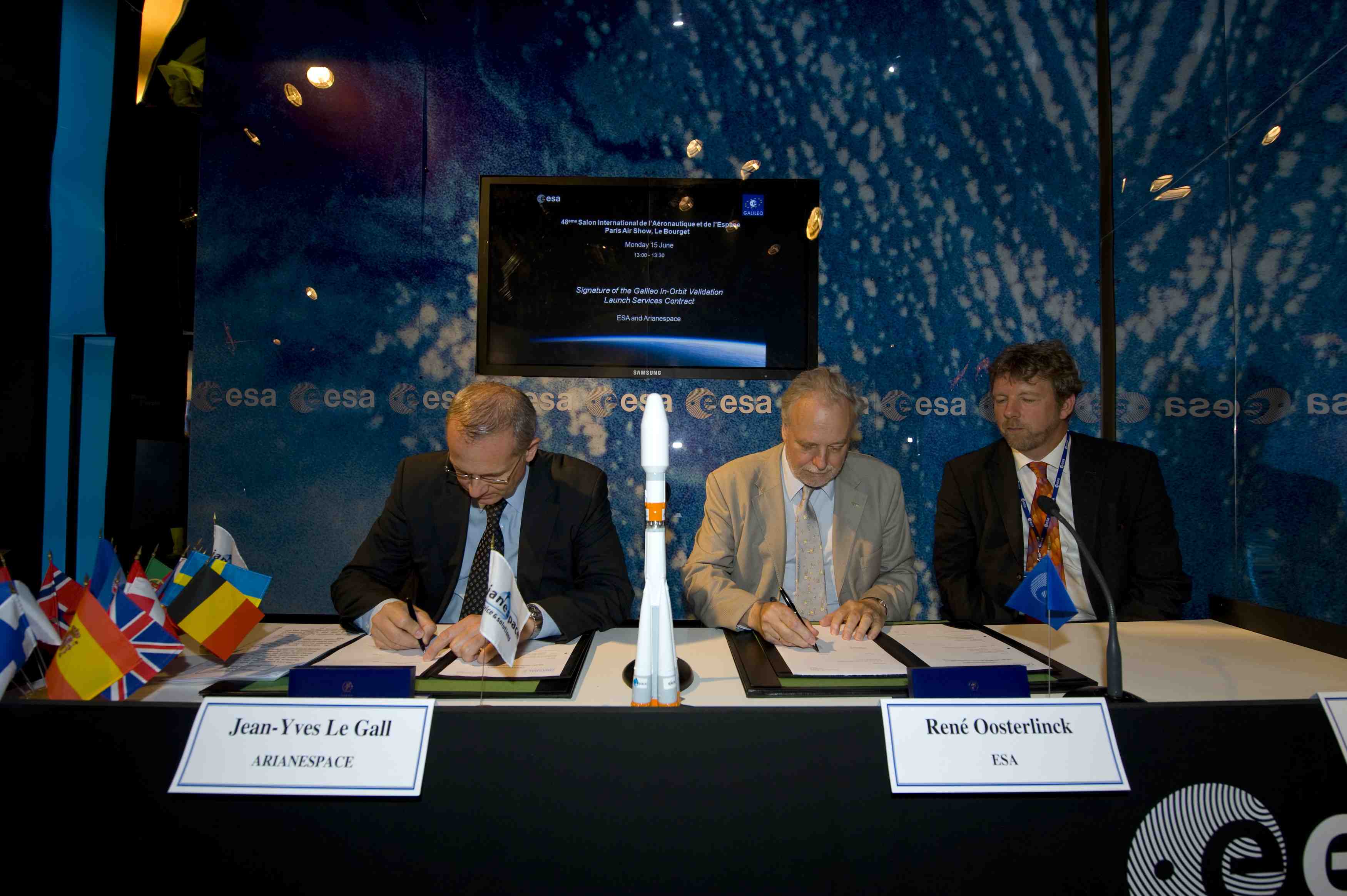
René Oosterlinck, ESA director of the Galileo Program and Navigation-related Activities (center), and Jean-Yves Le Gall, chairman and CEO Arianespace (left), sign the Galileo In-Orbit Validation Launch Services Contract in the ESA Pavilion at the Paris Air Show, Le Bourget. Paul Verhoef, programme manager of EU Satellite Navigation Programs at the European Commission. ESA photo — S. Corvaja, 2009On June 15, the European Space Agency (ESA) signed contracts for launch services on the Galileo in-orbit validation (IOV) satellites as well as two additional contracts for “long lead items” needed to build the full operational capability (FOC) Galileo constellation of satellites.
The first contract, with Arianespace, will provide launch services for the four IOV Galileo satellites that will be placed in orbit by the end of 2010. Two Soyuz rockets, each carrying two Galileo spacecraft, will launch from Europe’s Spaceport in French Guiana.
By Inside GNSS
Galileo Master’s award winners 2008Submit the best idea for a brand new satellite navigation application or device and you just might win the 2009 Galileo Master’s Award – €20,000 in prize money and lots of support to make your idea a reality.
But that’s not your only chance – you can try for one of the eight special topic prizes or one of the 17 different regional prizes, together worth €500,000 in cash and start-up assistance.
The competition began six years ago in Bavaria, Germany, but it has expanded to include many other regions of Europe as well as Australia, Israel, and Taiwan.
By Inside GNSSGalileo Services and OREGIN — the two most active organizations representing companies in the GNSS industry, particularly Europe’s Galileo program — have decided to join forces.
By Inside GNSS
A proposal now before the European Parliament and Council of the European Union would complete the transformation of the European GNSS Supervisory Authority (GSA) from the leading executive agency for the Galileo program into a diminished subsidiary of the European Commission (EC).
By Inside GNSS
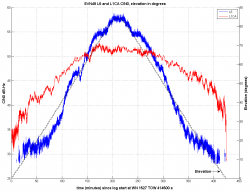
SVN49 L1 C/A (red) and L5 Signals. Septentrio image.Septentrio reports success in tracking five signals being transmitted from the modernized GPS Block IIR satellite with the L5 demonstration payload launched on March 24.
Now designated space vehicle number 49 (SVN49), the satellite began broadcasting in the L1 and L2 band on March 28, shortly after the spacecraft reached its quasi-circular middle earth sorbit.
By Inside GNSS
Prompted by a congressional footnote in the 2009 Omnibus Appropriations Act signed into law last month, the Office of the U.S. Trade Representative (USTR) is soliciting public comment on American industry’s access to the Galileo program and related markets.
By Inside GNSS
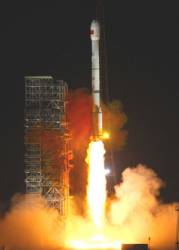
Compass-G2 Launch, April 15, 2009 (Xinhua/Li Gang photo)Launch of a second modernized Compass (Beidou 2) satellite on April 14 — this one a geostationary spacecraft — marks the return of China to its GNSS launch program two years after the initial venture into space.
Designated Compass G2 — reflecting the geostationary nature of its intended orbital position about 22,300 miles above the equator, the satellite lifted off at 16:16 UTC aboard a Long March 3C rocket from the Xichang launch base in southwestern China’s Sichuan province, according to China’s state news agency Xinhua.
By Inside GNSS