Galileo

January 19, 2017

ESA Puts Brave Face on Galileo Clock Failures

Passive hydrogen maser atomic clock of the type flown on Galileo, accurate to one second in three million years. ESA photo

At the traditional January media briefing in Paris yesterday (January 18, 2017), European Space Agency (ESA) General Director Jan Woerner was forthright in laying out the knowns and unknowns about the failed rubidium and hydrogen maser clocks onboard orbiting Galileo satellites, clocks that are absolutely crucial for accurate positioning.

Read More >

By Inside GNSS
January 17, 2017

FCC Seeks Comments on Allowing Galileo Use in U.S.

After a yearslong wait the Federal Communications Commission (FCC) is asking for comments on whether it should allow signals from Europe’s Galileo satellite navigation system to be used for non-federal applications in the United States. The call for public feedback is part of a process to grant a waiver so that Galileo-capable receivers don’t have to be licensed in the United States.

Read More >

By Inside GNSS
January 5, 2017

Vidal Ashkenazi Awarded OBE for GNSS Role in Services to Science

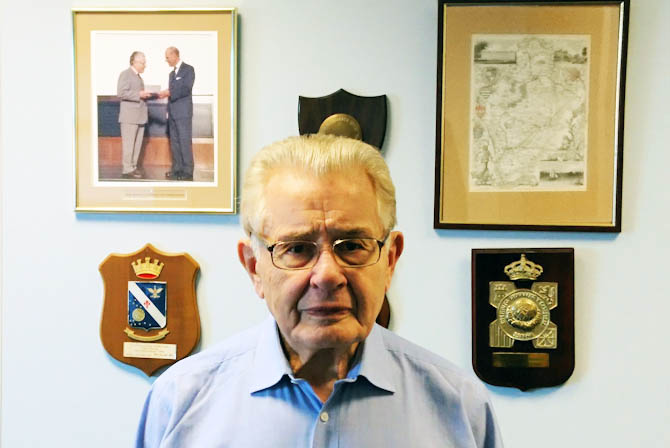
Professor Vidal Ashkenazi OBE

Nottingham Scientific Ltd (NSL) has announced that the company’s founder and CEO, Professor Vidal Ashkenazi, has been named an officer of the Order of the British Empire (OBE ) in the 2017 New Year’s Honors List for “Services to Science.”

The OBE was created by King George V in 1917 and is awarded by the ruling monarch of the United Kingdom, currently Queen Elizabeth II. The honor recognizes distinguished service to the arts and sciences, public services outside the civil service, and work with charitable and welfare organizations.

Read More >

By Inside GNSS
[uam_ad id="183541"]
December 15, 2016

All Good at ESA’s Navitec 2016

This week’s Navitec Conference, entitled “Navigating the Future of Transportation,” delivered good news to an appreciative crowd at the European Space Agency’s European Space Research and Technology Centre (ESA/ESTEC) in Noordwijk, the Netherlands.

Read More >

By Inside GNSS

GSA Signs Galileo Service Operator Contract

Following a complex tendering process that began in January 2015, the European GNSS Agency (GSA) awarded the Galileo Service Operator (GSOp) contract, with a value of up to €1.5 billion (US$1.56 billion), to Spaceopal at a special event in Brussels today (December 15, 2016).

The ceremony was featured in an event organized on the occasion of the European Commission’s declaration of Galileo Initial Services.

Read More >

By Inside GNSS
[uam_ad id="183541"]
December 8, 2016

Two More Galileo Satellites Transmitting Navigation Signals

After months of testing, the European Space Agency (ESA) has announced that Galileo satellites 13 and 14 are transmitting healthy navigation signals and ready to relay distress calls to emergency services.

The satellites, launched from Europe’s Spaceport in French Guiana on May 24, went through lengthy testing that included receiving and uplinking signals through specialized antennas, ESA said. Some of the tests included navigation and search and rescue payloads methodically switched on, the agency said.

Read More >

By Inside GNSS
November 30, 2016

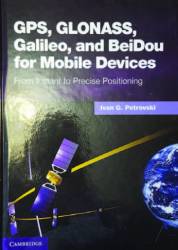
GPS, GLONASS, Galileo, and BeiDou for Mobile Devices

The navigation sensors for location-based services (LBS) are complex technical systems. Modern technical science can answer most questions about the optimality of particular position determination methods, signal processing algorithms, electronic circuits or similar well-defined problems, but the rigorous answer to the questions concerning the optimal LBS positioning sensor are still a big problem.

Read More >

By Inside GNSS

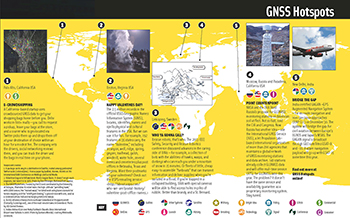
GNSS Hotspots | November 2016

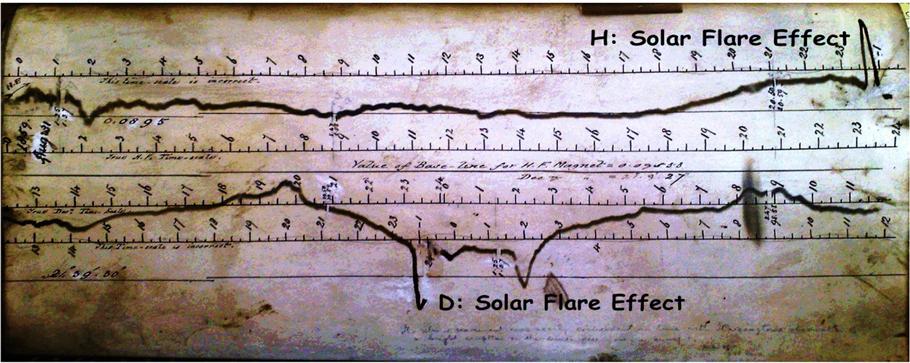
One of 12 magnetograms recorded at Greenwich Observatory during the Great Geomagnetic Storm of 1859
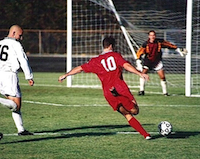
1996 soccer game in the Midwest, (Rick Dikeman image)
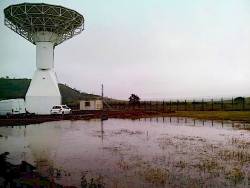
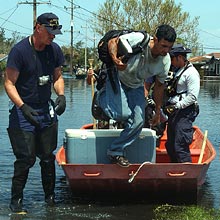
Nouméa ground station after the flood
A pencil and a coffee cup show the size of NASA’s teeny tiny PhoneSat
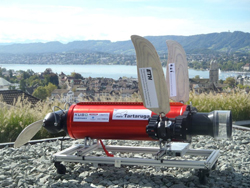
Bonus Hotspot: Naro Tartaruga AUV
Pacific lamprey spawning (photo by Jeremy Monroe, Fresh Waters Illustrated)
“Return of the Bucentaurn to the Molo on Ascension Day”, by (Giovanni Antonio Canal) Canaletto
The U.S. Naval Observatory Alternate Master Clock at 2nd Space Operations Squadron, Schriever AFB in Colorado. This photo was taken in January, 2006 during the addition of a leap second. The USNO master clocks control GPS timing. They are accurate to within one second every 20 million years (Satellites are so picky! Humans, on the other hand, just want to know if we’re too late for lunch) USAF photo by A1C Jason Ridder.
Detail of Compass/ BeiDou2 system diagram
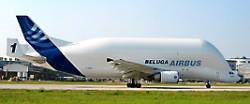
Hotspot 6: Beluga A300 600ST

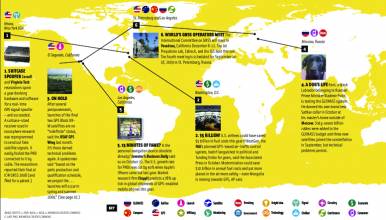
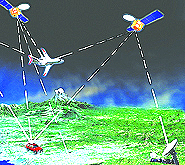
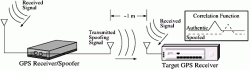
Highest altitude fix for a GPS signal, GNSS timing signals and hacking the Grid, Eagles act as drone countermeasures and rumors of a GNSS-nano-chip contributes to cash crisis in India

Read More >

By Inside GNSS
November 17, 2016

Europe Launches Galileo Navigation Satellite Quadruplets

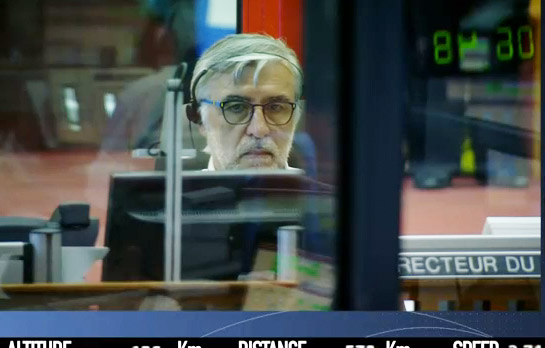
Didier Faivre, director of the Guiana Space Center, overseeing launch of four Galileo satellites. Screen capture of launch video by European Space Agency/ArianeSpace.

A modified Ariane 5 rocket lifted four Galileo satellites into orbit today (November 17, 2016) following an 8:06 a.m. (EST) launch from the European Space Center in Kourou, French Guiana.

The Galileo satellites reached their target altitude, after a "flawless release" from the new dispenser designed to handle four satellites, according to the European Space Agency (ESA). The dispenser released the first pair three hours and 25 minutes after liftoff, while the second separated 20 minutes later.

Read More >

By Inside GNSS
1 32 33 34 35 36 82
IGM_e-news_subscribe