New Builds

NovAtel Rolls Out Marine GNSS Antennas
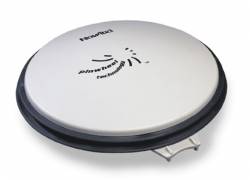
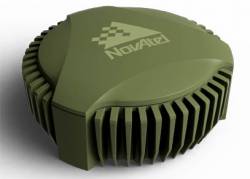
NovAtel has released its GPS-173-GGG-N and GPS-713-GGGL-N explosive atmosphere- (ATEX)–qualified GNSS marine antennas with Inmarsat rejection filters.
 
The triple-frequency antennas are based on the company’s Pinwheel technology. Both antennas receive GPS L1, L2, and L5; GLONASS L1, L2, and L3 ; BeiDou B1 and B2; and Galileo E1 and E5a/b frequencies. The antennas can also receive satellite-based augmentation system (SBAS) signals and those from Quasi-Zenith Satellite System (QZSS) satellites.
             

Read More >

By Inside GNSS
August 6, 2016

Rockwell Collins NavFire GPS Technology Used in Weapon Systems

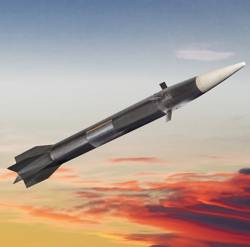
Vulcano 127-millimeter artillery shell

Rockwell Collins is integrating its NavFire Precision Positioning Service (PPS) GPS into Leonardo-Finmeccanica’s VULCANO naval and artillery weapons systems.  Rockwell says it customized the NavFire receivers for the customer’s ammunition and provided support during testing.
 
Vulcano is a family of unguided (BER) and guided (GLR) ammunition for the 76- and 127-millimeter naval guns and 155-millimeter land artillery systems built by Leonardo, an Italian company known as Finmeccanica until its renaming earlier this year.
 

Read More >

By Inside GNSS
[uam_ad id="183541"]

Clarion to Use Furuno’s DR/GNSS Module in Navigation System

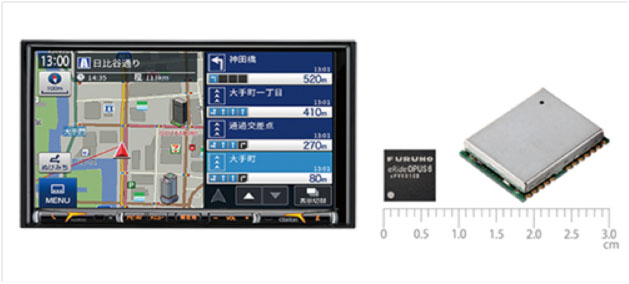
Clarion NXR16 with Furuno GV-86 GPS/dead reckoning-module

Furuno’s GV-86 GPS receiver chip with its dead-reckoning DR/GNSS module will be integrated into Clarion’s NXR16 car navigation systems for the auto-leasing and car rental industries.

The GV-86 features a dead-reckoning-enabled GNSS receiver that receives concurrent GPS, satellite-based augmentation system, and Quasi-Zenith Satellite System signals. The dead-reckoning capability allows the unit to provide positioning while in such harsh environments as tunnels, urban canyons, and underground parking garages where GNSS signals may be blocked, the company said.

Read More >

By Inside GNSS
July 27, 2016

Jackson Labs Launches Galileo-Enabled Multi-GNSS Disciplined Oscillators

A First-to-Market Galileo Update for Numerous JLT Products Allows Concurrent Operation of GPS/Glonass/BeiDou With the New Galileo Satellite Navigation System — Improving Performance and Reliability

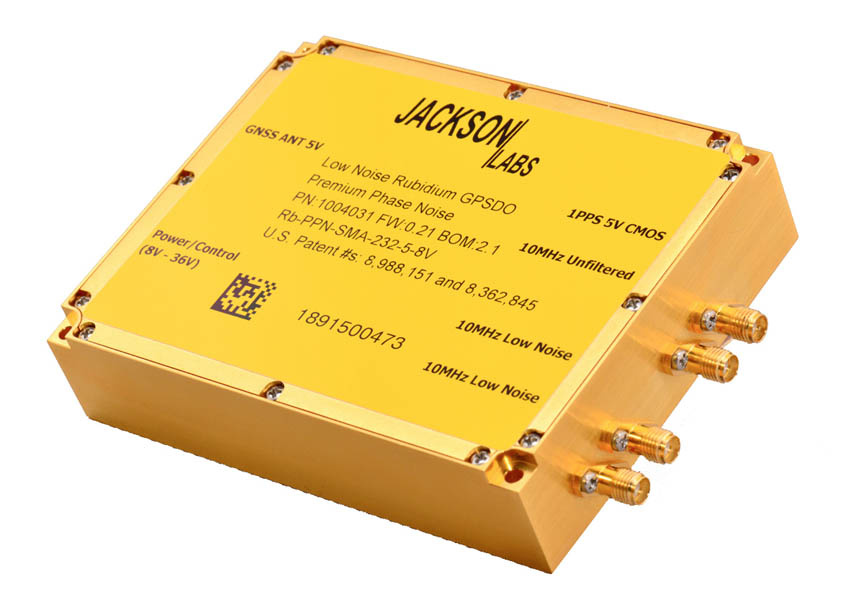
Jackson Labs Technologies, Inc. (JLT), a designer and manufacturer GNSS, timing and frequency equipment, has announced several new products with full support for Europe’s Galileo system, including a Galileo-Enabled Multi-GNSS Disciplined Oscillator (GNSDO) and a free software retrofit that adds Galileo functionality to existing products.

Read More >

By Inside GNSS
July 6, 2016

Spirent Announces New GNSS Simulator

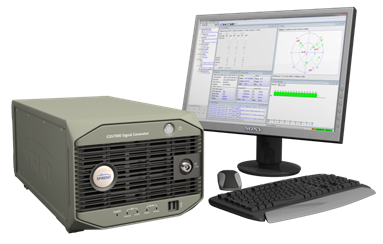
GSS7000

Spirent Communications has launched the GSS7000 series of multi-frequency, multi-GNSS RF constellation simulators.

The GSS7000 series emulates all civil GNSS systems and regional augmentation systems, and allows devices to be tested under a multitude of operating environments and error conditions. According to Spirent, the GSS7000 has the flexibility to reconfigure satellite constellations, channels and frequencies between test runs or test cases. Four software control variants are offered: SimTEST, SimREPLAY, SimREPLAYplus, and SimGEN.

Read More >

By Inside GNSS
[uam_ad id="183541"]
May 5, 2016

Trimble Introduces Multi-GNSS Module for System Integrators

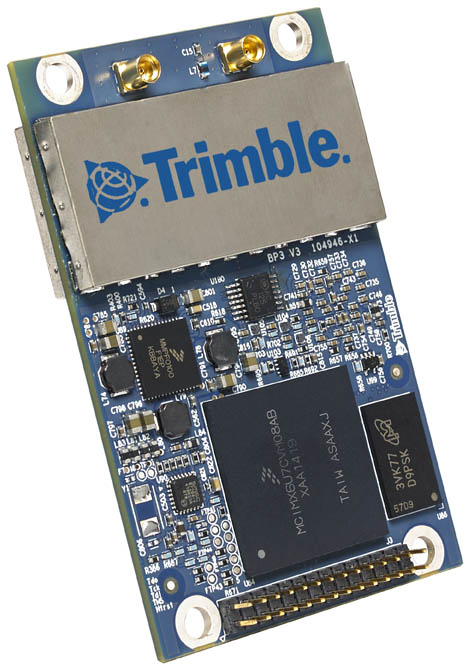
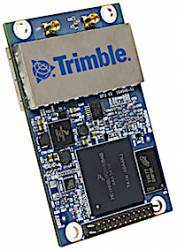
Trimble MB-Two module

Trimble has introduced its dual-antenna MB-Two GNSS module, which delivers GNSS-based heading plus pitch or roll in an industry-standard form factor for system integrators.

According to Trimble, the module’s embedded Z-Blade GNSS technology uses all available dual-frequency GNSS signals equally, without any constellation preference, to deliver fast and stable centimeter-accurate position and heading information. The MB-Two is designed as a solution for a variety of applications such as unmanned, agriculture, automotive, marine, and military systems.

Read More >

By Inside GNSS

Swiss Firm Launches u-blox 8 Module

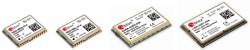
u-blox has released its 8 module series that addresses user needs for power-sensitive operation. A derivative of the u-blox 8 GPS/GLONASS receiver platform launched in January, the module is related to the u-blox M8 platform that targets applications where navigation performance and high accuracy are paramount.

Read More >

By Inside GNSS
April 28, 2016

KVH Reveals Plans to Build FOG Sensor for Self-Driving Cars

In this photo, the red illumination represents light moving through the FOG’s optical circuit of coiled fiber; this circuit is the FOG’s sensing unit and can be mounted with power and processing electronics within a driverless car to provide precise data for the car’s navigation systems. KVH photo

KVH Industries, Inc., says that it is developing a fiber optic gyro (FOG)–based, low-cost inertial sensor for self-driving cars, based on its successes in autonomous vehicle prototype programs and a wide range of unmanned applications.

The Middletown, Rhode Island–based company also announced that it has introduced a developer’s kit to support integration and testing of FOG-based inertial measurement units (IMUs) for driverless cars.

Read More >

By Inside GNSS
April 27, 2016

NovAtel Launches TerraStar-L Correction Service

NovAtel Inc. has announced the launch of its TerraStar-L, a new 40 centimeter precise point positioning (PPP) correction service. TerraStar-L is a subscription based correction service that delivers GNSS correction data via satellite to users of precision navigation systems.
 
The company says that position accuracy of 40 centimeters makes TerraStar-L ideal for broad accuracy applications such as agriculture, GIS or unmanned vehicle navigation, particularly where tree lines, buildings and other obstructions can be an impediment to continuous positioning.
 

Read More >

By Inside GNSS
April 26, 2016

Harxon Introduces Datalink Radio for GNSS Positioning

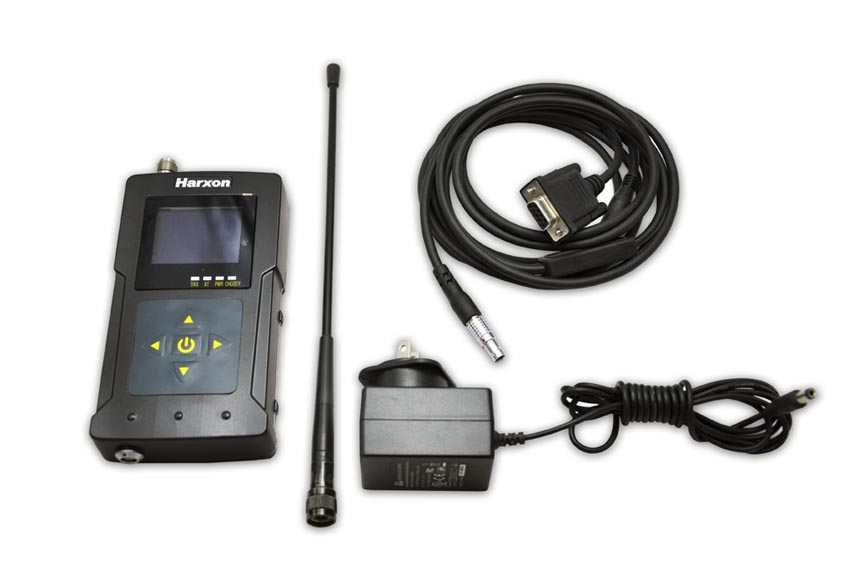
HX-DU1603D datalink radio

Harxon Corporation has launched the HX-DU1603D, a high-speed, Bluetooth-enabled, wireless data link designed for GNSS/RTK surveying and precise positioning.
 
The HX-DU1603D is a lightweight, ruggedized UHF receiver designed for digital radio communications between 410 and 470 MHz in the radio frequency spectrum using either 12.5- or 25-kilohertz channels.
 

Read More >

By Inside GNSS
1 45 46 47 48 49 62
IGM_e-news_subscribe