timing

July 11, 2024

Ariane 6 Launches: Impacts for Galileo G2

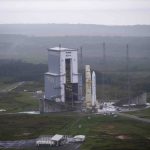
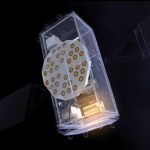
Ariane 6’s inaugural rocket launch took place from Europe’s Spaceport in French Guiana at 16:00 local time on 9 July. It has taken over from Ariane 5, featuring a modular design that can launch missions from low-Earth orbit and into deep space. Galileo Second Generation (G2) satellites are projected to join the constellation in 2026 with the Ariane 6 launcher. G2 satellites will use electric propulsion and host a more powerful navigation antenna, better atomic clocks and fully digital payloads.

Read More >

By Inside GNSS
June 20, 2024

Iridium Expands Satellite Time and Location Service to Europe and Asia Pacific

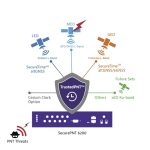
Iridium Communications Inc. has announced the expanded commercial availability of its Satellite Time and Location (STL) service to parts of Europe and the Asia Pacific region. This expansion is driven by increasing demand and aims to provide an alternative positioning, navigation, and timing (PNT) solution to protect critical infrastructure against GPS and Galileo spoofing and jamming.

Read More >

By Inside GNSS
[uam_ad id="183541"]
[uam_ad id="183541"]
March 18, 2024

Netnod and Adtran Fortify Sweden’s National Timing Infrastructure with Optical Cesium Clocks

In a move to fortify Sweden’s national infrastructure against emerging digital threats, Netnod is implementing Adtran’s coreSync OSA 3300-HP, an optical pumping cesium atomic clock technology. This strategic upgrade aims to enhance the precision and reliability of timing services vital to the nation’s economy, spanning sectors from finance to next-generation telecommunications like 5G.

Read More >

By Inside GNSS
March 14, 2024

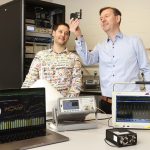
NPL Initiates Innovation Nodes to Propel UK’s Technological Advancement in Timing

The National Physical Laboratory (NPL) has taken a significant leap forward in enhancing the United Kingdom’s capabilities in the development of time-critical technologies. Marking the inauguration of the first of three innovation nodes, this initiative is aimed at sectors such as transport, telecommunications, fintech, and quantum with the application of accurate and precise timing.

Read More >

By Inside GNSS
February 10, 2024

Weekend Read: The Tale of Two Clocks

JILA, established by NIST and the University of Colorado Boulder, has played a pivotal role in advancing precision timekeeping through optical atomic clocks. These devices achieve extraordinary time measurement accuracy by utilizing the fundamental properties of atoms. Despite their advancements, the precision of these clocks is limited by quantum projection noise (QPN), arising from the quantum nature of the atoms.

Read More >

By Inside GNSS
December 23, 2021

Alternative PNT Companies Partner

Locata Corporation and Ursa Navigation Solutions, Inc. (UrsaNav) announced a technology partnership aimed at providing resilient PNT solutions to national governmental and commercial interests globally. Combining Locata’s high-accuracy local-area and UrsaNav’s very wide-area PNT produces a solution which lessens dependency on easily disrupted and increasingly vulnerable space-based signals, according to the two. 

Read More >

By Inside GNSS
IGM_e-news_subscribe