
Poland in “POSITION” for a Big Role in GNSS
Thanks to the POSITION project funded by the European GNSS Agency (GSA), Poland is primed to become a bigger player in the GNSS landscape in Europe.
By Inside GNSSThanks to the POSITION project funded by the European GNSS Agency (GSA), Poland is primed to become a bigger player in the GNSS landscape in Europe.
By Inside GNSS
GOES-R primary capabilities. NOAA imageA United Launch Alliance (ULA) Atlas V rocket carrying the Geostationary Operational Environmental Satellite R-series (GOES-R) for National Aeronautics and Space Administration (NASA) and National Oceanic Atmospheric Administration (NOAA) lifted off from Cape Canaveral Air Force Station, Florida, yesterday (November 19, 2016) headed for geosynchronous orbit.
By Inside GNSS
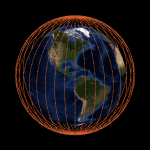
Figures 1 & 2Spacecraft in low Earth orbit (LEO), at altitudes below 3,000 kilometers, remain within the main Global Positioning System (GPS) signals’ Earth coverage. Spacecraft employing GPS at these altitudes enjoy signal availability and navigation and timing performance emulating that of terrestrial users.
By Inside GNSS
After extensive testing, u-blox has released new positioning and cellular wireless modules for navigation systems, telematics, road tolling, and advanced driver assistance systems (ADAS) applications.
The legal and regulatory framework of the Russian Federation covers not only the GLONASS system, but the country’s overall positioning, navigation and timing (PNT) system as well.
The term PNT is a synonym for navigation activities as defined in the Federal Law on Navigation Activities. The PNT system in the Russian Federation is defined as the combination of administrative and technical means that provide spatial and time data to all user groups, with GLONASS as a key element.
By Ingo Baumann
Javier Ventura-Traveset introduces Navipedia at the Munich Satellite Navigation Summit on March 14, 2012. He is responsible for managing Navipedia’s development as well as GNSS education activities for ESA.Working Papers explore the technical and scientific themes that underpin GNSS programs and applications. This regular column is coordinated by Prof. Dr.-Ing. Günter Hein, head of Europe’s Galileo Operations and Evolution.
In the last 30 years, satellite navigation applications have grown in number and kind, entire new systems have emerged, and existing systems have modernized.
By Inside GNSS