
Global Navigation Satellite Systems Engineering, Policy, and Design
Global Navigation Satellite Systems Engineering, Policy, and Design

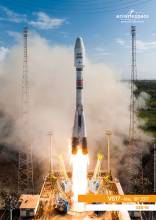
With designs on providing a boost to navigation safety and efficiency for commercial and general aviation, Raytheon Company on May 18 launched its GEO 6 satellite payload into orbit for its 12-year mission. It is the latest payload to support the Federal Aviation Administration’s Wide Area Augmentation System (WAAS) which enhances the reliability and accuracy of GPS signals for directing air travel.
By Inside GNSS Ellipse-D inertial navigation system. Photo source: SBG Systems.
VIAMETRIS has chosen the Ellipse-D inertial navigation system from SBG Systems to equip their new SLAM-based mobile mapping system: the vMS3D. The vMS3D is a complete mobile mapping solution which combines inertial, GNSS, and SLAM technologies designed to offer an economical option with optimal performance.
By Inside GNSS
In an opinion released earlier this spring, the Florida Fourth District Court of Appeal ruled against law enforcement use of data (including GPS-based data) from a car’s "event recorder" or "black box" without a warrant. The decision was just one of many in recent months that deals with the subject, as technology advances and privacy issues are clashing on a regular basis.
By Inside GNSS
Swift Navigation and Carnegie Robotics (CRL) rolled out their first joint product, a real-time kinematic (RTK) GNSS receiver called Duro, at the AUVSI XPONENTIAL trade show in Dallas, Texas, May 8-11.
The companies say Duro is targeted to robotics, precision agriculture, mapping, military, outdoor industrial and maritime markets.
By Inside GNSS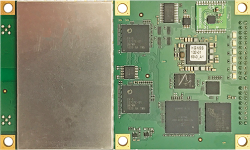 Vector Eclipse H328. Photo source: Hemisphere GNSS.
Hemisphere GNSS announces the Vector Eclipse H328, the next offering in a line of new and refreshed, low-power, high-precision, positioning and heading OEM (original equipment manufacturer) boards. The multi-frequency, multi-GNSS H328 is an all signals receiver board that includes Hemisphere’s new hardware platform and integrates Atlas GNSS Global Correction Service.
By Inside GNSS
When Inside GNSS first reported on the formal announcement to the start of Galileo Initial Services last December, there was plenty of excitement about the program’s potential, and with good reason.
By Inside GNSS
AGCO Corporation, a manufacturer and distributor of agricultural equipment solutions, is expanding its automatic guidance product offering. AGCO Auto-Guide™ and VarioGuide customers using the NovAtel SMART6-L receivers, can now acquire TerraStar satellite correction signals to enhance positioning performance.
By Inside GNSS
The new GPS ground system has passed its most recent in-depth review and completed a schedule and budget re-baselining though a new government watchdog report says the program remains at "high risk of cost overruns, schedule delays and performance shortfalls."
By Inside GNSS
After a couple of changes in direction and spending some $18 million to verify the technical chops of their most likely suppliers, defense officials appear ready to buy up to 22 new GPS III spacecraft. Although three firms are now well positioned to bid on the potentially lucrative contract, the Defense Department continues to leave the contracting door ajar for newcomers, just in case.
By Inside GNSS
 The Basilica of Saint-Sernin is a church in Toulouse, France, the former abbey church of the Abbey of Saint-Sernin or St Saturnin. Wikimedia Commons photo by Guimsou.
The International Technical Symposium on Navigation and Timing is an annual event for professionals and researchers working with or interested in navigation and timing technologies and their use. This event focuses on tackling technical hot topics by inviting internationally recognized speakers from all around the world to share their expertise and views. The audience can easily engage in discussion with these experts during the question sessions and roundtables, and the symposium also provides a great environment for networking and visiting exhibition stands.
By Inside GNSS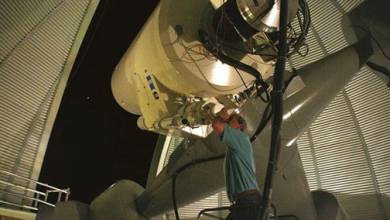
Space debris is becoming a bigger problem for space agencies and private companies, and NASA and the Department of Defense (DoD) are just two of many organizations around the globe that are concerned. Earlier this month experts gathered in Germany to discuss the problem and to review possible solutions.
By Inside GNSS