
GPS

September 17, 2014

Alison Brown: Tally Ho! The Hunt for GNSS Innovations

In 2005, Alison Brown was the first Sidney Sussex College woman alumna to be named as an honorary Fellow in recognition of her distinguished technical contributions. Pictured here with Keith Glover, now head of engineering at Cambridge University, who taught Brown control systems engineering, and Donald Green, her director of studies while she was an undergraduate.

SIDEBAR: Alison Brown’s Compass Points

On display in the Smithsonian’s “Time and Navigation” exhibit in Washington D.C. is the world’s first GPS-enabled cell phone. It was developed in 1995 by NAVSYS Corporation, a Colorado GNSS and inertial R& D company, as part of the push to build a national emergency notification system for mobile users, E911.

Read More >

By Inside GNSS
SAGAIE

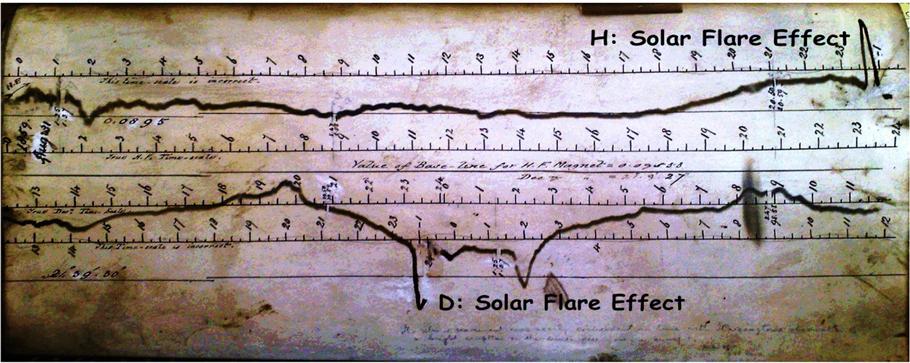
Scintillation — rapid RF signal frequency and amplitude changes due to signal propagation path changes and phase shifting caused by solar turbulence in the ionosphere — is well known in the GNSS community. However, conclusive scientific studies that cover the whole extent of the question are hard to find. Galileo In-Orbit Validation Experiment (GIOVE) data processing confirmed the effects of scintillation on GNSS receivers, as described in the paper by J. Giraud listed in the Additional Resources section near the end of this article.

Read More >

By Inside GNSS
[uam_ad id="183541"]
September 16, 2014

Harold Martin Returns to PNT NCO as Director

Harold “Stormy” Martin

Harold W. "Stormy" Martin III will be the new director of the National Coordination Office (NCO) for Space-Based Positioning, Navigation, and Timing (PNT), the focal point for federal agencies working out GPS policy issues.

Martin was the deputy director of the NCO and an Air Force colonel until this summer when he retired from the military. He will succeed Jan Brecht-Clark, who retired at the end of 2013. His start date as director has not been set.

Read More >

By Inside GNSS

[uam_ad id="183541"]
September 6, 2014

Munich Satellite Navigation Summit 2015

The Antiquarium in the Residenz München

The Munich Satellite Navigation Summit will take place at the Residenz Muenchen in Munich, Germany on March 24 – 26, 2015.

Register here

The theme for this year’s summit is “Future of PNT – A Glance into the Crystal Ball”.

The technical program includes plenary discussions and updates on the main activities in worldwide satellite navigation systems, including:

Read More >

By Inside GNSS

International Technical Symposium on Navigation and Timing

The Capitole of Toulouse
Toulouse, France

The 2014 International Technical Symposium on Navigation and Timing will be held at the ENAC premises (Bellonte Amphitheater) in Toulouse, France on November 17 – 18, 2014. The objective of the symposium is to gather experts and innovators that will present their views/work on specific navigation- and/or timing-related topics, with an emphasis on technical aspects.

Online registration is open.

Read More >

By Inside GNSS
September 4, 2014

GPS Networking Offers EMI Shielding for GPS/GNSS Splitters

GPS Networking, headquartered in Pueblo West, Colorado, has announced that it now offers electro-magnetic interference (EMI) shielding on its GPS/GNSS Splitters.

Interference between electronic components is an increasing issue as more wireless components are used to complete broadband systems. Reducing disturbance among separate frequencies through EMI shielding is a critical deliverable for project managers, says Eileen O’Halloran, general manager at GPS Networking

Read More >

By Inside GNSS
August 29, 2014

Air Force Weighs Switching to Multiyear GPS Procurements

The Air Force says it might ask Congress for permission to implement bigger buys of GPS satellites beginning in fiscal year 2016 (FY16) once it sorts out whether to drop Lockheed Martin as the GPS III prime contractor and switch to a different manufacturer for the navigation payload.

The department told Congress in a recent report on multiyear procurement (MYP) that while its current approach “allows the government the flexibility to adapt to a changing budget profile and constellation needs, it prevents the program from realizing savings that MYP could provide.”

Read More >

By Inside GNSS
1 93 94 95 96 97 163
IGM_e-news_subscribe