Javad Ashjaee, 1949-2020
A great man has left us, left the international GNSS community. Dr. Javad Ashjaee passed away in Moscow on May 30 from the corona virus illness, a family member reported on social media.
By Alan CameronA great man has left us, left the international GNSS community. Dr. Javad Ashjaee passed away in Moscow on May 30 from the corona virus illness, a family member reported on social media.
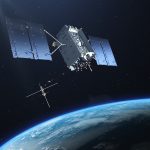
By Alan CameronGPS satellites usually transmit their signals with constant power. However, a so-called “Flex Power” is foreseen to increase the strength of individual signals to better fulfill operational constraints. Flex power operations can be detected in carrier-to-noise density ratio (C/N0) observations provided by GNSS receivers of the global tracking network of the International GNSS Service (IGS).
By Peter Steigenberger, et al.The Federal Communications Commission ignored a technical standard defining radio-frequency interference. The five commissioners licensed powerful terrestrial broadcast next to the satellite band, exposing national defense and critical infrastructure to harm.
The Federal Communications Commission should really consider updating its motto. “Firm, fast, flexible, and fair” has a bit of an old-fashioned ring. As mottos go, it fails to keep up with the times.
By Alan CameronThe European Space Agency (ESA) awarded two contracts to Thales Alenia Space concerning system evolution of the European Geostationary Navigation Overlay Service (EGNOS).
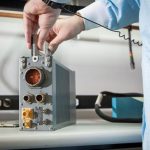
By Inside GNSSOrder-of-magnitude advances in inertial technology seem to take place roughly every 20 years, and the industry is poised at such a point now. New developments in photonic technology make high-performance inertial measurement accessible at lower size, weight and power. Many applications from driverless cars to UAVs can now take advantage of positioning that can independently bridge GPS outages from 2 minutes up to 10 minutes.
By Inside GNSSA connected ambulance demonstrator develops a multitude of communications options on board, in preparation for a full healthcare connectivity development and test center in the UK.
By Inside GNSSJust like the kids valiantly doing their homework during this strange, removed time, PNT enthusiasts young and old around the world can put their isolation to good use by honing skills at home. “GPS: An Introduction to Satellite Navigation,” the massive online open course created by Frank van Diggelen and the late Per Enge, is available on YouTube.
By Inside GNSSA new GNSS/INS receiver, the AsteRx-i D UAS from Septentrio, specifically targets integration into unmanned aerial systems (UAS). It provides centimeter-level RTK positioning and 3D attitude. It features a 44 pin connector compatible with 3rd-party integrations, as well as event marker inputs to accurately time-stamp camera shutter events.
By Inside GNSSA new marine-certified quad-band GNSS receiver, the LD900 from VERIPOS, delivers accurate and reliable positioning in demanding offshore environments. The LD900 can track four GNSS frequencies simultaneously to ensure a precise position is always available at sea.
By Inside GNSSQinertia, a PPK software from SBG Systems, now supports third-party Inertial Measurement Units (IMUs) and offers a GNSS post-processing license that covers all major GNSS receivers.
By Inside GNSSIn its order allowing Ligado Networks to use satellite frequencies for on-the-ground wireless, the Federal Communications Commission set conditions on the firm’s operations, but only at the very tail end. Those conditions are there to help protect GPS receivers from interference — interference the FCC acknowledges as being quite possible.
By Dee Ann DivisThough the FCC approved Ligado Networks’ request to use satellite frequencies to support terrestrial 5G, opposition to the move remains firm as everyone waits to see what kind of measures are included in the final decision to protect GPS from interference.
By Dee Ann Divis