
GPS

April 25, 2013

North Korea’s GPS Jamming Prompts South Korea to Endorse Nationwide eLoran System

Projected accuracy and coverage of Korea’s eLoran network. Ministry of Oceans and Fisheries of Korea

GPS jamming attacks from North Korea that have increased in frequency and duration since they began August 2010 have prompted the South Korean government to implement an enhanced Loran (eLoran) systems that will cover the entire country by 2016.

The South Korean government completed design, development, and construction documents for the eLoran system in February and will procure the system infrastructure through international competitive bidding.

Read More >

By Inside GNSS
[uam_ad id="183541"]

Locata Installation Supports U.S. Vehicle Crash Avoidance Research

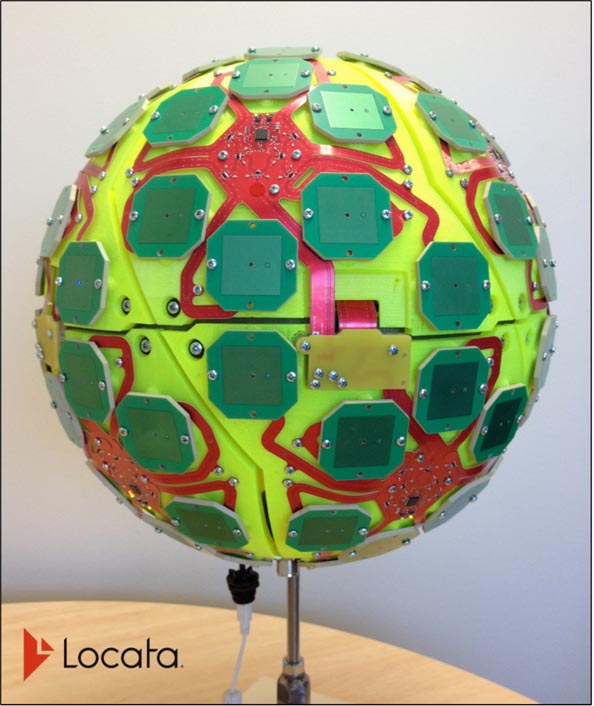
The U.S. Insurance Institute for Highway Safety will use Locata positioning to control automated testing of frontal collision avoidance and other safety systems. IIHS image

In announcing the selection of its terrestrial positioning system as the core PNT technology for the U.S. Insurance Institute for Highway Safety (IIHS) Vehicle Research Center (VRC), Locata Corporation has opened up a new front in its campaign to augment or replace GNSS in application environments where the latter technology is unreliable or unavailable.

Read More >

By Inside GNSS

[uam_ad id="183541"]

IGS Launches Real-Time Service for High-Precision GNSS

The International GNSS Service (IGS), a worldwide federation of agencies involved in high-precision GNSS) applications, has announced the launch of its Real-Time Service (RTS).

The RTS is a global scale GNSS orbit and clock correction service that enables real-time precise point positioning (PPP) and related applications requiring access to IGS low latency products. The RTS is offered in beta as a GPS-only service for the development and testing of applications.

Read More >

By Inside GNSS

April 1, 2013

AUVSI Unmanned Systems 2013

The 2013 Unmanned Systems North America industry exhibition and symposium sponsored by AUVSI will be held from August 12 -15 at Walter E. Washington convention Center in Washington D.C. The Renaissance Washington is the conference headquarters hotel.

It features technical panels and presentations, workshops and poster sessions on the state of the unmanned systems and robotics markets. The event covers military, civil and commercial applications for air, ground and maritime vehicles.

Read More >

By Inside GNSS

March 29, 2013

Furuno to Launch New Multi-GNSS Receiver Chips, Modules This Summer

Furuno Electric Company has announced that new multi-GNSS receiver chips eRideOPUS 6 and eRideOPUS 7 — with active anti-jamming, multipath mitigation, and dead reckoning interfaces — will be available to the market beginning August 2013.

The eRideOPUS 7 receiver chip can process GPS and GLONASS signals (with a combined antenna), satellite-based augmentation system (SBAS) transmissions, Japan’s Quasi-Zenith Satellite System (QZSS), and — with a software update —Galileo signals. The eRideOPUS 6 is not GLONASS-capable.

Read More >

By Inside GNSS

Move to Set Privacy Rules for Operating Unmanned Systems Gathers Steam

The prospects for the rapid integration of unmanned aerial systems (UAS) into the day-to-day work of farmers, pipeline operators and firemen seem to be dimming amidst a hail of privacy legislation.

Virginia is poised to enact a two-year moratorium on the use of UASs, roughly 30 other states are weighing legislation and nearly half a dozen federal bills limiting the use of UASs have already been introduced in Congress just two months into the new session.

Read More >

By Inside GNSS

March 25, 2013

Letters: Get a Start on GNSS Interoperability Now

“The GNSS Quartet” (January-February 2013, Inside GNSS, aptly named and coauthored by Glen Gibbons, Dee Ann Divis, and Peter Gutierrez) is reminiscent of Dr. Brad Parkinson’s observation about “interchangeability” at his ION GNSS 2011 plenary session. With interoperability taken to its logical level of completion, a position solution should be readily obtainable from four satellites, each belonging to a different constellation.

Read More >

By Inside GNSS

IGM_e-news_subscribe