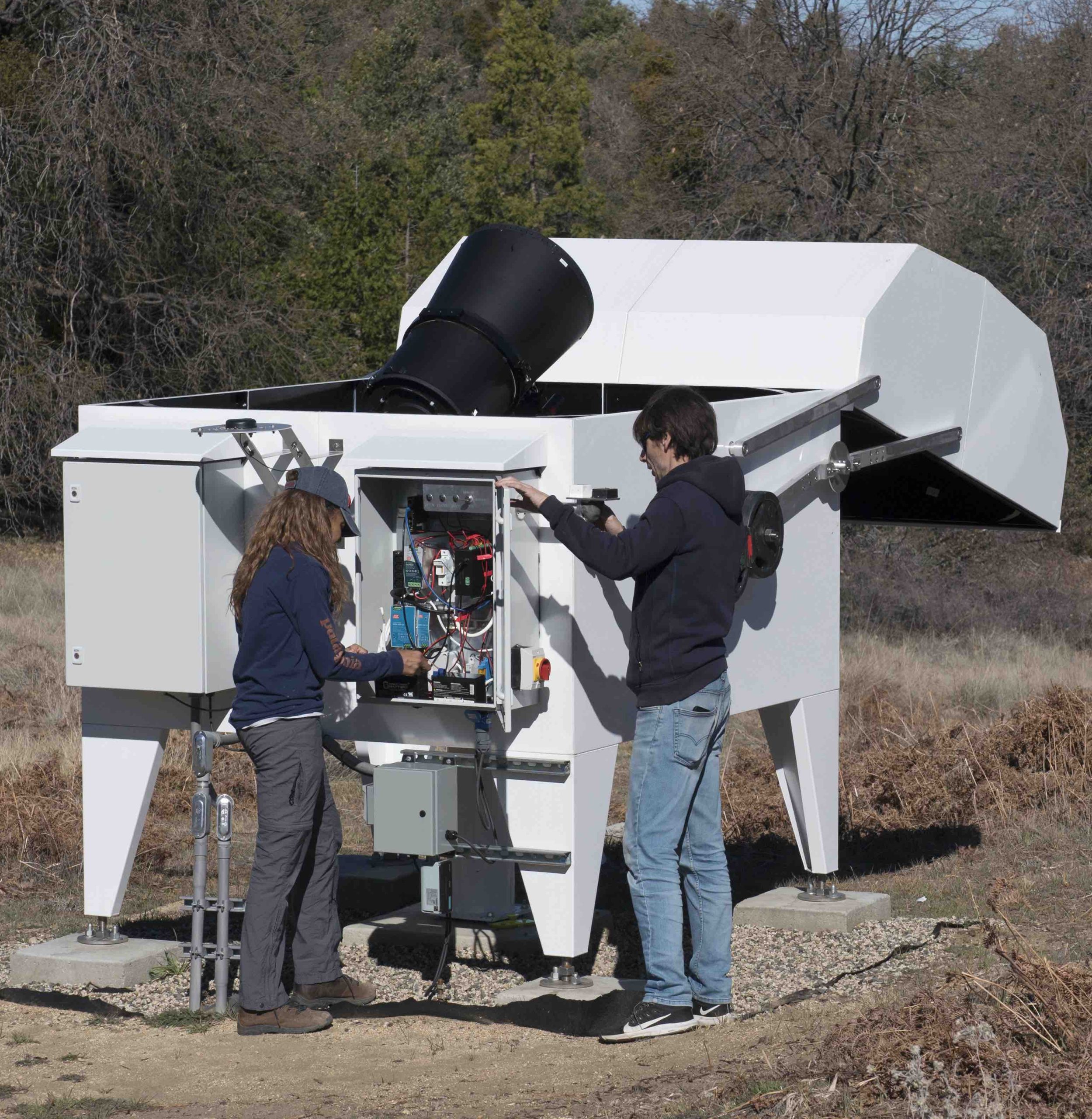
A u-blox high-precision GNSS timing receiver is providing the synchronization backbone for PANOSETI, a distributed optical telescope array designed to scan the entire sky for potential signatures of extraterrestrial intelligence.
PANOSETI — Pulsed All-sky Near-infrared Optical SETI — is a multi-institutional program led by researchers at the University of California, Berkeley. The system requires extremely precise time coordination across widely separated telescope nodes to detect fast-transient optical and near-infrared signals. Traditionally that level of synchronization has depended on fiber-based infrastructure such as White Rabbit, which is costly and impractical to deploy at remote observatory sites.
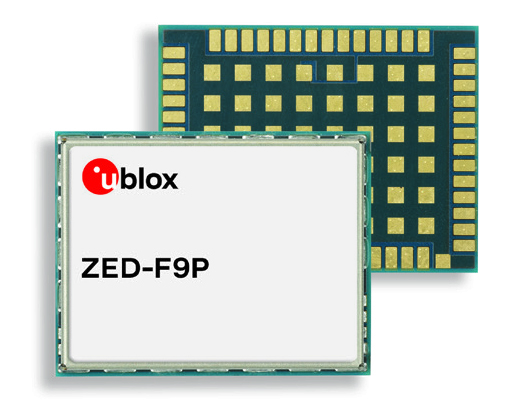
Using the u-blox ZED-F9T, the PANOSETI team demonstrated approximately 0.7 nanosecond standard deviation between 1PPS signals over a 1-kilometer baseline, with performance improving to around 200 picoseconds using filtering techniques — meeting or exceeding the requirements for next-generation distributed sensing systems.
“Achieving this level of synchronization without fiber is a significant step forward for distributed instrumentation,” said Dan Werthimer, Chief Scientist of the PANOSETI project at UC Berkeley. “It allows us to achieve the timing precision we need for our telescope array in locations where traditional fiber-based systems are not feasible.”
The u-blox announcement frames the result as extending beyond scientific research, pointing to applications in distributed sensor networks, remote timing systems, and resilience of critical infrastructure.