July 12, 2018

China Launches Another BeiDou Navigation Satellite

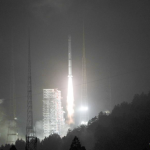
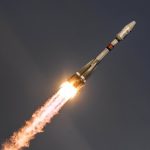
China sent a new BeiDou navigation satellite into orbit on a Long March-3A rocket from the Xichang Satellite Launch Center, in the southwestern Sichuan Province, at 4:58 a.m., Tuesday, July 10.

The satellite is the 32nd of the BeiDou navigation system, and one of the BeiDou-2 family, which is the second generation of the system. The state-run Xinhua press agency confirmed the launch within two hours after liftoff.

Read More >

By Inside GNSS
July 10, 2018

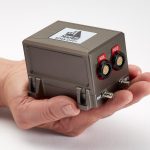
NovAtel’s GNSS+INS Combined System with SPAN Technology Now Offered in Rugged, Ultra-Compact Unit

NovAtel announced today that it is now delivering their market-leading SPAN® tightly-coupled GNSS+INS navigation technology in a rugged, ultra-compact unit. Commercially exportable and ideal for integration into a wide variety of applications, the high-performance SPAN CPT7 is designed to deliver assured positioning – anywhere, in a package one-quarter the size of the highly successful SPAN-CPT.

Read More >

By Inside GNSS

Curtiss-Wright Highlights A-PNT Solutions for Ground Vehicles in GPS/GNSS-Denied Environments at JNC

Curtiss-Wright’s Defense Solutions division announced that it will highlight its family of commercial-off-the-shelf (COTS)-based modules and LRU solutions designed for system integrators seeking to rapidly and cost-effectively deploy Assured Position, Navigation and Timing (A-PNT) services at the 2018 Joint Navigation Conference, July 9-11 (Booth #109), the largest U.S. military Positioning, Navigation and Timing (PNT) conference of the year with joint service and government participation.

Read More >

By Inside GNSS

Harris Corp. Delivers Advanced Environmental Monitoring Sensor for Japanese Satellite

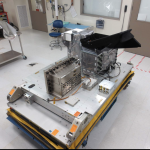
Harris Corporation has delivered an environmental monitoring sensor for the Greenhouse Gases Observing Satellite-2 (GOSAT-2), which will significantly enhance Japan’s ability to monitor greenhouse gases from space.

The Harris-built TANSO-FTS-2 (Thermal and Near Infrared Sensor for Carbon Observation-Fourier Transform Spectrometer-2) will measure greenhouse gases in the atmosphere. The newly built instrument will collect high-spectral resolution data of the Earth in five bands, which enables measurement during daylight and darkness. The instrument’s unique intelligent pointing system identifies, in real time, cloud-free areas of the atmosphere – greatly increasing the amount of useable data, according to the company.

Read More >

By Inside GNSS
July 5, 2018

Securing PNT Workshop Looks at GNSS Back-up Options

With eyes on a future where reliable GNSS back-ups are in place to protect against both accidental or intentional disruptions of GNSS, three organizations represented on Positioning, Navigation and Timing Technical Group (PNTTG) – Innovate UK Knowledge Transfer Network (KTN), Royal Institute of Navigation (RIN) and The General Lighthouse Authorities – hosted a seminar last month to review user needs and the status of two possible RF back-up options to GNSS mentioned in the London Economics report on the economic impact of a GNSS disruption.

Read More >

By Stan Goff
June 25, 2018

GSA’s Cospas-Sarsat Meeting Addresses Progress of Search and Rescue Systems

The Cospas-Sarsat MEOSAR (Medium-Altitude Earth Orbit Search and Rescue) system has been in the news quite a bit of late, and with good reason. As the technology has evolved, so too has the ability to improve search and rescue operations which save lives.

The cover story for the current issue of Inside GNSS is dedicated to the Cospas-Sarsat MEOSAR system and its role as a solution to support the ICAO GADSS Autonomous Distress Tracking recommendation.

Read More >

By Inside GNSS
June 19, 2018

Naval Research Laboratory Marks 60 Years in Space with Vanguard

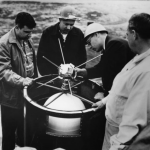
Just more than 60 years ago the U.S Naval Research Laboratory (NRL) launched what has become the longest remaining man-made object in space.

Launched in March 1958, Vanguard I, a component of the Vanguard Project, is a small aluminum sphere (16.5 centimeters in diameter) that was designed to partake in the International Geophysical Year (IGY) — a series of coordinated observations of various geophysical phenomena during solar maximum, spanning July 1957 through December 1958.

Read More >

By Inside GNSS

Letter About Ligado in Limbo

The issue at hand is whether the Federal Communications Commission (FCC) should allow a change in the use of frequencies close to those used by GPS. Virginia-based Ligado Networks wants to repurpose its satellite frequencies to also support ground-based telecom services. Testing done several years ago and expanded upon more recently has shown such a system could seriously interfere with GPS receivers.

Some three months after a meeting of the key federal agencies using and running the GPS program, they have yet to release a letter stating their recommendation on whether to allow the development of a potentially interfering telecommunication service.

Read More >

By Dee Ann Divis
IGM_e-news_subscribe