Fleshing Out the New UK PNT Framework
Speaking at the recent NAVISP conference in Noordwijk, Mark Brammer, Positioning Lead, UK National PNT Office, provided details on the UK’s new Framework for PNT Resilience and Innovation.
By Peter GutierrezSpeaking at the recent NAVISP conference in Noordwijk, Mark Brammer, Positioning Lead, UK National PNT Office, provided details on the UK’s new Framework for PNT Resilience and Innovation.
By Peter GutierrezThe Association of the United States Army’s (AUSA) annual conference highlighted the growing popularity of small unmanned aircraft as well as the need to develop and refine counter-UAS systems to go up against them—all of which must operate in GPS-denied or degraded environments. Many, if not all, of the systems featured rely on precise positioning, especially in the GPS-denied environments frequently encountered on the modern battlefield.
By Brett DavisESA intends to extend the NAVISP program. The fourth phase of the program, to be dubbed NAVISP Next, will be officially proposed for approval at the next ESA the Ministerial Conference in 2025.
By Peter GutierrezIndustry veteran Mariam Sorond has taken over as the CEO of NextNav.
By Inside GNSSSan Jose, California, USA, November 30, 2023 – JAVAD GNSS announced that its industry-leading receivers are successfully tracking the NavIC L1 signal broadcast from the first of its second-generation navigation satellites, launched May 29, 2023.
By Inside GNSSThere has never been a clearer and more widespread acknowledgement of PNT vulnerability. With its new strategy for ensuring the continuity of positioning, navigation and timing (PNT) services, the United Kingdom adds considerable impetus to a trend that has already witnessed new determination on the parts of the United States and the European Union to assess real, alternative PNT (A-PNT) and/or complimentary PNT (CPNT) solutions.
By Peter GutierrezThe Eurofighter Typhoon is set to become the first international platform to receive the Digital GPS Anti-jam Receiver (DIGAR™) from BAE Systems, giving the aircraft more protection against signal jamming, spoofing and radio frequency (RF) interference.
By Inside GNSSEarlier this month, Standford University hosted its 17th annual PNT Symposium, with two days filled of presentations from student speakers and invited guests.
By Renee KnightIn September, the U.S. Department of Transportation (DOT) issued a Request for Information (RFI) to seek industry input on Complementary Positioning, Navigation, and Timing (CPNT) technologies.
By Dawn M.K. Zoldi (Colonel, USAF, Ret.)NTS-3 Satellite Prepares for Launch to Experiment with Ways to Improve GPS.
Nearly 50 years ago, there were no smart phones, no GPS-guided weapons, no turn-by-turn direction systems in automobiles.
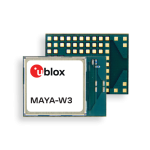
By Brett DavisThe u-blox MAYA-W3 brings the benefits of Wi-Fi 6 and the 6 GHz band to industrial applications, preventing network congestion and ensuring power efficiency.
By Inside GNSSThe last projected GPS III missions and the first follow-on missions are part of Space Systems Command (SSC)’s 21 new mission assignments, all of which are expected to launch within the next two to three years.
By Inside GNSSJoin us November 15, 2023, to hear our expert panel discuss how tactical-grade miniature MEMS inertial sensors address the challenges of navigation, positioning and motion control applications.
By Inside GNSSFor years, the U.S. Department of Transportation (DOT) has been exploring the technologies and systems necessary to provide positioning, navigation, and timing (PNT) services to complement the Global Positioning System (GPS) so that these critical services remain available even when GPS signals are disrupted. In the past few months, the department has ramped up these Complementary PNT (CPNT) efforts, from its issuance of a CPNT Action Plan in September to a related Request for Information (RFI) seeking industry input on CPNT technologies. What are these efforts, how are they going and why the sense of urgency now?
By Dawn M.K. Zoldi (Colonel, USAF, Ret.)SpaceX recently signed an agreement with the European Space Agency (ESA) to launch four Galileo satellites on its Falcon 9 rocket next year.
By Inside GNSS