The European Space Agency (ESA)-funded project ‘A White Rabbit based implementation of Coherent Clock’ has successfully completed its validation phase. The project demonstrated a highly resilient, ground-based time distribution system designed to safeguard critical infrastructures against GNSS vulnerabilities. Funded under ESA’s NAVISP program, the initiative was led by Safran Electronics and Defense Spain.
As global telecommunications networks, power grids, and data centers increasingly depend on ultra-precise timing, relying on a solitary GNSS reference exposes networks to risks like jamming, spoofing, and signal multipath. To build a resilient architecture, the Coherent Clock project introduced a distributed clock ensemble mechanism. Instead of treating receivers as isolated units, the system aggregates timing data from multiple geographically distributed GNSS nodes via fiber-optic networks to synthesize an optimized, secure global time solution.
The architecture utilizes Safran’s WR-Z16 LJ units, which combine embedded Septentrio Mosaic-T GNSS receivers with the IEEE 1588-2019 high accuracy precision time protocol, heavily based on White Rabbit (WR-PTP) technology. This mesh topology establishes a distributed network that removes any single grandmaster dependency, enabling seamless sub-nanosecond phase synchronization over metropolitan distances.
Rigorous testing and verification
Safran presented the final results of the project at a recent ESA-hosted event. Central to the platform is the distributed clock ensemble server (DiCES), which monitors node status and historical Kalman filter metrics through a dedicated representational state transfer application programming interface. DiCES computes real-time phase and frequency corrections, delivering them back to individual nodes to drive a local hardware ‘paper clock’ ensemble with sub-picosecond resolution.
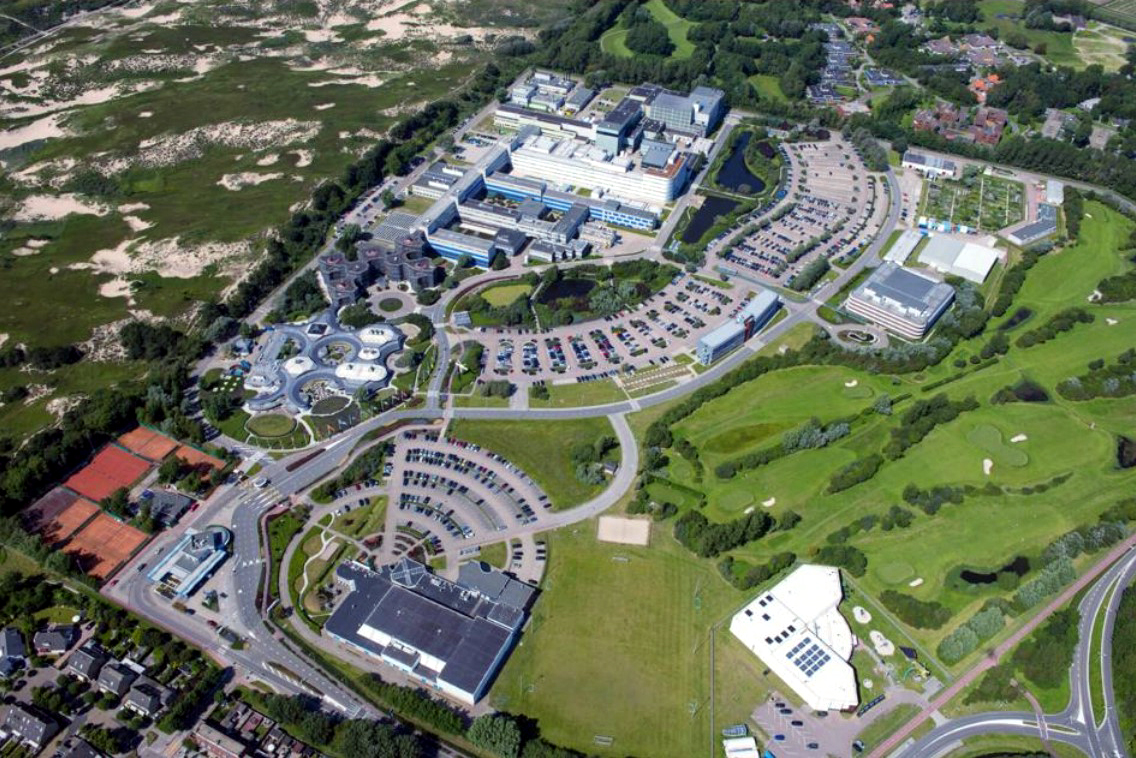
The team executed verification campaigns using simulated rubidium clocks at Safran’s timing laboratory in Granada, Spain. They followed this with physical testing using multi-node configurations of real caesium and maser standards at the European Space Research and Technology Centre (ESTEC) UTC laboratory in Noordwijk, Netherlands.
Under benign baseline conditions, the synthesized ensemble demonstrated superior long-term stability compared to any single standalone reference clock. Crucially, when subjected to hostile test scenarios, including forced node power failure, 10-minute connector detachments, and emulated sub-nanosecond phase and frequency jumps, the Kalman-plus-weights algorithm instantly mitigated anomalies. The system isolated anomalous nodes by setting their algorithmic weight to zero without compromising aggregate network timing or output stability.
The successful demonstration concludes the project at technology readiness level 5. Looking forward, Safran plans to harden the technology, integrate absolute UTC-traceability testing, implement optimized steering, and deploy multi-site commercial pilots, to align fully with future 5G standards.