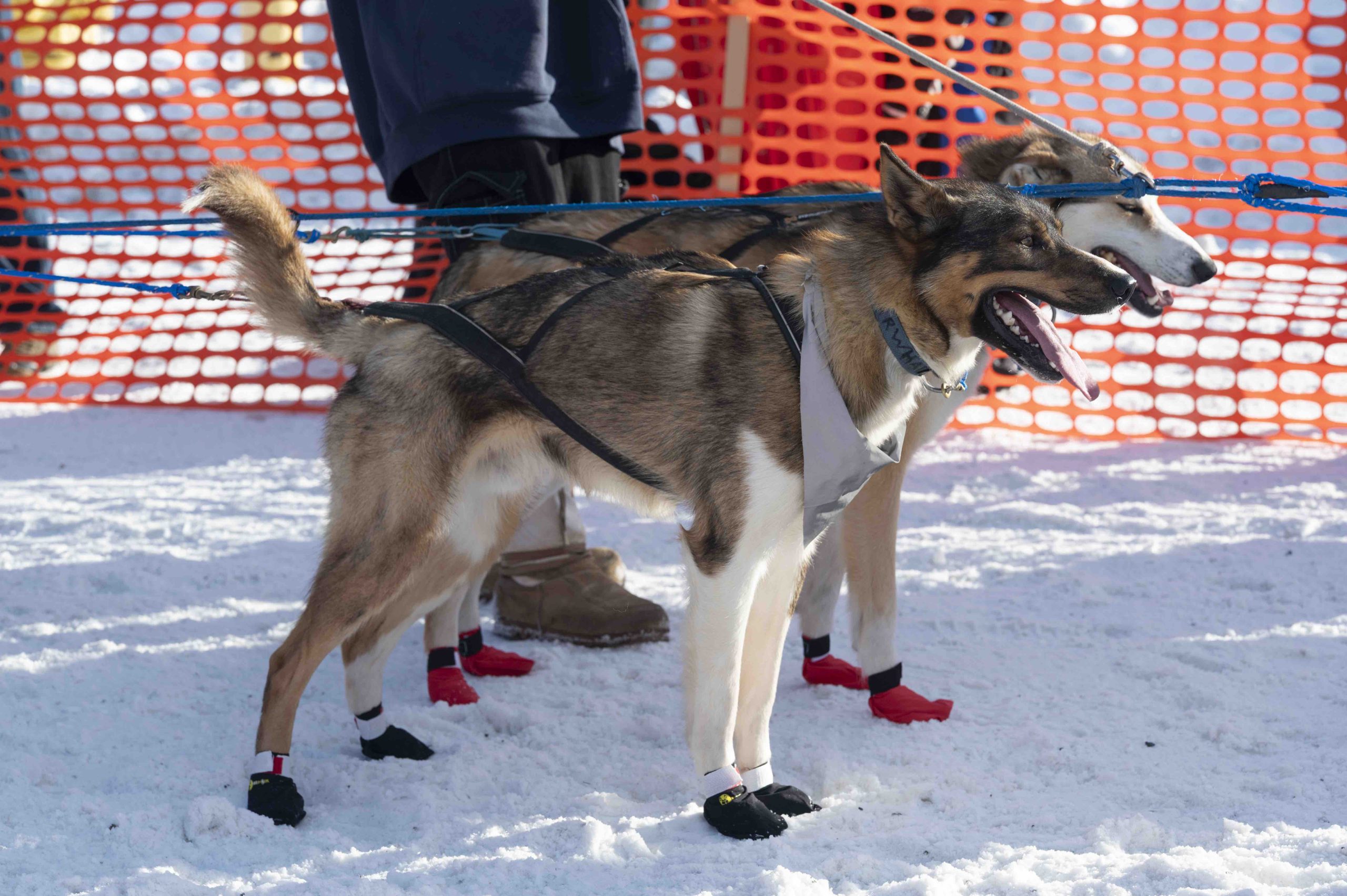
Russian electronic warfare from the Kola Peninsula has moved from fighter routes and air corridors into a very different domain: a 1,200-kilometer dogsled race across northern Norway.
Organizers and police for Finnmarksløpet, Europe’s longest sled dog race, say ongoing jamming and spoofing are degrading the GPS trackers carried by each team, forcing the event to lean more heavily on trail marking and traditional navigation.
Race tracking hit by jamming and spoofing
According to reporting in the Barents Observer, Norway’s Finnmark police and race officials have confirmed that GNSS disturbances are affecting the race’s live tracking system. Each sled in Finnmarksløpet carries a GPS device so organizers, safety teams, and the public can follow progress across the Finnmark plateau. Military jamming and spoofing from Russia’s Kola Peninsula are now interfering with both reception and transmission of those signals.
Tarjei Sirma-Tellefsen, Chief of Staff at the Finnmark Police District, said police are in “good dialogue” with the race regarding participant safety but “unfortunately see GNSS disturbances occurring in the area.” In practice, that can cause sled positions to freeze, jump erratically, or appear in the wrong place altogether on the public map.
The race route runs from Alta east across the Finnmark plateau to Kirkenes, near the Russian border, and back again. Portions of the course follow the Pasvik valley along the western shore of the river that separates Norway from Russia’s Kola Peninsula – placing mushers and their GPS equipment squarely inside a region that has seen repeated interference over the past several years.
Part of a broader High North interference pattern
Finnmarksløpet is the latest in a series of civilian activities in Norway’s far north affected by Russian GNSS interference.
Norwegian authorities first reported systematic jamming impacting aviation and other GPS users in eastern Finnmark in 2017. District police at the time described outages as frequent enough to be considered “the new normal,” requiring long-term planning for degraded GPS.
Since then, pilots approaching Kirkenes and other northeastern airports have reported near-daily GNSS interference, with signals distorted or lost on approach and alternative navigation systems such as inertial and ground-based aids used as primary references.
Further south, Finland and Estonia have issued navigation warnings for the Gulf of Finland due to persistent GNSS disruption traced to Russian and Belarusian territory, citing increased risk to shipping and a need for mariners to treat satellite navigation with caution.
Taken together, the incidents show a broad arc of GNSS interference stretching from the Arctic High North down into the Baltic – with the dog-sled race now providing a very public, human-scale illustration of the problem.
A live test of “everyday” PNT resilience
Finnmarksløpet is a reminder that satellite navigation is now embedded in activities far beyond aviation, shipping, or defense.
In this case:
- Each team’s GPS tracker underpins safety monitoring, media coverage, and fan engagement.
- Organizers, rescue teams, and family members rely on those positions to confirm that mushers and dogs are on course and moving as expected in harsh winter terrain.
- When jamming or spoofing degrades those signals, race control has to fall back on more traditional tools: marked trails, checkpoints, radio communications, and map-and-compass navigation for participants.
From a PNT resilience standpoint, the situation checks several familiar boxes:
- Single-sensor dependence: GPS trackers are often built around L1-only receivers with limited interference detection.
- Lack of redundancy: consumer-grade tracking platforms may not fuse inertial sensors, terrestrial beacons, or multi-constellation, multi-frequency GNSS in ways that help detect spoofing or jamming.
- Human expectations: fans and even some safety stakeholders may assume that a public tracking map is authoritative, when in fact it may be running on degraded or manipulated data.

.jpg "Handicapping the GNSS Horse Race")