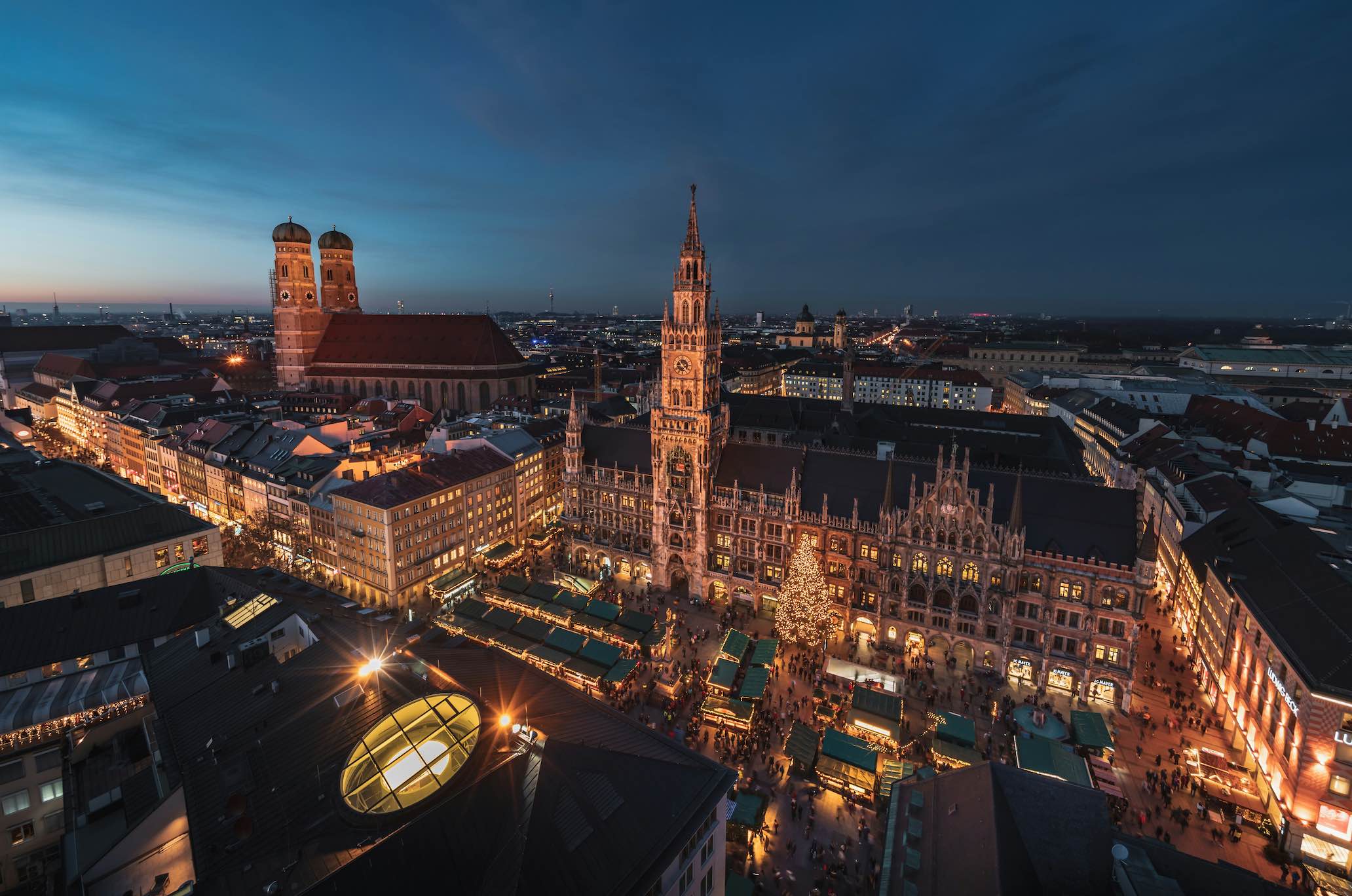
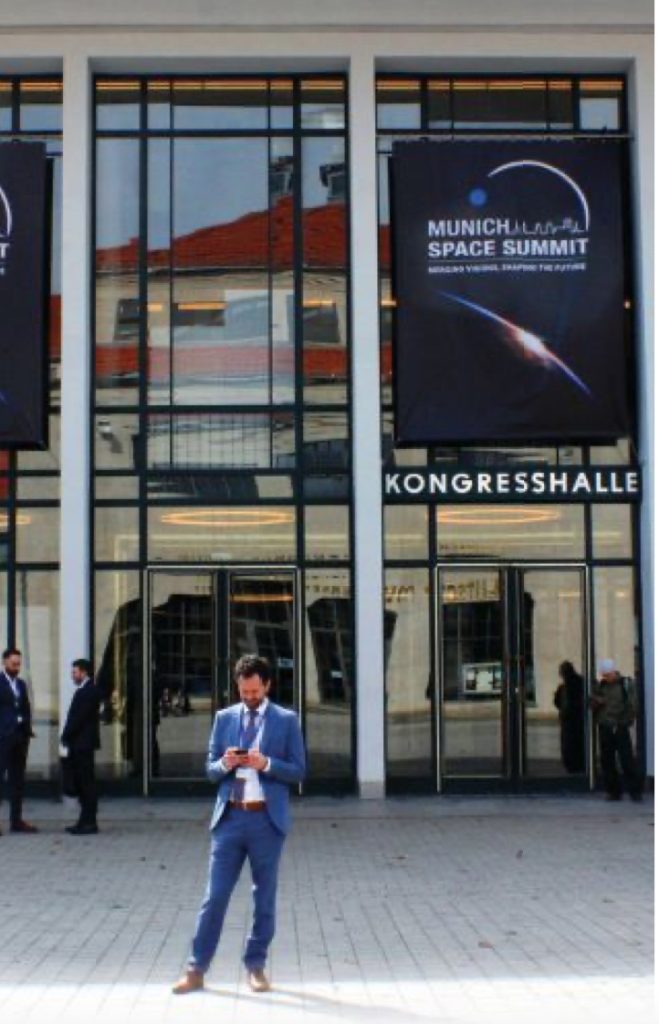
For the first time, the summit merged two meetings, the Munich Satellite Navigation Summit and the Munich NewSpace Summit, highlighting how NewSpace energy is starting to reshape Europe’s space model and PNT vision.
At this year’s Munich Space Summit, something subtle—but significant—happened. What began two decades ago as a focused gathering of satellite navigation experts has merged with the faster-moving world of NewSpace. The NewSpace policy and industry concept marks a major shift in how the space sector works, transitioning from a government-driven sector to a more commercial, innovation-driven ecosystem, involving private companies, startups, and new business models.
The new Munich Space Summit, combining the Munich Satellite Navigation Summit and the Munich NewSpace Summit, clearly highlighted this shift and what it means for Europe’s space model and its vision for PNT.
Bringing the Message Home
Bringing NewSpace into the fold means adding some of that agility to the deeply rooted PNT community. The PNT portion of the program brought together top space leaders to discuss how policy, programs and NewSpace pep can help them face pressing global challenges. Florian Hermann of the Bavarian State Chancellery offered some rousing opening remarks, referring colorfully to Germany’s significantly increased space-related spending. “Even in the mainstream in our society,” he said, “people know that we are facing something like a gold rush in space.” The country’s new budget marks a clear political shift toward space as a strategic, economic and security domain.
This joining of hands comes at a moment of intense concern about European defense and security, as war, geopolitical shifts and other threats converge, making Europe feel less secure than at any point in decades. Responding to that concern is the European Commission (EC), here in the form of Christophe Kautz, Director of Satellite Navigation and Earth Observation at DG DEFIS: “Let me be concrete about the new priority on which we are working. The Commission has developed quite large defense programs, and some of that is also going toward space. But in addition to that, we are also adapting what we already do with our space programs.”
Kautz described the EC’s proposal of a major new funding framework to boost Europe’s competitiveness. The Commission envisions a dedicated “space and defense window,” meaning a targeted funding stream for space infrastructure and defense capabilities. There will also be a focus on startups and SMEs, defense tech, as well as industrial scale-up and innovation.
“We’ve laid out what we want to do in the next finance period,” Kautz said, “…We are complementing our existing GNSS services, where we had a focus on the civil side, to make them also workable, or to tune them, toward the security and defense user.”
LEO PNT, he said, is the future and “can also be very useful for security and defense applications. When it comes to Earth observation, of course we’ve had Copernicus for many years, but we want to complement it with what we are calling an Earth observation governmental service, a PRS-like service in the realm of Earth observation.”
The EC is also hard at work on its new IRIS² communications initiative. “And we will have space surveillance and tracking,” Kautz said, “so we’re trying to tune our service portfolio toward security and defense.”
Forces at Play
ESA General Director Josef Aschbacher started his presentation on a positive note: “I just landed this morning from Washington D.C. where yesterday the new NASA administrator was announcing his vision of a Moon architecture, the Moon ecosystem, which is very interesting and where ESA has a lot of participation.”
On the changing geopolitical environment, his tone hardened. “The things we are seeing,” he said, “are drastically changing the landscape of space. We had a very successful [ESA] ministerial conference in Germany last November, and this was really Europe’s collective response to the new geopolitical reality. On the eastern side, of course, we have the war in Ukraine, on the western side we have the United States and the new geopolitical context in which we are living. My message to all the ministers of our ESA countries was Europe has to be stronger, more autonomous and self-reliant, and therefore we need space programs across the board where we are increasing our strength and capacity.”
At the Ministerial Council, member states agreed not only on a record budget of about €22 billion for 2026 to 2028, but also on a “clear defense and security mandate,” something ESA has traditionally avoided.
“We are working closely with the European Commission, and in general, we really want to build up the space economy,” Aschbacher said. “Europe has to change, we have to become faster, we have to rely on the ingenuity of our small and medium-sized enterprises.”
The European Union Agency for the Space Program (EUSPA) Executive Director, Rodrigo da Costa, expressed his approval of the new format. “In this new geopolitical situation, the response of the space sector is very important, to operationalize all of the space services for the security dimension, for the governmental users, which can be of a military nature.
“Our key focus,” he said, “has always been on how to serve a maximum amount of people, and I think we are there. The security users add another dimension, because they will be building key missions, key operations based on the services that we provide. This is required. As an ecosystem, as a sector, we are changing our focus, to serve this very particular set of users.”
Challenges Enumerated
Kautz reminded attendees it’s not going to be easy: “We have great ideas, and sometimes we are quite good at transforming these into something concrete. We do have some extremely good systems, but there are gaps. We do not have the investment power that they have in other parts of the world. This is linked perhaps to the way we are structured in Europe, some things that inhibit our investment capabilities. We are working on this.”
The European Investment Bank (EIB), launched a dedicated space financing initiative to support Europe’s space industry. The strategic fund mobilizes private and public capital behind space technology, infrastructure and companies.
“So there is some movement,” Kautz said, “and this is something that we need, to help turn our ideas into economic reality. I think we also have issues related to our regulatory environment. At least from the Commission’s perspective, we think we need an internal market for space. The proposed Space Act should lead us into this direction.” The EU Space Act, expected to take effect in 2030, sets unified rules for space activities, boosting investment, innovation, and strategic autonomy across Europe’s space sector.
Aschbacher added another complaint to the list: “We are fragmented. We are 27 EU countries, more than 20 ESA member states. We have to join forces, especially when we are under pressure.”
Aschbacher will be aware of recent reports suggesting Germany and possibly Italy may pursue their own national systems for sovereign communications, essentially duplicating the capabilities of the EU’s IRIS², which is aimed at providing shared secure connectivity.
“We seem to be going in the wrong direction,” he said. “The time is critical. If we go too far, in not linking up these different systems, it will be too late.”
Still Competitors, Still Collaborators
From across the great water, a lone American said his country still holds some security-related priorities in common with its allies. An old friend of the conference, Harold “Stormy” Martin is Director of the National Coordination Office (NCO) for Space-Based PNT within the U.S. Government. He assured the audience that while, “the world situation is not beautiful right now, President Trump’s PNT policies make it clear that the U.S. takes GPS jamming and GPS spoofing very seriously. We’re developing interference mitigation and detection measures.”
The event highlighted how NewSpace energy—speed, innovation, SME participation, and flexible architectures—is reshaping Europe’s space model and strengthening its vision for Galileo, LEO PNT and a more resilient space infrastructure designed to support economic growth, service continuity, and greater confidence in critical operations.