Main Categories

December 5, 2011

Conference Survey Reflects North American Leadership in GNSS Innovation, Delays in Galileo Program

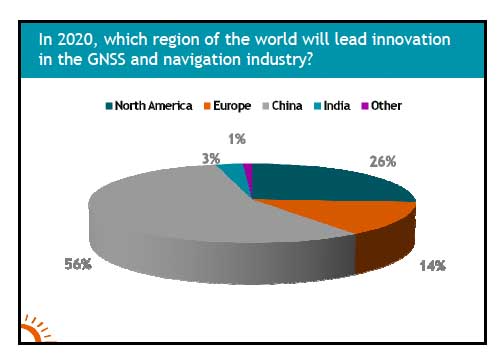
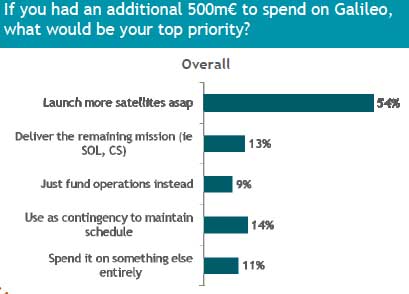
A survey of 140 attendees at last week’s European Navigation Conference (ENC 2011) in London, England, produced a fascinating assessment of GNSS expectations in the coming years — and how that assessment has changed since 2007.

Sponsored by Helios, a UK business and technology consultancy working in the transportation and technology domains, the survey asked delegates eight questions with multiple choice answers, and recorded their responses using handheld keypads and live electronic voting.

Read More >

By Inside GNSS

December 1, 2011

European Commission Rolls Out Free Software for EGNOS Developers

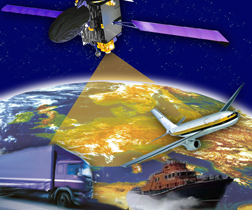
The European Commission has introduced free, downloadable and ready-to-use software tools to help anyone develop enhanced location and timing applications that harness the power of Europe’s European Geostationary Navigation Overlay Service (EGNOS).

EGNOS, which began operations earlier this year, provides real-time satellite-based corrections and integrity monitoring for GPS satellite signals.

Read More >

By Inside GNSS

Galileo Regains Momentum with Financial, Management Framework Proposals

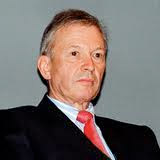
Paul Weissenberg of the European Commission’s Enterprise and Industry directorate

After years of arduous political navigation filled with delays and disappointments, Europe’s GNSS programs appear to have found firmer ground as it heads into a crucial deployment phase.

Today (November 30, 2011), the European Commission (EC) proposed a €7 billion (US$9.41 billion) allocation for Galileo and EGNOS in the European Union’s next budget cycle (2014–2020) and delegation of the programs “exploitation” to the European GNSS Agency (GSA) and the systems’ deployment, to the European Space Agency (ESA).

Read More >

By Inside GNSS

[uam_ad id="183541"]
November 30, 2011

LightSquared Postpones International Expansion Effort

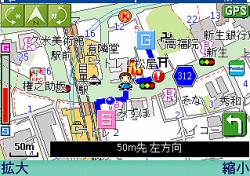
A GPS app on a Japanese smartphone. The GPS Council there told the FCC that any signal degradation could jeopardize the Global Positioning System’s standing as a global standard.

LightSquared has dropped, for now, efforts to expand its wireless broadband plans to markets in other countries, Inside GNSS has learned.

The Virginia firm was working this summer on proposals to the International Telecommunication Union, including one aimed at addressing compatibility issues between ground stations or “complementary ground components” of mobile satellite services and other frequency-using services.

Read More >

By Inside GNSS

Spirent Launches TestDrive-GNSS Automation Software

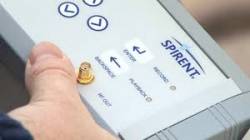
Spirent Communications has announced the launch of its new automation and reporting tool, TestDrive-GNSS for SimGEN- and SimREPLAYplus-controlled GNSS test systems. TestDrive-GNSS automates the testing process to significantly reduce overhead costs and testing times associated with characterization of GNSS devices.

Read More >

By Inside GNSS
November 29, 2011

Russia Adds Another Satellite to GLONASS Constellation

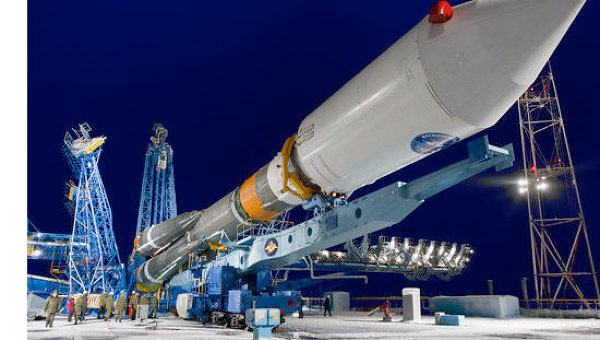
Russia launched a single GLONASS-M satellite into orbit on Monday (November 28, 2011) from the Plesetsk space center north of Moscow.

This is the fifth and the last launch of a GLONASS satellite this year, according to the Russian Federal Space Agency.

Typically, Russia launches three of the modernized satellites at a time on Proton rockets, including three GLONASS-Ms sent up November 4 from Baikonur, Kazahkstan, and placed in orbital plane 1. Monday’s launch used the smaller Soyuz rocket to place the satellite into plane 3.

Read More >

By Inside GNSS
November 25, 2011

FCC Supplies FOIA Data Dump for LightSquared/GPS Interference Issue

[Updated November 25 2011] For those wondering what to do on Black Friday …

In another holiday special, the Federal Communications Commission (FCC) has announced creation of a public web portal for documents related to the LightSquared/GPS interference issue that will , in the agency’s words, “provide ready access to publicly available documents and other responsive documents not otherwise exempt from release under the FOIA [ Freedom of Information Act].”

Read More >

By Inside GNSS
[uam_ad id="183541"]
November 21, 2011

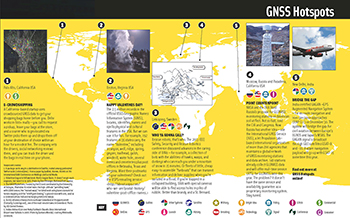
GNSS Hotspots | November 2011

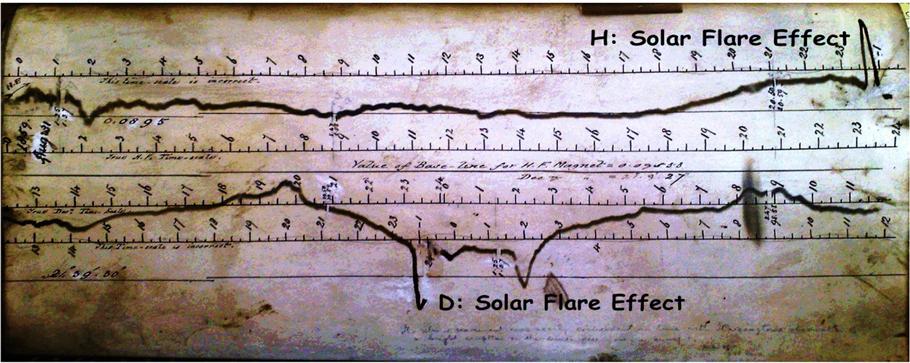
One of 12 magnetograms recorded at Greenwich Observatory during the Great Geomagnetic Storm of 1859
1996 soccer game in the Midwest, (Rick Dikeman image)
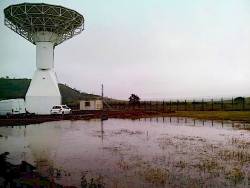
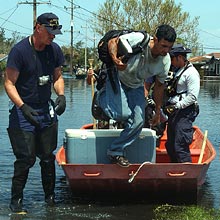
Nouméa ground station after the flood
A pencil and a coffee cup show the size of NASA’s teeny tiny PhoneSat
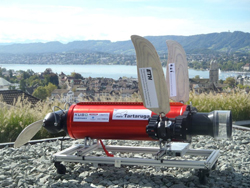
Bonus Hotspot: Naro Tartaruga AUV
Pacific lamprey spawning (photo by Jeremy Monroe, Fresh Waters Illustrated)
“Return of the Bucentaurn to the Molo on Ascension Day”, by (Giovanni Antonio Canal) Canaletto
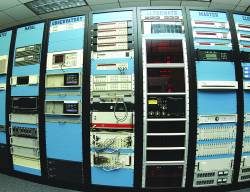
The U.S. Naval Observatory Alternate Master Clock at 2nd Space Operations Squadron, Schriever AFB in Colorado. This photo was taken in January, 2006 during the addition of a leap second. The USNO master clocks control GPS timing. They are accurate to within one second every 20 million years (Satellites are so picky! Humans, on the other hand, just want to know if we’re too late for lunch) USAF photo by A1C Jason Ridder.
Detail of Compass/ BeiDou2 system diagram
Hotspot 6: Beluga A300 600ST

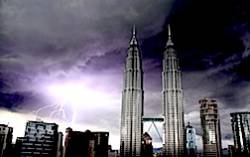
1. Portland, Oregon and Los Angeles, California USA
TWINS!

Read More >

By Inside GNSS

Making Virtual Solid

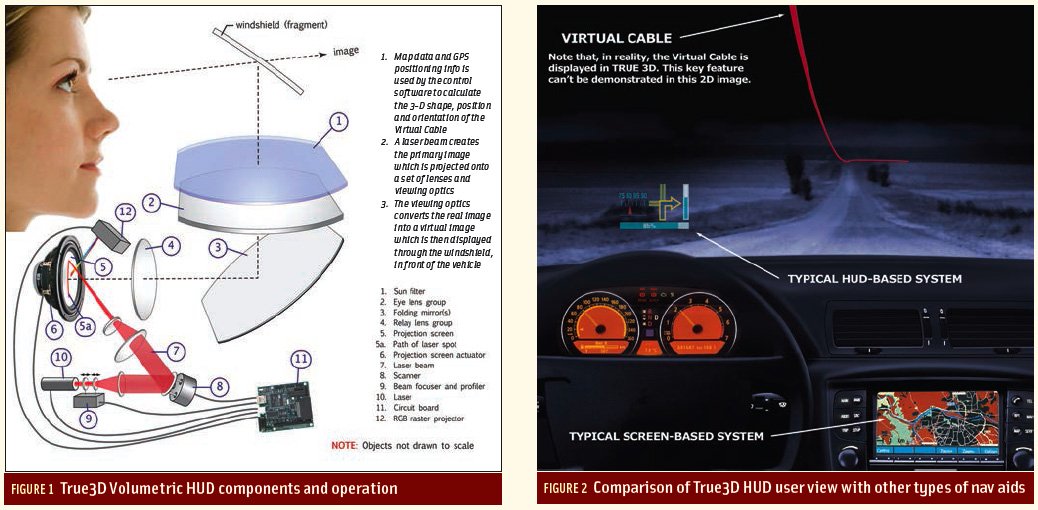
FIGURES 1 & 2: True3D Volumetric HUD components and operation (left), Comparison of True3D HUD user view with other types of nav aids (right)

Return to main article: "True3D HUD Wins Global SatNav Competition"

Many technologies are created before their best applications are even thought about. This leads to a business phenomenon known as “technology push” in contrast to “consumer pull.” The True3D Volumetric HUD technology did not share this path.

Read More >

By Inside GNSS
November 16, 2011

EU Launches Two Navigation Satellites; Galileo is On Its Way

Europe’s first two Galileo satellites have reached their final operating orbits, opening the way for activating and testing their navigation payloads.

Marking the formal end of their launch and early operations phase (LEOP), on November 3, control of the satellites was passed from the CNES French space agency center in Toulouse to the Galileo Control Center (GCC) in Oberpfaffenhofen, Germany.

Read More >

By Inside GNSS

GLONASS Trio in Orbit, Another K-Class to Follow

Russia launched a Proton-M rocket carrying three GLONASS-M satellites from the Baikonur space center at November 4 after a 24-hour delay due to technical reasons, a spokesman for the Federal Space Agency Roscosmos said.

This was first launch of a Proton-M rocket with GLONASS satellites from Baikonur since a failed attempt last December. That led to the dismissal of several top officials in the space agency and industry and the appointment of Vladimir Popovkin to head the space agency.

Read More >

By Inside GNSS

Oh No! Not LightSquared Again!

Please.

Please. Please. Please. 

Can we please talk about something besides LightSquared?

Not yet? You mean, they are still here?

And we have so many other GNSS-related topics that deserve comment: 

Some peculiar cuts in civil GPS funds and GPS III budgets being proposed by congressional committees. 

A re-examination — aka analysis of alternatives — of GPS and PNT options in general. Space weather and an impending solar max. Warrantless GPS-aided tracking before the Supreme Court.

Read More >

By Inside GNSS
IGM_e-news_subscribe