Australia Funds 4-year GNSS Plan, New Space Agency
The Australian government has launched a four-year plan to upgrade and densify its National Positioning Infrastructure (NPI) to improve position accuracy from coast to coast.
By Dee Ann DivisThe Australian government has launched a four-year plan to upgrade and densify its National Positioning Infrastructure (NPI) to improve position accuracy from coast to coast.
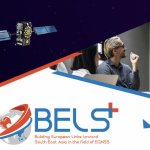
By Dee Ann DivisBuilding European Links toward Southeast Asia (BELS+) is a program designed to develop GNSS markets for European Union (EU) companies and help EU GNSS applications gain a foothold in South East Asia. With that in mind, the project is organizing a GNSS Data Processing training program in Barcelona on July 11-13, in addition to a workshop on July 12 to raise awareness about business opportunities in South East Asia among European companies, professionals and institutions offering GNSS-based products and services.
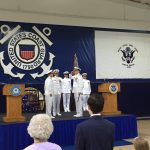
By Inside GNSSThe U.S. Coast Guard’s Navigation Center (NAVCEN), and its commander Captain Russell Holmes, received special honors at a ceremony where Holmes officially took his leave for New Orleans and a new post as officer in charge of marine inspection for the outer continental shelf.
By Dee Ann DivisHopping in the car and firing up the navigation system, only to have it take you in precisely the wrong direction while it gets its bearings, will be a thing of the past for South Korean users of combined GPS/eLoran navigation systems when the nation’s new eLoran network comes on line in 2020.
By Inside GNSSWho knows what’s in store for this year’s 15th edition of the European Satellite Navigation Competition (ESNC), which is currently scouting for new business ideas through July 31, 2018. The innovation competition annually awards the best services, products, and business ideas using satellite navigation in everyday life.
By Stan GoffThe issue at hand is whether the Federal Communications Commission (FCC) should allow a change in the use of frequencies close to those used by GPS. Virginia-based Ligado Networks wants to repurpose its satellite frequencies to also support ground-based telecom services. Testing done several years ago and expanded upon more recently has shown such a system could seriously interfere with GPS receivers.
Some three months after a meeting of the key federal agencies using and running the GPS program, they have yet to release a letter stating their recommendation on whether to allow the development of a potentially interfering telecommunication service.
By Dee Ann DivisRTCA President Margaret T. Jenny has informed the Board of Directors of her intention to retire from RTCA this August, at the end of her second 5-year contract. RTCA’s Board will initiate a search process to identify a successor for her.
By Inside GNSSYet another milestone has been reached as the Galileo global navigation satellite system inches closer to completion of its entire constellation comprising of 24 operational satellites plus spares in three orbital planes as the last two Galileo satellites of the second tranche were sent to Kourou on May 31.
By Stan GoffIn response to the growing threat of GPS/GNSS interference in military operations, Orolia is presenting its Assured Positioning, Navigation and Timing (PNT) Solutions at this week’s Eurosatory exhibition in Paris, France.
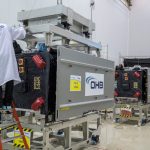
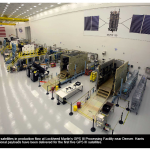
By Stan GoffHarris Corporation has provided Lockheed Martin with its fifth of 10 advanced navigation payloads contracted for the U.S. Air Force GPS III satellite program.
By Inside GNSSWork Largely Continues as Group Becomes a Standards Development Organization. RTCA, which for decades has developed standards and worked through technical challenges at the behest of the Federal Aviation Administration, is no longer a Federal Advisory Committee (FAC) for the agency.
The FAA declined to renew its contract with RTCA and will instead take over some of what RTCA was doing — though, for now, the changes will be limited.
By Dee Ann DivisThe ESA/JRC International Summer School on GNSS is hosted this year by Austria from July 16-27, 2018 in Loipersdorf, Austria. It is in cooperation with Stanford University in the United States, the Institut Supérieur de l’Aeronautique et de l’Espace ISAE-SUPAERO in Toulouse, France, Graz University of Technology in Austria and the University FAF Munich in Germany.
By Inside GNSSThe European Space Agency (ESA), the French National Space Center (CNES), the German Aerospace Center (DLR) and the University of the Federal Armed Forces Munich are pleased to announce the Call for Papers for the 9th edition of the ESA Workshop on Satellite Navigation Technologies and European Workshop on GNSS Signals and Signal Processing (NAVITEC).
By Inside GNSS