GPS

November 1, 2013

Assured PNT: Army Links Smart Phones and GPS Devices

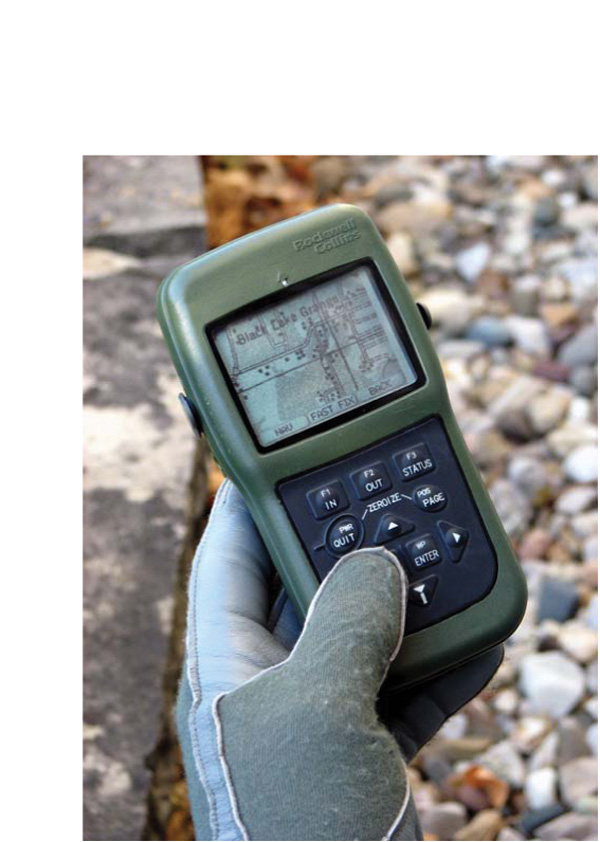
U.S. Army DAGR GPS receiver

The Army is working on GPS equipment that would connect with a single, user-friendly device like a smart phone or through a single hub to reduce the number of devices a soldier has to carry and to facilitate software updates.

The work is part of a wide-ranging effort at the Aberdeen Proving Ground in Maryland to shift the focus away from having positioning, navigation, and timing (PNT) capability in each device —such as a DAGR (Defense Advanced GPS Receiver) or range finder — connecting equipment into a single device that supplies the necessary PNT information.

Read More >

By Inside GNSS
October 31, 2013

Budget Battle: GPS Program Funding Appears Solid

The GPS program appears well positioned to weather another round of budget cuts, although some contractors that support the program may not be so fortunate.

“I would expect GPS will be relatively protected (with) continued investment and modernization of the satellite constellation.” said Robert Levinson, a senior defense analyst for Bloomberg Government during an October 28 briefing.

“GPS is in fairly good shape,” confirmed an expert familiar with the Air Force’s budget.

Read More >

By Inside GNSS
[uam_ad id="183541"]
October 30, 2013

Space-Based PNT NCO Director Retiring; New RITA Director Confirmed

After just a year in office, the leader of the organization that helps keep federal GPS activities in sync is retiring.

National Coordination Office (NCO) Director Jan Brecht-Clark, told Inside GNSS that her family convinced her it was a good time to make the move.

“My family has been talking to me about retiring while I still have my health,” she said, adding that she is looking forward to traveling.

Read More >

By Inside GNSS
October 22, 2013

2012 Delta IV Launch Investigation Results Delay Fifth GPS Block IIF

Planned launch of the fifth GPS Block II-F satellite on a Delta IV rocket has been delayed twice and now has no firm date for a new attempt.

Officials with the United Launch Alliance (ULA) — a 50-50 joint venture owned by Lockheed Martin and Boeing — attributed the delay to recent results of the second phase of an investigation into an anomaly that affected the second stage of a Delta IV GPS launch in October 2012.

Read More >

By Inside GNSS
October 8, 2013

ISPA 2013 – Precision Approach and Performance Based Navigation Symposium

The 2013 International Symposium on Precision Approach and Performance Based Navigation will be held at the Maritim proArte Hotel in Berlin, Germany on October 23 – 24, 2013.

The symposium will focus on aircraft approaches and performance based navigation, including approaches using standalone GPS, technological aspects such as GNSS, augmentation systems, radio navigation, and new and emerging navigation services.

Read More >

By Inside GNSS
October 2, 2013

NovAtel Garners FAA Contract for 3rd-Generation WAAS Receiver

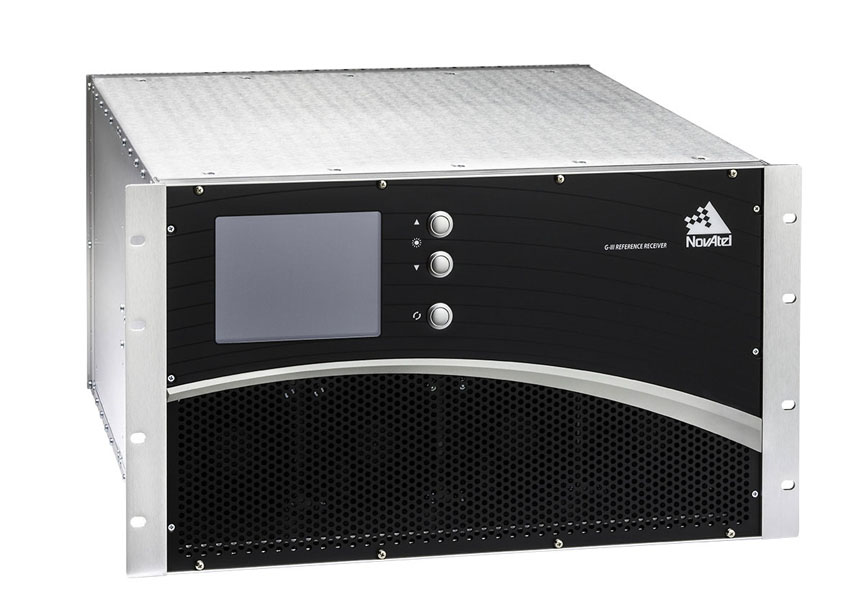
NovAtel G-III WAAS Reference Receiver

The U.S. Federal Aviation Administration (FAA) has contracted with NovAtel Inc. to produce and deliver 176 Wide Area Augmentation System (WAAS) third-generation reference receivers (G-III).

The contract also includes engineering support for the G-III receiver as well as the current generation reference receiver (G-II), Geostationary Earth Orbit Uplink Subsystem – Type 1 (GUST) receiver, and Signal Generator (SIGGEN).

Read More >

By Inside GNSS
[uam_ad id="183541"]
October 1, 2013

Harm Claim Thresholds May Be Coming for GNSS

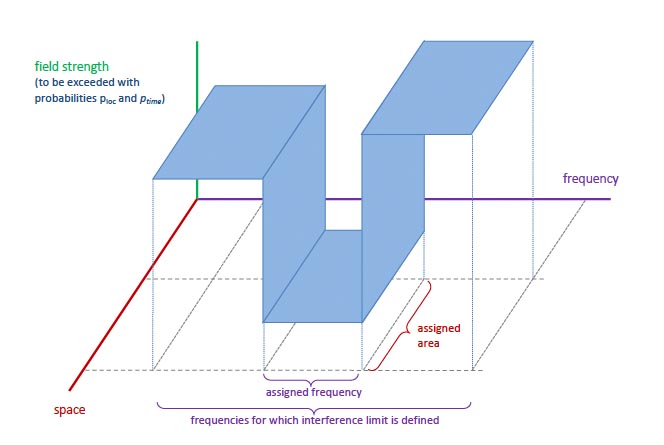
A group of top frequency experts recommended last week that the Federal Communications Commission (FCC) conduct a pilot test of the concept of “harm claim thresholds” (HCTs), an approach that requires receiver manufacturers to build devices capable of withstanding a predetermined level of interference from users in adjacent frequencies.

Read More >

By Inside GNSS

Air Force May Delay Phasing Out L2 Semi-Codeless Signal

The Air Force may hold off on phasing out codeless and semi-codeless access to the GPS L2 signal in light of delays to GPS modernization, experts told attendees at the recent Civil GPS Service Interface Committee (CGSIC) meeting. The issue will likely be discussed as part of the formulation of the 2014 Federal Radionavigation Plan (FRP).

“Semi-codeless retirement in 2020 is being evaluated,” said Col. Colonel Harold Martin, deputy director of the National Coordination Office for Space-Based Positioning, Navigation, and Timing (PNT).

Read More >

By Inside GNSS

September 30, 2013

Obama Administration Directive Lifted Limits on NSA Domestic Spying, including GPS Location Data

In 2008, the campaign of President Barack Obama pioneered the use of social media to power his way to the White House. In 2010, the president unleashed the National Security Agency (NSA) to collect and analyze details — including geolocation derived from GPS and other positioning technologies — of billions of American citizens’ telephone calls, e-mails, and social media such as Facebook.

Read More >

By Inside GNSS

September 16, 2013

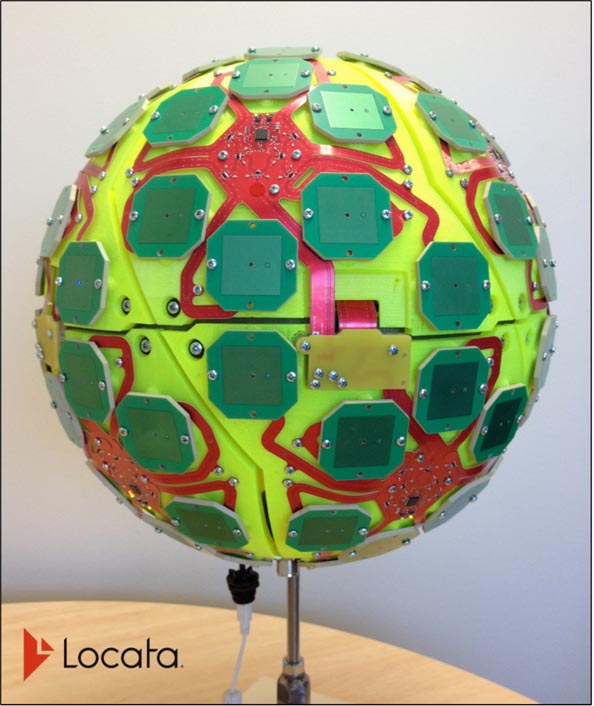
AFIT Signs Agreement on GPS Technology Development with Locata

Locata’s VRay Orb-80 antenna

The Air Force Institute of Technology (AFIT) and Locata Corporation, based in Canberra, Australia, have announced the signing of a co-operative research & development agreement (CRADA) to build and demonstrate new Locata multipath mitigation technology for use in GPS receivers. This cooperation is expected to leverage many years of proprietary Locata ground-based technology development to bring completely new capabilities to satellite-based GPS receivers.

Read More >

By Inside GNSS

September 14, 2013

GNSS Hotspots | September 2013

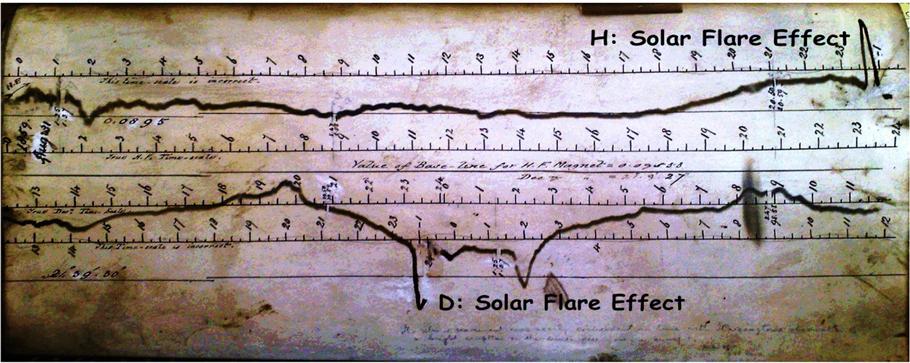
One of 12 magnetograms recorded at Greenwich Observatory during the Great Geomagnetic Storm of 1859
1996 soccer game in the Midwest, (Rick Dikeman image)
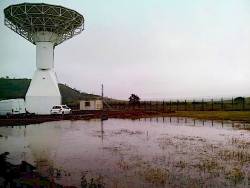
Nouméa ground station after the flood
A pencil and a coffee cup show the size of NASA’s teeny tiny PhoneSat
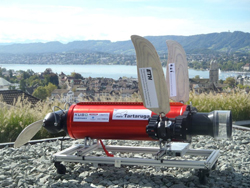
Bonus Hotspot: Naro Tartaruga AUV
Pacific lamprey spawning (photo by Jeremy Monroe, Fresh Waters Illustrated)
“Return of the Bucentaurn to the Molo on Ascension Day”, by (Giovanni Antonio Canal) Canaletto
The U.S. Naval Observatory Alternate Master Clock at 2nd Space Operations Squadron, Schriever AFB in Colorado. This photo was taken in January, 2006 during the addition of a leap second. The USNO master clocks control GPS timing. They are accurate to within one second every 20 million years (Satellites are so picky! Humans, on the other hand, just want to know if we’re too late for lunch) USAF photo by A1C Jason Ridder.
Detail of Compass/ BeiDou2 system diagram
Hotspot 6: Beluga A300 600ST

1. EASY RIDER
Milwaukee, Wisconsin USA
√ Not only has century-old American motorcycle manufacturer Harley Davidson used consumer focus groups for the first time to develop its newest “hogs,” it has responded to customers with a voice-activated touch-screen GPS unit, the first on a production model. Now the Easy Riders don’t have to wend their way to trouble, they can ask their chopper where to go.

Read More >

By Inside GNSS

IGM_e-news_subscribe