Munich Summit Highlights Satellite Navigation Plans, GNSS Program Struggles
Paul Verhoef, European Commission (left), and Yin Jun, China Ministry of Science and Technology
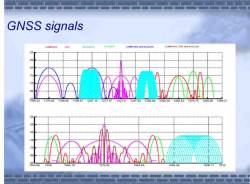
Highlights of the 2009 Munich Satellite Navigation Summit (March 3- 5): Russia will place its first CDMA signal on the GLONASS L3 frequency that overlaps the European Galileo E5b spectrum; China plans to launch three Compass satellites this year and seven more next year to provide a regional capability for Compass/Beidou, followed by completion of the full 30-MEO, 5-GEO constellation after 2015 and before 2020; Galileo program discussions revealed tensions around negotiations with China about a frequency overlay of Compass signals on the security-oriented Public Regulated Service as well as the question of whether the costs to build Galileo can be kept within the €3.4-billion limit agreed by the European Council and the European Parliament; the GPS Block IIR-20(M) satellite with an L5 demonstration payload will be launched later this month in what may be the program’s last chance to secure primary GPS access to the frequency.