
New Builds

Qualcomm Adds GLONASS Capability to Chipsets

Qualcomm Incorporated has announced the company’s product support for the Russian GLONASS satellite system to enable the use of both GPS and GLONASS networks simultaneously for improved location performance.

The first GLONASS-capable phone is the MTS 945 from Chinese phone manufacturer ZTE developed with Russian chipset manufacturer AFK Sistema and powered by Qualcomm’s Snapdragon MSM7x30 chipset.

Read More >

By Inside GNSS
June 1, 2011

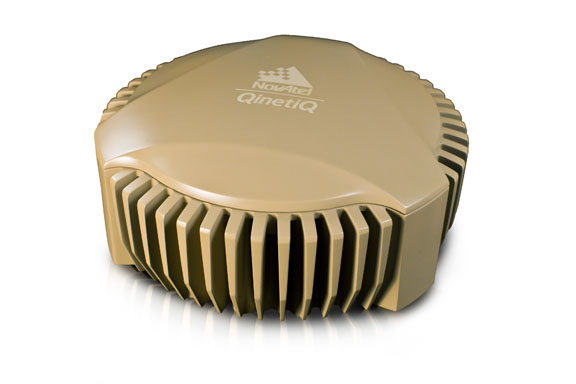
NovAtel, QinetiQ Collaborate on Anti-Jam GPS System

NovAtel Inc. in collaboration with QinetiQ Ltd. has developed GAJT (pronounced “Gadget”), the world’s first single-enclosure GPS anti-jam system small enough for light armored and other land-based military vehicles. GAJT combines NovAtel and QinetiQ technologies in a stand-alone, rugged enclosure that mounts to the exterior of vehicles.

GAJT is a seven element controlled reception pattern antenna (CRPA) that nulls jammers, ensuring GPS positioning capabilities are retained during combat, training, or other vehicle-based missions.

Read More >

By Inside GNSS
May 24, 2011

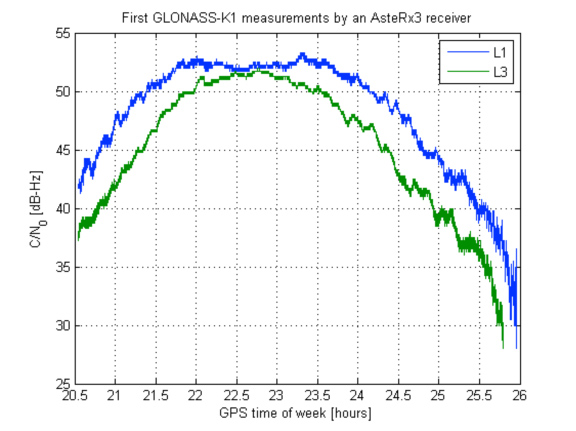
Septentrio Announces AsteRx-m ‘Ultra-Compact’ GPS/GLONASS RTK Receiver

Septentrio has announced plans to release the AsteRx-m, a low-power GPS/GLONASS dual-frequency RTK receiver that is smaller than a credit card.

The new board, which will begin shipping in the third quarter of 2011, is aimed specifically at integration in handheld devices, mobile computing platforms, and other solutions requiring high accuracy combined with low power in applications where space is at a premium. The new receiver covers the functionality range from GPS-L1 only to full GPS-GLONASS L1-L2

Read More >

By Inside GNSS
[uam_ad id="183541"]
April 28, 2011

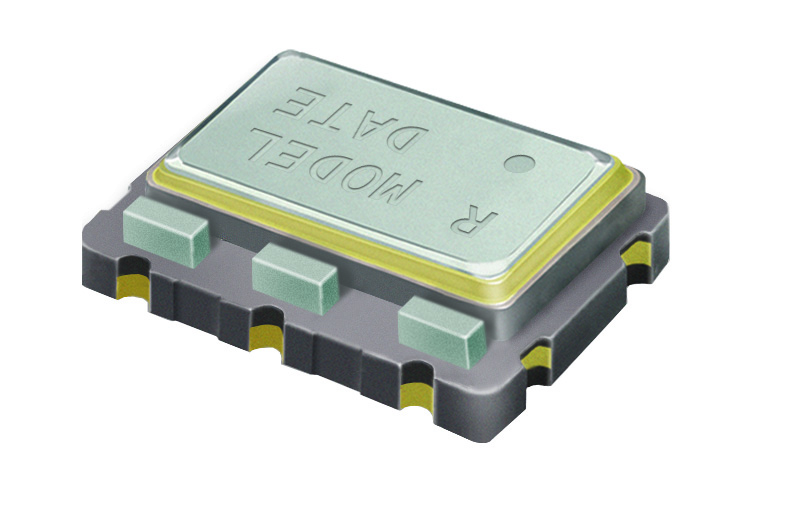
Rakon Introduces RTX-A TCXOs

Rakon RTX7050A TCXO

Rakon Ltd. has launched two new fully integrated temperature compensated crystal oscillators (TCXOs) in its RTX-A series, designed for use in precision GNSS receivers and wireless communication devices and base stations, such as LTE femtocells, IP timing, and WiFi/WiMax.

The RTX7050A and RTX5032A (5 x 3.2 millimeters) employ an analog IC for both the oscillator and temperature compensation.

Read More >

By Inside GNSS

Geneq Announced Dual-Frequency RTK GPS, OmniSTAR HP Receivers

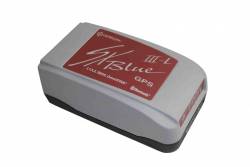
Geneq SXBlue IIIL

Geneq Inc., a Montreal, Quebec, Canada, manufacturer, has introduced two new GPS products.

The SXBlue III-L is a compact GPS L1/L2 receiver in the world designed for use with OmniSTAR’s HP service to attain decimeter accuracy worldwide. Targeted at GIS mapping/surveying applications, the receiver measures 14 x 8 x 5.6 centimeters (5.57 x 3.15 x 2.22 inches) and weighs 517 grams (1.14 pounds) including battery.

Read More >

By Inside GNSS
[uam_ad id="183541"]
January 30, 2011

Spectracom Launches GSG-55 GPS/SBAS Constellation Simulator

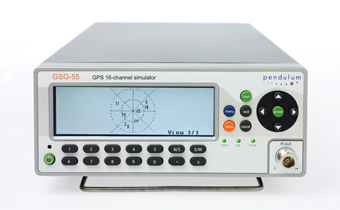
Pendulum GSG-55 Simulator

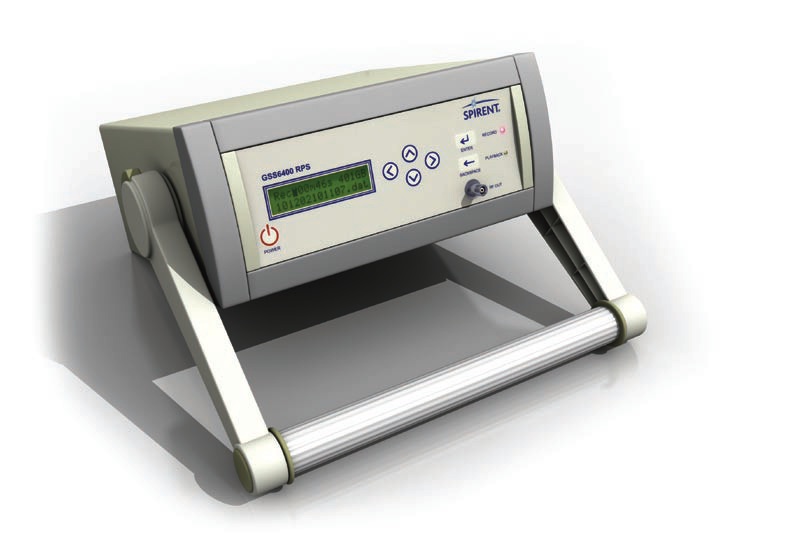
Spectracom has announced its new 16-channel GPS constellation simulator, the Pendulum GSG-55.

The latest in the Pendulum line of GPS receiver test instruments, the GSG-55 is able to simulate Satellite-Based Augmentation Systems (SBAS), such as the U.S. Wide Area Augmentation System and the European Geostationary Navigation Overlay Service (EGNOS).

Read More >

By Inside GNSS
January 25, 2011

Lockheed Martin to Test GPS III in Virtual World

Collaborative Human Immersive Laboratory (CHIL) illustration (Lockheed Martin)

GPS III contractor Lockheed Martin has integrated several virtual reality technologies in a new Collaborative Human Immersive Laboratory (CHIL) in Littleton, Colorado, which will be used to validate and test next-generation GPS and other space programs.

With CHIL, Engineers and technicians can explore satellite designs and functions, troubleshoot and fine-tune them in a virtual world before building them in physical space.

Read More >

By Inside GNSS
January 18, 2011

Symmetricom Launches CSAC Product for Precise Timing and Synchronization

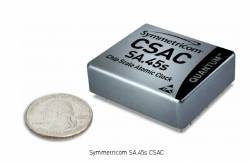
After eight years of successful participation in the Defense Advanced Research Projects Agency (DARPA) chip scale atomic clock (CSAC) initiative, Symmetricom, Inc., announced today (January 18, 2011) the general availability of what it says is the world’s smallest, lowest power atomic oscillator: a 16 cubic-centimeter unit weighing less than 35 grams (about 1.25 ounces) and operating on only 115 milliwatts of 3.3 VDC power.

Read More >

By Inside GNSS
1 48 49 50 51 52 57
IGM_e-news_subscribe