
ION GNSS+ 2025: Galileo at 30 and the Future of Resilient PNT
While celebrating the Galileo milestone, the conference focused on addressing today’s GNSS vulnerabilities and moving toward a more assured PNT.
By Richard Thomas
Global Navigation Satellite Systems Engineering, Policy, and Design
While celebrating the Galileo milestone, the conference focused on addressing today’s GNSS vulnerabilities and moving toward a more assured PNT.
By Richard Thomas
Safran Federal Systems, a leading provider of Assured Position, Navigation, and Timing (A-PNT) solutions, has been selected by Moog Inc. to provide its Skynaute navigation solution as part of Moog’s Genesys Avionics Suite™ for the Lockheed Hercules platform (L-Series and C-130).
By Inside GNSS
How Swift Navigation aims to make centimeter-level positioning affordable at automotive scale—with carrier partnerships, a cloud-first corrections network, and safety metrics designed for control-loop trust.
By Inside GNSS
Beyond the mapless versus HD maps debate.
By Inside GNSS
Recent moves by Estonia demonstrate the strengthening of GNSS resilience through open access, multi-constellation support and European integration.
By Peter Gutierrez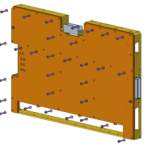
Power conversion has become a critical focus in the race to make satellite and communications payloads lighter, smaller, and more energy-efficient. Airbus Crisa’s latest development, the Antenna Power Regulator (APR) module, represents a decisive step forward.
By Peter Gutierrez![On-site testing and validation of GreenAsph 4.0; Image courtesy Exact Control System[50]](https://insidegnss.com/wp-content/uploads/2025/11/On-site-testing-and-validation-of-GreenAsph-4.0-Image-courtesy-Exact-Control-System50-150x150.jpg)
Czech company Exact Control System, with support from the European Space Agency (ESA), is redefining digital road rehabilitation with multi-layer GNSS-guided milling, on-board 3D modeling, and selective asphalt recycling.
By Peter Gutierrez
VIAVI Solutions Inc. has received an award from the U.S. Department of Transportation (DOT) through its Complementary Positioning, Navigation, and Timing (CPNT) Action Plan Rapid Phase II.
By Inside GNSS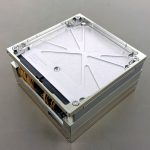
At a recent event hosted by the European Space Agency (ESA), Artur Kobyłkiewicz, Project Manager at GMV Poland, and Roman Wawrzaszek, Project Manager at the Space Research Centre of the Polish Academy of Sciences (CBK PAN), presented the results of the GNSSWLEO project.
By Peter Gutierrez![Some of the equipment that makes up Indra’s GBAS; Image courtesy Indra[87]](https://insidegnss.com/wp-content/uploads/2025/11/Some-of-the-equipment-that-makes-up-Indras-GBAS-Image-courtesy-Indra87-150x150.jpg)
Indra Navia’s ground-based augmentation system (GBAS), developed in Norway, is installed at airports worldwide, enhancing satellite navigation accuracy for aircraft landings. Positioned at or near runways, it provides precise guidance and integrity data, enabling safer, more efficient, and flexible approaches.
By Peter Gutierrez
Spirent Communications, now part of Keysight Technologies, announced PNT Xe, a new global navigation satellite system (GNSS) simulation platform designed to extend high-performance GNSS testing to more users across the development lifecycle.
By Inside GNSS
The Netherlands is preparing to implement a distance-based tolling system for heavy goods vehicles (HGVs) exceeding 3.5 metric tons, scheduled to start on July 1, 2026. The initiative aims to modernize road user charging by employing GNSS-based technology to monitor vehicle movements and calculate tolls per kilometer driven.
By Peter Gutierrez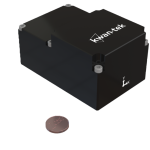
In a time of increasing geopolitical tension and the growing incidence of GNSS interference, particularly in Eastern Europe, quantum sensing has emerged as a pivotal alternative technology for ensuring resilient positioning, navigation and timing (PNT) systems.
By Peter Gutierrez