The Inertialist: Inertial Testing – Tricks of the Trade
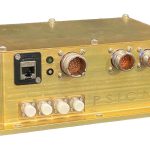
Guest contributor Marius Gheorghe of Ideal Aerosmith Inc. explores time-tested techniques and exclusive insights for effective inertial sensor and system testing.
By Andrey SolovievGuest contributor Marius Gheorghe of Ideal Aerosmith Inc. explores time-tested techniques and exclusive insights for effective inertial sensor and system testing.
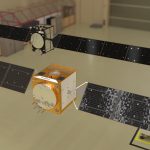
By Andrey SolovievAdvanced Space’s CAPSTONE mission has been operating near the Moon for over 440 days, focusing on testing Positioning, Navigation, and Timing (PNT) technologies in a cislunar environment. The mission, officially known as the Cislunar Autonomous Positioning System Technology Operations and Navigation Experiment, aims to demonstrate new capabilities for spacecraft navigation and positioning in lunar space.
By Inside GNSSThe payload will augment existing GNSS constellations with additional navigation signals from LEO, while relying on GNSS for orbit determination and time synchronization.
By Inside GNSSPositioning and wireless communication technologies provider, u-blox, has announced the launch of two LTE-M cellular module series, the SARA-R52 and LEXI-R52. These modules are designed to meet the needs of industrial applications requiring both positioning and wireless communication capabilities.
By Inside GNSSHow GEODNET’s blockchain-based decentralized network approach is scaling global GNSS correction network density and coverage.
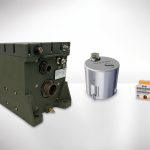
By Inside GNSSSeptentrio has announced the release of AntaRx-Si3, a GNSS/INS Smart Antenna housed in an ultra-rugged enclosure, designed for straightforward installation on machinery like agricultural robots. It combines Septentrio’s high-accuracy GNSS positioning with an Inertial Measurement Unit (IMU) within the same enclosure as the GNSS antenna, utilizing FUSE+ technology.
By Inside GNSSThe Korea Augmentation Satellite System (KASS), designed and implemented by Thales Alenia Space as the prime contractor, has been officially certified by Korean national authorities and has entered operational service. This system was developed in partnership with the Korea Aerospace Research Institute (KARI) on behalf of the Korean Ministry of Land, Infrastructure and Transport (MOLIT).
By Inside GNSSAiroha Technology has announced the launch of its AG3335MA satellite positioning chip series at the end of December 2023. This new chip series has successfully passed the AEC-Q100 Grade 2 reliability qualification tests for automotive applications.
By Inside GNSSThis study examines the frequency, type and severity of interference events at specific locations in the country, providing valuable insights into the use of detectors, the nature of interference encountered, their potential sources and the impact on GNSS-derived positions.
By Inside GNSSBAE Systems has successfully completed the Critical Design Review (CDR) for its Military GPS User Equipment (MGUE) Increment 2 Miniature Serial Interface (MSI) program, marking a significant milestone in the development of an advanced military GPS receiver and next-generation semiconductor. This development is part of a $247 million contract awarded in 2020 by the U.S. Space Force.
By Inside GNSSA look at recent testing and the advantages of using KF tracking to process GNSS meta-signals.
By Daniele Borio and Melania SusiQualinx, a company specializing in ultra-low power wireless tracking and connectivity semiconductors, has announced a partnership with the European Union Agency for the Space Programme (EUSPA). This collaboration, under the Fundamental Elements EU R&D funding mechanism, aims to develop a consumer-grade, low-power GNSS receiver for EUSPA’s GNSS authentication service.
By Inside GNSSOn January 18 2024, the 2023 update of the European Radio Navigation Plan was made available online in five languages. The publication is a European Commission Staff Working Document, written by The Directorate-General for Defence Industry and Space (DG DEFIS), in cooperation with the Joint Research Centre (JRC), the European Commission’s science and knowledge service.
By Inside GNSS