B: Applications

QZSS’s Indoor Messaging System

Japan’s Indoor MEssaging System (IMES) promises to provide “seamless” indoor and outdoor positioning with no extra hardware for a GPS-enabled phone, receiver, or other portable device. But what is it?

Japan’s Indoor MEssaging System (IMES) promises to provide “seamless” indoor and outdoor positioning with no extra hardware for a GPS-enabled phone, receiver, or other portable device. But what is it?

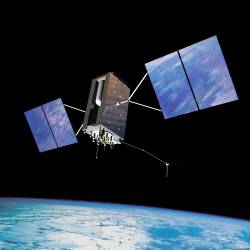
IMES is a lesser-known part of the regional Quasi-Zenith Satellite System (QZSS) being developed by the Japan Aerospace Exploration Agency (JAXA). The QZSS program will place three satellites in high-altitude orbits transmitting ranging signals to improve navigation performance in areas of Japan that prove difficult with GPS alone. The first launch of a QZSS satellite is scheduled for 2010.

Five of six QZSS signals transmitted from these satellites will use the same signal structures, frequencies, spreading code families, and data message formats as GPS and GPS satellite-based augmentation system (SBAS) signals.

An annex to the interface specification for QZSS (IS-QZSS) sets forth the IMES signal design. (See reference in Additional Resources section at the end of this article.)

Although QZSS satellite signals will only be available in a western Pacific Ocean region centered over Japan, IMES is a separate terrestrial element based on an open specification that could be implemented anywhere.

According to the annex, the IMES signal is designed by JAXA to contribute to “the development of QZSS-ready receivers as well as satellite positioning applications by realizing the seamless positioning environment.” However, IMES signal transmitters are not part of the QZSS component; rather, the IMES specification is intended to aid third-party vendors in further development and installation of the system.

Primarily, IMES is designed to provide accurate positioning indoors where reception of GPS and other GNSS signals is blocked or unreliable. By being able to operate indoors using GPS-capable equipment (by upgrading a receiver firmware with the IMES navigation bit decoding algorithms), the system is meant to pick up where GPS fails, in a “seamless” way.

IMES is really competing with assisted-GPS or GNSS (AGPS/AGNSS), which has been used with some success — although substantial inaccuracy — for indoor positioning. In particular, its advocates advance IMES’s utility for enhanced 911 (E911) automatic location of emergency calls from mobile phone users.

At the recent International Symposium on GPS/GNSS in Tokyo, a number of technical presentations and exhibitors discussed the implementation of IMES technology by JAXA, GNSS Technologies (GNSST), and other companies. Hitachi and GNSST had receivers on their exhibit stands and graphics explaining how IMES worked.

For someone with a GPS background, these graphics were somewhat confusing. It looked as though IMES was a system of GPS retransmitters mounted to ceilings — something that wouldn’t help much at all for indoor navigation.

Further investigation, however, revealed that these transmitters, although they operate in the GPS L1 band, are in fact transmitting a completely separate signal. The IMES signal simply gives the location of the nearest transmitter, which an appropriately configured receiver can then take to be “its” position.

At this point, of course, the alarm bells go off. Transmitting in L1? To GPS users, that’s tantamount to jamming. So, is IMES the perfect answer to the “seamless” ubiquitous positioning problem – or is it a dangerous jamming threat to the integrity of GPS?

Perhaps the answer lies somewhere in between. . . . With that thought in mind, this article briefly describes the IMES program and raises several key issues about its practical use in combination with GNSSs.

The IMES Signal
In June 2008, JAXA released version 1.0 of the IS-QZSS document, which includes the IMES specification. The RF characteristics of IMES are the same as the L1 C/A code for GPS and QZSS.

Transmitted at the GPS L1 center frequency (1575.42 MHz), IMES has a bandwidth of 2.046 MHz or more including the main lobe. Like the L1 C/A code, the IMES signal is right-hand circularly polarized and BPSK-modulated with a pseudorandom noise (PRN) code.

In the current interface specification for GPS (IS-GPS-200D) the U.S. government has approved allocation of the Gold (or PRN) codes 173 to 182 for use by other GNSS applications such as IMES. The received power level at an IMES-capable receiver is specified to fall in the range between -158.5 dBW to – 94 dBW. Word structure, bit rate, and modulation are the same as L1 C/A code.

IMES Messages
IS-QZSS defines four different types of messages, as shown in Table 1 (above, right). Two messages give the location of the transmitter. Message type 0 gives the latitude (23 bits) and longitude (24 bits) in WGS-84. However, height or altitude appears as a building floor number (8 bits). Message 1 provides latitude (24 bits), longitude (25 bits), altitude (12 bits), and floor number (9 bits — with units of 0.5 floor).

Messages 3 and 4 simply send an identifier, which, according to GNSST, can then be used to address a location in a database corresponding to that ID. Messages 3 and 4 also transmit a “BD” bit, which is a border or boundary indicator, set whenever the transmitter is the one “nearest” the outdoors or a GPS-accessible area. (As yet undefined, Message type 2 is reserved for later development.)

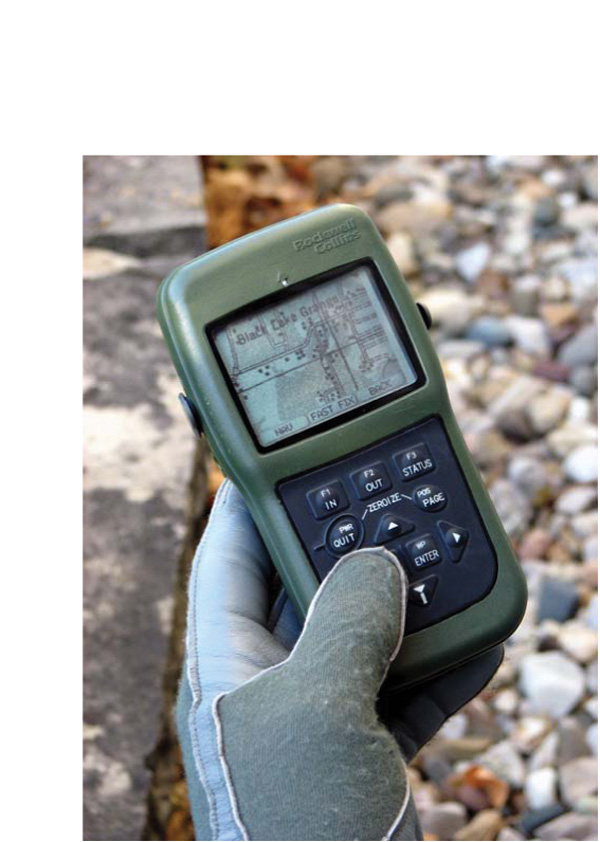
IMES can be used by a suitably modified stand-alone GPS receiver but is primarily intended for use with a GPS-enabled mobile device. Notably, messages 3 and 4 rely on the device to be able to access a database via a network.

The Additional Resources section includes a number of articles, particularly those by D. Manandhar et alia, that describe IMES, its applications, and test results to date in greater detail.

What’s Good about IMES?
What IMES delivers that other indoor location systems does not is reliability and accuracy. When receiving an IMES signal, the receiver has a strong idea of where it is to within tens of meters. The accuracy is better than AGPS, especially in height, and receivers are not required to have high sensitivity.

The big selling point for IMES in Japan is its ability to add a lot of value to simple positioning with additional data, such as maps and route guidance. For example, locations extracted from the databases used with messages 3 and 4 can be accompanied by location-based service (LBS) information.

In fact, the location may not even be returned at all. The sorts of applications used by Hitachi and GNSST to promote or, in Australian slang, spruik IMES include indoor navigation, finding products in a store, geofencing of children, location-specific instructions in case of emergency, asset management, and so forth.

What’s Not So Good about It?
The technology is in its infancy; so, the list of problems that we will raise here looks large, but each issue needs to be dealt with if IMES is in fact going to succeed AGPS.

1. Infrastructure. For IMES to work, the transmitters need to be very densely located in all indoor spaces where location is required, at separations of 20–30 meters. This represents a massive investment in infrastructure. However, unlike AGPS, this investment does not necessarily need to be made by the telecom companies alone or even at all. Also, if the IMES infrastructure is incomplete, AGPS may still be required to fill the gaps.

2. Jamming. IMES should only affect a small area around the transmitter. However, within this area, IMES will completely jam GPS.

The QZSS specification suggests that the IMES power levels are high enough to jam GPS outdoors. A maximum transmitted signal strength of -94 dBW is about 65 dB stronger than an unobstructed GPS signal received outdoors. The receiver will generally receive the signal at a much lower level; the minimum is specified to be -158.5 dBW, but jamming is still likely to occur nearby to a transmitter. Indoors, where the direct GPS signals are strongly attenuated, the situation would be worse.

The Gold codes are designed so that a receiver should be able to detect a GPS signal that is about 21dB weaker than the strongest GPS signal. This is known as the cross-correlation margin. Advanced signal-processing techniques, such as those developed by Eamonn Glennon at the University of New South Wales, can increase this margin substantially, but even with indoor GPS, cross-correlation margins of 65 dB have not even been considered.

Other systems that have been assigned codes in the IS-GPS-200D, such as SBAS and QZSS itself, transmit at levels that do not exceed the cross-correlation margin. In practice, in Japan the levels will not be as high as those in the specification. GNSST suggest that transmitters will be limited to -100 dBW (or -70 dBm), still significantly stronger than GPS.

Initial GNSST experiments suggest that this transmitted signal strength only has a noticeable effect on a GPS receiver within one meter (with the stronger level of the specification affecting receivers out to three meters’ distance). These affected regions seem small, and independent tests should be used to confirm the GNSST results. If they are valid, IMES will only jam a relatively small area.

The system model of IMES is also not “backward compatible,” meaning that if a user has an AGPS device that has happily worked for years, once IMES is installed, that device can no longer use AGPS.

3. Seamlessness. Interestingly, in the papers presented about IMES, the word “seamless” appears prominently. The idea is that the same equipment can use GPS outdoors and IMES indoors, “seamlessly.” Some papers even claim that the seamlessness has been proven by experiment.

This isn’t quite the case, however.

Modified receivers and mobile phones have been shown to work indoors with IMES signals and outdoors with GPS, but as yet none of the published experiments appear to showing a receiver happily using IMES and transitioning without interruption to GPS outside, or vice versa. The transition from GPS to IMES should be “seamless” — that is, the receiver holds on to GPS until it is jammed or blocked indoors, by which time it has picked up IMES (as long as it is looking for it).

Going the other way is more problematic. IMES can be used until it is too weak to be received, but then the receiver should be able acquire four GPS satellites. If the equipment is being used in an environment broadcasting Messages 3 or 4, then it will have been warned by the BD bit to start looking for GPS signals. In a Message 1 or 2 environment, no such warning will have been given.

Because IMES requires the receiver to receive one IMES signal at a time, a “handover” between IMES transmitters must take place. So, while receiving from one transmitter, the receiver must be searching for others, not knowing which of the PRNs is best to search for.

The near-far phenomenon means that the current IMES transmitter will jam others until they are within the cross-correlation margin. Consequently, once a transmitter’s power has been set, maximum and minimum distances emerge for the placement of other transmitters.

These transmitters must use different PRNs or else they will spoof each other. This means that the IMES transmitters must be laid out based on a code-reuse pattern similar to the frequency-reuse patterns employed by cellular networks, with the added complication of operating in three dimensions, i.e., different floors of a building by definition have different IMES transmitters.

Returning to the question of GPS/IMES transitions, although a huge effect is not likely, this cross-acquisition between GPS and IMES will use more energy than for one system alone, if for no other reason than it increases the PRN search space by the 10 codes used for IMES.

4. “You are the ground segment.” The IMES transmitters, like GPS satellites, tell the receiver where they are. However, in the case of GPS satellites, a secure, centralized ground segment infrastructure is used to create the transmitted messages.

In the case of IMES, the lat/long/height/floor that is transmitted must come from somewhere else. Each of the locations must be surveyed in. The accuracy of this survey need not be great, because the resolution of the transmitted messages is 1–3 meters and, in any case, that position applies for regions of tens of meters.

However, the surveyed position of an IMES transmitter still needs to be accurate to, say, meters in WGS-84. Given the enormous numbers of transmitters needed for this system, a huge scope for error arises in a) the measurement of the position, b) the data entry of the position, and c) the installation of the equipment (a transmitter with a perfectly well entered position being installed in the wrong place).

5. “They are the ground segment.” Messages 3 and 4 don’t tell you your position directly. That information comes from a database. The business model put forward by GNSST suggests that the database may be owned by, “for instance, department store, underground mall and etc.”

What that means is that users may not get the position they’re looking for, just what the department store or underground mall wants them to receive. As with casinos in Las Vegas, navigating one’s way out of the shop as soon as possible may not be in the store owner’s best interest.

6. Security. Tens or hundreds of thousands of these devices are needed for IMES to operate properly. They will have to be installed in public areas such as shopping centers and railway stations, and private areas such as shops. Their installation needs to be cheap because of the sheer numbers involved.

However, if an IMES transmitter can be installed relatively simply, it is also likely to be easy to remove. A stolen transmitter, or one simply bought from the manufacturer, could cause havoc. Driving through a city with a high-powered IMES transmitter on the dashboard could cause all GPS navigators nearby to either cease working, or worse, if they are IMES-enabled, to think they were in the location of the stolen device (i.e., inside a building). It makes GPS jammers (or IMES spoofers) readily available to any small-time thief.

7. Frequency allocation and regulation. Ultimately, IMES will only ever operate in countries where the IMES signal has been sanctioned in the L1 band. This may in some cases require a change in the law before it can operate. In Australia, for instance, any transmission in the L1 band must not have an intention to jam GPS, otherwise it is considered a criminal act. IMES works by deliberately jamming GPS (or at least AGPS) in indoor environments.

Although IMES transmitters are not pseudolites, it would make sense if they were regulated in a similar way. Recently, the European Conference of Postal and Telecommunications Unions (CEPT) has taken the lead in trying to come up with a global standard for pseudolite regulation. The relevant committee is yet to report (possibly early in 2009).

Conclusion
In summary, it appears that before IMES can make significant inroads into indoor positioning, a series of hurdles must first be overcome. IMES is not a magic bullet for the current hot problem of ubiquitous or “seamless” positioning. It’s just another option to add to the list, with its own set of strengths and weaknesses.

Additional Resources
Japan Aerospace Exploration Agency, Quasi-Zenith Satellite System Navigation Service Interface Specification for QZSS (IS-QZSS) V1.0, June 17, 2008 (available on-line at <http://qzss.jaxa.jp/is-qzss/index_e.html>)

NAVSTAR Global Positioning System Interface Specification IS-GPS-200, Revision D, IRN-200D-001, Navstar GPS Space Segment/Navigation User Interfaces, GPS Wing, Space and Missile Systems Center, Los Angeles AFB, California, USA, March 7, 2006

Glennon, E., and R. Bryant, A. Dempster, and P. Mumford, “Post Correlation CWI and Cross Correlation Mitigation Using Delayed PIC,” Proceedings of ION GNSS 2007, Fort Worth, Texas, US, September 26-28, 2007

Manandhar, D., and K. Okano, M. Ishii, M. Asako, H. Torimoto, S. Kogure, and H. Maeda, “Signal Definition of QZSS IMES and Its Analysis,” Proceedings of ION GNSS 2008, Savannah, Georgia, USA, September 16–19, 2008

Manandhar, D., and K. Okano, M. Ishii, M. Asako, H. Torimoto, S. Kogure, and H. Maeda, “Development of Ultimate Seamless Positioning System for Global Cellular Phone Platform Based on QZSS IMES,” Proceedings of ION GNSS 2008, Savannah, Georgia, USA, September 16–19, 2008

Manandhar, D., and S/ Kawaguchi, M. Uchida, M. Ishii, and H. Torimoto, “IMES for Mobile Users: Social Implementation and Experiments based on Existing Cellular Phones for Seamless Positioning”, Proceedings of International Symposium on GPS/GNSS, Tokyo, November 11–14, 2008

Martin, S., and H. Kuhlen, and T. Abt, “Interference and Regulatory Aspects of GNSS Pseudolites,” Journal of Global Positioning Systems, vol. 6, no. 2, pp. 98-107, 2007

By
January 13, 2009

Blaupunkt Picks IfEN Constellation Simulator for Testing Car Nav Systems

NavX-NCS

Blaupunkt GmbH, a leading automotive electronics manufacturer, has selected the NavX-NCS multiconstellation, multifrequency GNSS simulator from IfEN GmbH as the GPS reference for production testing of its car navigation systems.

The NavX-NCS RF constellation simulator supports all present and planned Galileo and GPS frequencies (E1/L1, L2C, E5AB/L5, E6) in one box, now including the composite binary offset carrier (CBOC) signal structure for the Galileo Open Service on E1.

Read More >

By Glen Gibbons

What about GPS jamming and maritime safety, and linear carrier phase combinations?

Q: What is the effect of GPS jamming on maritime safety?

A: Although GPS jamming incidents are relatively rare they can occur; and when they do, their impact can be severe.

The General Lighthouse Authorities of the United Kingdom and Ireland (GLAs) comprise the Commissioners of Irish Lights, the Commissioners of Northern Lighthouses and Trinity House, who between them provide aids to navigation (AtoNs) for the benefit of all mariners in British and Irish waters.

Q: What is the effect of GPS jamming on maritime safety?

A: Although GPS jamming incidents are relatively rare they can occur; and when they do, their impact can be severe.

The General Lighthouse Authorities of the United Kingdom and Ireland (GLAs) comprise the Commissioners of Irish Lights, the Commissioners of Northern Lighthouses and Trinity House, who between them provide aids to navigation (AtoNs) for the benefit of all mariners in British and Irish waters.

In order to investigate the effects of GPS jamming, whether by intentional or accidental means, the GLAs conducted a trial in 2008 on the effect of GPS denial on marine aids-to-navigation, and ship-borne and shore-based navigation and information systems.

Today’s mariners commonly use GPS enabled devices to navigate their vessels, however large, from port to port and berth to berth.  The International Maritime Organization (IMO) mandates the carriage of electronic position-fixing systems by all vessels over 300 gross tons and those carrying passengers on an international voyage in accordance with the Safety of Life at Sea (SOLAS) convention.

The GPS position is often fed into other vessel systems, for example an electronic chart display and information system (ECDIS), the vessel’s automatic identification system (AIS), or a plotter.

The use of differential GPS (DGPS) is preferred; mariners improve their positioning accuracy and ensure integrity of their GPS derived position by using the large number of DGPS radiobeacons located around the world.

Although GPS receivers for navigation are commonplace and very conspicuous on the bridge, the use of GPS is often more inconspicuous in other AtoN and positioning devices. Examples include its use for providing position input to the onboard AIS transponder, as well as the digital selective calling (DSC) system, which has the capability to include the vessel’s position as part of a distress signal.

In addition to vessel-based systems, marine aids-to-navigation use GPS. AIS timeslots may be synchronized using GPS as a source of accurate time. AIS also provides AtoN position information based on GPS input. Synchronized lights use GPS as a common timing source, and differential GPS services provide accuracy and integrity to the mariner.

Therefore, GPS denial, whether intentional from malicious jamming or unintentional due to malfunctioning equipment such as television antennas, may affect safety both on the bridge and on-shore.

(For the rest of Alan Grant and Paul Williams’ answer to this question, please download the complete article using the pdf link above.)

Q: What are linear carrier phase combinations and what are the relevant considerations?

A: Linear carrier phase combinations are formed by adding or subtracting carrier phase measurements on two or more frequencies. Such combinations are used to improve the resulting measurement in some manner relative to the original measurements.

In this context, “improvement” usually implies removing/reducing certain errors so as to facilitate the ambiguity resolution process or increase the measurement (and, therefore, position) precision. We must note, however, that improvement in both areas is not possible and thus a design trade-off is required.

In this “solution,” we will discuss how linear carrier phase combinations are formed and the key considerations associated with this process. A discussion of some of the common GPS combinations is also provided.

Topics in the full article include Linear Combinations, Integer Nature of the Ambiguities, Magnitude of Errors in Units of Cycles, Magnitude of Errors in Units of Length.

Summary and Outlook
The analysis focuses on dual-frequency combinations. However, with the modernization of GPS and the upcoming launches of Galileo and Compass, multiple frequency combinations will be possible. Despite this, the considerations discussed in this article will still hold and can be used as a stepping stone for more advanced combinations and subsequent data processing.

(For the rest of Mark Petovello’s answer to this question, please download the complete article using the pdf link above.)

By Inside GNSS
[uam_ad id="183541"]

Critical Infrastructure: The United States and GPS

So, President Obama wants to spend some money on infrastructure, eh? Well, here’s an idea: send some of it GPS’s way.

Infrastructure isn’t just concrete and rebar. We can also build highways to the stars and — pardon the clichés — bridges to the future rather than bridges to nowhere.

And talk about bang for the buck. The billion dollars or so that the United States spends on GPS each year produces many tens of billions of dollars in products and services.

So, President Obama wants to spend some money on infrastructure, eh? Well, here’s an idea: send some of it GPS’s way.

Infrastructure isn’t just concrete and rebar. We can also build highways to the stars and — pardon the clichés — bridges to the future rather than bridges to nowhere.

And talk about bang for the buck. The billion dollars or so that the United States spends on GPS each year produces many tens of billions of dollars in products and services.

Of course, a big chunk of that GPS market is outside of this country. But after our recent lamentable contribution to global financial troubles, perhaps its time to remind the world about the unprecedented U.S. generosity in creating an entirely new public utility and making it available everywhere.

Not only that, but U.S. policy forced other GNSS providers to be generous, too. As the would-be Galileo public-private partnership discovered, you can’t compete with free.

Anyway, back to Obama and infrastructure.

The Global Positioning System has many unusual, novel, perhaps even unique features. But the one that relates to the current topic is that GPS is both a critical infrastructure in itself — notably its ground control and space segments and the pervasive, strategic installation of high-performance receivers  — and a contributor to other critical infrastructures, such as communications networks or transportation.

That should earn GPS double the attention, if not twice the budget.

But there’s more. GPS not only allows us to do things that we couldn’t do before; it allows us to do them more efficiently — greater productivity at less cost, whether surveying forest boundaries or guiding a thousand airplanes at once.

And though those efficiencies may reduce the job opportunities at individual enterprises, they stimulate a far greater amount of job creation overall — design and engineering, manufacturing, professional fieldwork — most of it high-skilled and higher-paying than the positions that were lost.

The United States really hasn’t had an industrial policy since just before and during World War II, when the Roosevelt administration converted much of the nation’s jobless into public employees (Works Progress Administration, Civilian Conservation Corps), its manufacturing sector into an armament assembly line, and gasoline and foodstuffs into ration coupons.

After that, we saw occasional, isolated initiatives — the interstate highway system, the lunar missions of the 1960s, SEMATECH — large-scale infrastructure and technology programs that could have served as potential components of an industrial policy, if one had existed.

GPS can help thread the new infrastructure efforts together, and expand the role that it already plays.  Many commercial GPS manufacturers are looking forward to the opportunities that building or restoring highways, bridges, and (imagine!) maybe even railroads will bring.

But the United States is still running the GPS program as though we had all the time in the world. Well, no offense to those atomic clocks on board the GPS satellites (another first of its kind), but the world is quickly catching up with us in matters of GNSS. And, if we take a close look at the world’s four GNSS program schedules, over the next few years just about every other GNSS system is going to pass GPS by in terms of signal availability, modernity, and diversity.

The United States risks seeing its GPS brand decline amid the growing choices in the GNSS marketplace.

It’s time that the GPS leadership, civil and military, revisited its prevailing philosophy and began launching for scheduled capability, rather than as needed to sustain an aging constellation.

And, while they’re at it, they should take another look at the size of the constellation. Every other GNSS system is committed to a true 30 satellite/30 slot configuration. If the advent of the biggest infrastructure investment in American history isn’t the right time to do the same with GPS, when is?

As American poet Edwin Markham asked on behalf of the man with the hoe gazing at the ground, “Give back the upward looking and the light/ Rebuild in it the music and the dream”

By

Thales Alenia Space Italia Wins Two Galileo Receiver Development Contracts

The European Space Agency (ESA) has awarded Thales Alenia Space Italia (TAS-Italia) two contracts for development of Galileo ground station receiver equipment.

One contract is for Galileo In-Orbit Validation Element (GIOVE) phase A/B ground station receivers capable of tracking the multiplex binary offset carrier (MBOC) signal that is common to both the Galileo Open Service (OS) and the new GPS L1 civil signal, which will be transmitted beginning with the GPS III generation of satellites.

Read More >

By Glen Gibbons
January 12, 2009

Dual-Frequency RTK GPS Receiver

Hemisphere GPS offers the dual-frequency R220 GPS receiver, a 39-channel that offers real-time kinematic (RTK) operation with 12 channels of L1 C/A code, 12 channels of L1 P-code, and 12 channels of L2 P-code tracking. The other three channels can be used for tracking satellite-based augmentation systems including OmniSTAR’s commercial HP and XP differential correction services or three additional channels of L1 C/A-code tracking.

Read More >

By Glen Gibbons
January 11, 2009

Former U.S. Space Commerce Official Joins ITT

Edward M. Morris

Edward M. Morris, formerly executive director for the U.S. Office of Space Commercialization, Department of Commerce, has joined ITT Space Systems Division (SSD) as executive director of strategic business development.

In his new position, Morris will be responsible for strategic program and business development of GPS navigation systems and additional space-related capabilities.

Read More >

By Glen Gibbons
[uam_ad id="183541"]
January 9, 2009

Gates Backs Lynn for Key Defense Post

William J. Lynn III

(Updated Jan.26) President Barack Obama’s nomination of William J. Lynn III, a senior vice-president at Raytheon Corporation, for deputy secretary of defense and his granting Lynn a waiver from the new administration’s own rules on former lobbyists has provoked considerable criticism from some quarters.

As the number two official in the Department of Defense (DoD), Lynn would report directly to Robert Gates, the current secretary of defense who has continued in that position in the new administration, the only holdover from ex-President Bush’s cabinet. Gates has come out strongly in support of Lynn, saying that he requested the waiver from the president.

Among other responsibilities, the deputy secretary serves as the co-chair of
the Space-Based Positioning, Navigation, and Timing (PNT) Executive
Committee (ExCom). Lynn would succeed Gordon England, who has paid a lot of attention to GPS during his term in office and enhanced the role of the PNT ExCom as an arbiter and advocate for the GPS program throughout the federal government.

Read More >

By Glen Gibbons
January 8, 2009

AUVSI Unmanned Systems Program Review 2009

AUVSI sponsors a three-day review of government unmanned system programs at the Mandarin Oriental Hotel in Washington DC on February 3-5 2009.

The event features 30 sessions covering air, ground and maritime systems. Topics include Next Generation UAS, Civil Use of UAS, DARPA Programs, NIST Search and Rescue, Irregular Warfare use for Maritime Systems, and many more.

AUVSI is the Association for Unmanned Vehicle Systems International, an industry group.

Register online at the website below.

Read More >

By Inside GNSS
January 6, 2009

PCTEL Acquires Wi-Sys

PCTEL, Inc., announced today (January 5) that it has acquired Wi-Sys Communications Inc., an Ottawa, Ontario, Canada–based company that specializes in GPS antenna and receiver technology. PCTEL will pay $2.1 million for Wi-Sys and plans to fully integrate the latter company’s operations into its Antenna Products Group (APG).

Read More >

By Glen Gibbons
December 26, 2008

GNSS Postprocessing Software

OnPOZ Precision Positioning (a division of VGI Solutions) offers a new EZSurv GNSS Post-Processing version that offers full compatibility with GLONASS satellite signals. According to the company, EZSurv is compatible with most of the raw GNSS data formats on the market. The software computes high-accuracy geodetic results, enabling seamless data postprocessing among different brands of GNSS receivers using the following surveying modes: static, rapid static, stop and go, kinematic, semi-kinematic, and on-the-fly (OTF) for single and dual frequency receivers.

Read More >

By Glen Gibbons
December 7, 2008

NovAtel Announces GNSS Smart Antenna for Machine Guidance

NovAtel has announced its new SMART-AG antenna, an L1 GPS + GLONASS receiver plus antenna system housed in a single, low profile, rugged enclosure, designed for manual guidance and auto steer installations.

SMART-AG features 14 GPS L1 channels, 12 GLONASS L1 channels, and two additional channels for satellite-based augmentation systems (SBAS) as well as two NMEA 0183 compatible RS-232 serial ports, an NMEA2000 compatible CAN port, plus built-in mounting magnets.

Read More >

By Inside GNSS
IGM_e-news_subscribe