
Kodiak Robotics relies on lightweight mapping for autonomous truck PNT
Kodiak Robotics, Inc. has been on a bit of a roll lately, developing automated solutions for long-haul truck routes in the southern parts of the U.S.
By Kevin JostKodiak Robotics, Inc. has been on a bit of a roll lately, developing automated solutions for long-haul truck routes in the southern parts of the U.S.
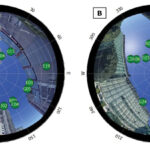
By Kevin JostA factor-graph optimization-based GNSS positioning method uses GNSS pseudorange and Doppler observations to estimate position, velocity, and receiver clock biases. Added constraints on past and current graph nodes of the graph using time-difference observations of the GNSS carrier phase improve the accuracy, and a robust optimization method excludes multipath outliers. Experimental results reduce horizontal positioning error from 5 to 10 meters to 1.37 meters.
By Inside GNSSThe concept of autonomous driving has generated a lot of interest and attention in the past decades as it is believed to provide numerous benefits for individuals and society: increased road safety, reduced traffic congestion, accidents and death, and saving time and pollution on commuting. There is a lot of ongoing work on this topic, much research and many experiments have been conducted on how to make cars learn the environment, make human-like decisions and drive on their own.
By Inside GNSSDifficult GNSS environments and adverse weather conditions require a fusion of many sensors to maintain lane-level accuracy for autonomous platforms, without incurring high costs that would inhibit widespread adoption. Radars are an attractive option in a multi-sensor integration scheme due to being robust to adverse weather and insensitive to lighting variations.
By Inside GNSSEMCORE Corporation, a provider of advanced mixed-signal products that serve the aerospace & defense, communications, and sensing markets, announced that it has entered into a definitive agreement to acquire the assets and liabilities of the L3Harris Space and Navigation Business for approximately $5 million in an all-cash transaction.
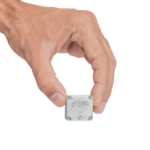
By Inside GNSSSBG Systems announced the tactical-grade Pulse-40 inertial measurement unit (IMU) in a miniaturized size for precision and robustness under harsh conditions, with an excellent size, weight, power and cost (SWAP-C) rating for its category.
By Inside GNSSBy Miguel Amor, Chief Marketing Officer
Hexagon’s Autonomy & Positioning division
I had my first interaction with a geodetic GPS receiver in the early ’90s. In my freshman year of college, a professor demonstrated how to use two single-frequency receivers to achieve centimeter accuracy for post-processing observations. I didn’t know at the time that I would spend the next 30 years deeply involved in and contributing to this innovative positioning technology.
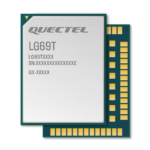
By Inside GNSSQuectel Wireless Solutions, a supplier of IOT modules and antennas, and Point One Navigation, a supplier of precision location technology, announced the LG69T-AM addition to the LG69T GNSS Module Series.
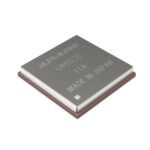
By Inside GNSSAlps Alpine and Furuno Electric Co., Ltd. have jointly developed the UMSZ6 Series GNSS1 Module realizing high-accuracy positioning to within 50 centimeters without correction data for automotive applications.
By Inside GNSSThe European Union Agency for the Space Programme has published a 41-page Info Note on the Galileo Open Service Navigation Message Authentication (OSNMA).
By Inside GNSSLocata Corporation and Ursa Navigation Solutions, Inc. (UrsaNav) announced a technology partnership aimed at providing resilient PNT solutions to national governmental and commercial interests globally. Combining Locata’s high-accuracy local-area and UrsaNav’s very wide-area PNT produces a solution which lessens dependency on easily disrupted and increasingly vulnerable space-based signals, according to the two.
By Inside GNSSZak Kassas, associate professor of mechanical and aerospace engineering at the University of California-Irvine, has receuved the Young Investigator Research Program (YIP) award from the Air Force Office of Scientific Research (AFOSR). Kassas was one of 36 scientists and engineers from 30 institutions in the country to earn the recognition for 2022.
By Inside GNSSSwift Navigation announced its support of the new STMicroelectronics Teseo V. The Teseo V family is a single-chip GNSS triple-frequency device for automotive use. Swift’s team has been working with ST to ensure the optimization of Swift’s precise positioning solution—comprised of the Starling positioning engine and Skylark precise positioning service—when paired with the STA8135GA Teseo V, the first single-chip triple-band GNSS IC (Integrated Circuit).
By Inside GNSS