
MICE-1: Greece’s Maritime LEO IoT Nanosatellite
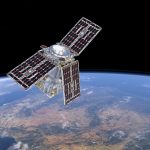
Greece has taken a significant step into operational space capabilities with the launch of MICE-1 (Maritime Identification and Communication System-1).
By Peter GutierrezGreece has taken a significant step into operational space capabilities with the launch of MICE-1 (Maritime Identification and Communication System-1).
By Peter GutierrezIn a corner the globe often overlooked by the GNSS community, the Southern Positioning Augmentation Network (SouthPAN) is steadily advancing toward full operational capability, and with noteworthy implications for Europe-linked GNSS technologies.
By Peter GutierrezThe Latvian Positioning System (LatPos) is highlighting how strategic monitoring, operational transparency, and proactive interference management can sustain high-precision GNSS services amid increasing regional signal threats.
By Peter GutierrezEuropean efforts to strengthen positioning, navigation, and timing (PNT) are increasingly focusing on timing, the least celebrated yet foundational element of the triad.
By Peter GutierrezSmall form factor Assured Precision Navigation and Timing solution unveiled at All-Domain Persistent Experiment.
By Inside GNSSA new commercial positioning, navigation and timing (PNT) collaboration, anchored by TrustPoint’s low Earth orbit (LEO) C-band navigation service, is taking shape with industry partners on both sides of the Atlantic.
By Peter GutierrezEurope’s role in lunar exploration has crystallized around a clear strategic theme: enabling reliable positioning, navigation and timing (PNT) beyond Earth, in close coordination with international partners, particularly NASA.
By Peter GutierrezSince we last reported on the Safran-Xona/TrustPoint integrations, the low-Earth-orbit PNT narrative has advanced decisively, moving from laboratory interoperability tests to tangible in-orbit demonstrations and coordinated industry validation.
By Peter GutierrezFAST Labs™ organization awarded $16 million contract for DARPA’s Oversight program
By Inside GNSSUnder a European Union Aviation Safety Association (EASA)-implemented project, European and South American partners are conducting targeted technical exchanges, operational assessments, and regulatory coordination on satellite-based augmentation systems (SBAS).
By Peter GutierrezOff the coast of Venezuela, U.S. forces seized the tanker Skipper in a helicopter-launched raid, an operation confirmed by U.S. officials on 11 December, after the vessel spent weeks spoofing its GNSS-derived AIS position. The incident throws a glaring spotlight on the global ‘dark fleet’, a network of sanctions-evading tankers whose illicit movements resonate far beyond the Caribbean.
By Peter GutierrezNew research by Finland’s National Land Survey (NLS) seeks to measure and mitigate GNSS interference and to quantify receiver tolerance, in response to a surge of jamming and spoofing incidents in the Baltic region. Co-funded by the European Union under the European Regional Development Fund (ERDF), the project runs through March 2027.
By Peter GutierrezFunded under the European Space Agency’s NAVISP program, the ‘Deployable Satellite Navigation Antenna’ project has delivered a compact Ka-band antenna prototype for small satellite platforms.
By Peter Gutierrez