A: System Categories

January 18, 2011

Galileo Mid-Term Review Foresees €1.9 Billion in Additional Costs

Antonio Tajani, EC Vice-President. EC photo

A European Commission (EC) communication sent to the European Parliament and European Council today (January 18, 2011) estimates that completing a fully operational capability (FOC), 30-satellite Galileo system and the European Geostationary Navigation Overlay Service (EGNOS) will cost an additional €1.9 billion above the €3.4 billion already allocated.

Read More >

By Inside GNSS
January 17, 2011

2011 Space Weather Workshop

Forecasters at NOAA’s Space Weather Prediction Center (NOAA photo)

The annual Space Weather Workshop will take place on April 26-29 2011 in Boulder, Colorado.

Program organizers call it the "meeting of science, research, applications, operations and users." The program highlights space weather impacts in several areas, including
communications, navigation, spacecraft operations, aviation, and
electric power. 

Recent progress in large-scale modeling efforts will
be featured; while new developments in Sun-to-Earth coupled modeling systems
will also be a highlight.

Read More >

By Inside GNSS
[uam_ad id="183541"]

Dorides to Head European GNSS Agency [updated]

[updated January 18, 2011] Carlo des Dorides has been named as the new executive director of the European GNSS Agency (formerly the Galileo Supervisory Authority or GSA).

He will succeed Heike Wieland, who leaves at the end of January to become principal legal council at the European Patent Office. Wieland served as GSA acting director following the departure of Pedro Pedreira last June.

Read More >

By Inside GNSS
January 9, 2011

A Model-Based Approach

For the complete story, including figures, graphs, and images, please download the PDF of the article, above.

Galileo receiver designers require formal interface specifications for the Galileo signal-in-space (SIS) in order to write unambiguous and accurate specifications for Galileo receivers. To compute their positions, Galileo receivers must be able to retrieve timing and orbital information from the data stream conveyed in Galileo analog signals.

Read More >

By Inside GNSS
[uam_ad id="183541"]

Indian Regional Navigation Satellite System

FIGURES 1, 2 & 3

For the complete story, including figures, graphs, and images, please download the PDF of the article, above.

In satellite navigation, a GNSS receiver must account for several sources of error such as relativistic effects, atmospheric propagation delay, offset of satellite clocks from system time and satellite ephemeris. In order to accurately compute user position, velocity, and time (PVT), these errors need to be predicted/estimated precisely.

Read More >

By Inside GNSS

GNSS Interference, Detection and Mitigation

Bushy House

Britain’s Position, Navigation and Timing Network of the Digital Systems
KTN (Knowledge Transfer Network) presents a one-day workshop on
"GNSS Interference, Detection and Mitigation."

Professor Martyn Thomas will present the
conclusions of the Royal Academy of Engineering report on GNSS vulnerability, which was released on March 8.  

The workshop will take place at Bushy House, National Physical Laboratory, Teddington, Middlesex on Thursday, March 10 2011 from 10 a.m. to 4 p.m.

Topics include:

Read More >

By Inside GNSS
January 8, 2011

2011 West Coast Seminars: NavTech GPS

NavTech GPS will offer its 2011 west coast GNSS technical seminars at the Doubletree Hotel in San Diego, California from Monday, March 28 through Friday, April 1.

Over 25 years, NavTech GPS has provided GPS/GNSS applications solutions for military and research customers, with product choices from more than 30 manufacturers, and has organized basic and advanced GNSS seminars for engineers and technical professionals all over the United States.

The San Diego seminars include:

Read More >

By Inside GNSS
January 4, 2011

GPS Programs Push Ahead

The GPS program continues progress on several fronts — in space and on the ground.

During fall 2010, the U.S. Air Force and the Raytheon Company team developing the GPS Advanced Control Segment (OCX) successfully carried out an integrated baseline review (IBR) for the next-generation system on schedule.

When completed in 2015 under the current schedule, GPS OCX will deliver control segment enhancements designed to provide secure, accurate and reliable navigation and timing information to military, commercial and civil users.

Read More >

By Inside GNSS
December 30, 2010

Europe’s Galileo Reaches Many 2010 Milestones – but Satellite Launches Still Delayed

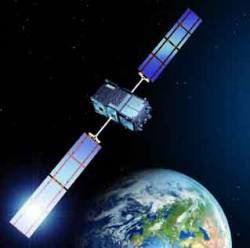
Soyuz launch of IOV satellite. ESA illustration

Europe’s Galileo space-based navigation system still awaits launch of its first in-orbit validation (IOV) satellites — now set for August 2011 — but the program is rolling out a steady stream of announcements of milestones reached.

Most recently, European Commission (EC) and European Space Agency (ESA) officials inaugurated the Fucino Galileo Control Center, 130 kilometers (81 miles) east of Rome, which will be responsible for the Ground Mission Segment.

Read More >

By Inside GNSS
IGM_e-news_subscribe