A: System Categories

November 9, 2011

IP Solutions Introduces ReGen GNSS Simulator

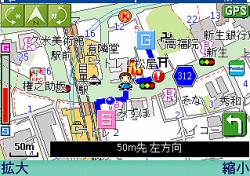
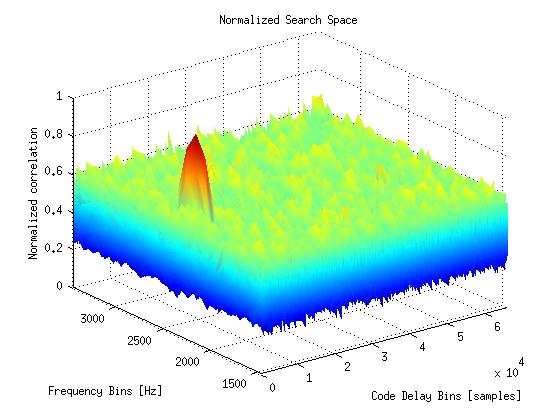
IP Solutions ReGen software simulator GUI

Tokyo, Japan–based IP Solutions has released its ReGen GNSS DIF Signal Simulator, a software simulator that simulates ionospheric effects, generates digital IF (DIF) signals similar to those recorded by an RF recorder, and comes with an optional capability of simulating integrated inertial navigation.

Various configurations can produce multichannel GPS and GLONASS L1 signals and single-channel GPS L1, L2, L5 and GLONASS L1 and L2 signals, as well as simulating noise and interference.

Read More >

By Inside GNSS

November 8, 2011

GPS Coalition To FCC: LightSquared Must Not Use Upper 10-MHz Band

A United States Army specialist explains GPS system to a Croation soldier in their mine-resistant, hardened vehicle, Afghanistan (2011 Photo: Brian Henriksen, US Army)

[Update November 9 2011] In an ex parte filing with the Federal Communications Commission (FCC) on November 8, a leading GPS advocacy group has asked that the agency “promptly rule” that LightSquared not be permitted to pursue high-powered terrestrial operations in the upper Mobile Satellite Services (MSS) band adjacent to the GPS L1 band.

Read More >

By Inside GNSS
[uam_ad id="183541"]

6th GNSS Vulnerabilities and Solutions Conference

This annual conference on the Croatian Adriatic aims at GNSS experts and covers the risks and vulnerabilities of the global navigation satellite systems and efforts to improve accuracy and reliability.

It will take place at Baska on the resort island of Krk in Croatia from May 21 to May 24, 2012.

Read More >

By Inside GNSS

November 4, 2011

Russia Launches Three More GLONASS-Ms

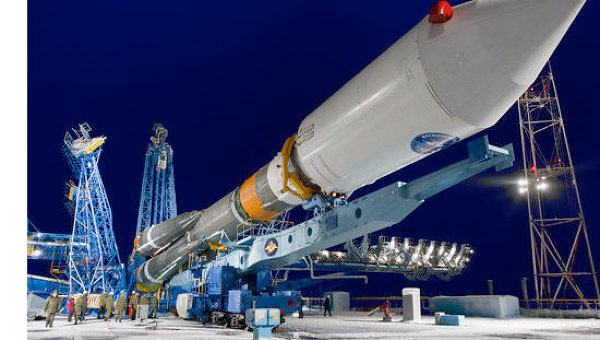
Proton-M rocket on launch pad at Kazakhstan, cosmodrome. Roscosmos photo.

Russia launched a Proton-M rocket carrying three GLONASS-M satellites from the Baikonur space center at 16:51 Moscow time [12:51 GMT] on Friday (November 4, 2011) after a 24-hour delay due to technical reasons, a spokesman for the Federal Space Agency Roscosmos said.

Read More >

By Inside GNSS
[uam_ad id="183541"]

Roscosmos Delays GLONASS Launch

The Russian Federal Space Agency has delayed launch of three GLONASS-M satellites scheduled for today (November 3, 2011), according to  the Russian state information agency RIA Novosti has reported. The agency provided no additional details on the cause of the one-day delay.

The launch will take place from the Baikonur space facility in Kazakhstan using the Proton-M carrier rocket, equipped with a Briz-M upper stager

Read More >

By Inside GNSS
November 1, 2011

Galileo Satellites Will End Early Operations Phase Soon, Navigation Signals to Follow

The Dongara facility in Western Australia is part of Prioranet, a commercial tracking network operated by Universal Space Network, Inc., Newport Beach, California, USA, that is being used to track the Galileo IOV satellites. Photo USN, Inc.

Preparations to bring the first operational Galileo satellites on-line are continuing apace.

The Launch and Early Orbit Phase (LEOP)  phase will end tomorrow (November 2, 2011) for the In-Orbit Validation (IOV) spacecraft that were launched on October 21, and transmission of the first navigation signal can be expected in about 10 days from now, according to a European Space Agency (ESA) source.

Read More >

By Inside GNSS
October 31, 2011

Russian Plans Four GLONASS-M Launches in November, System Nears FOC

Russia plans to add four GLONASS-M satellites to its constellation in November, which should bring the GNSS system to fully operational capability (FOC).

The Russian Federal Space Agency (Roscosmos) website indicates that a launch of three GLONASS-Ms on board a Proton-M rocket will take place this Thursday (November 3, 2011) from the Baikonur space center in Kazakhstan.

Read More >

By Inside GNSS

4th Conference on European Union Space Policy

First two Galileo IOVs head into orbit from EU’s Kourou space center (ESA photo)

The 4th high-level EU conference on European Space Policy will take place at the Parliament Hemicycle, 43 rue Wiertz, in Brussels on November 8 and 9, 2011.

The theme is "A Space Policy for Society and Citizens," and the program will emphasize future funding and applications of the Galileo navigation system and the GMES, the European earth observation and monitoring system.

Read More >

By Inside GNSS
IGM_e-news_subscribe