A: System Categories

May 19, 2012

First GPS III Launch Delayed by Up to a Year, OCX by Two Years

The launch of the first GPS III satellite has slipped to 2015 and completion of the ground control system is now delayed by up to two years, according to the chief of the Air Force’s space operations  

“We’ll be ready to launch the first GPS III in 2015, but it now appears the next generation GPS Operational Control System, or OCX, won’t be ready for about a year or two after that,” General William L. Shelton, commander of Air Force Space Command told attendees at the 28th Annual National Space Symposium.

Read More >

By Inside GNSS
May 18, 2012

China Plans Another BeiDou Dual Launch in August

Ran Chengqi, director of the China Satellite Navigation Office

China will launch another three satellites for the BeiDou-2 (Compass) system by the end of the year, according to officials speaking today (May 18, 2012) at the China Satellite Navigation Conference (CSNC 2012) in Guangchou.

Meanwhile, in comments quoted by People’s Daily Online edition, the system is expected to be adopted by some of China’s neighboring countries in the next year or two. People’s Daily is the official newspaper of the Communist Party of China.

Read More >

By Inside GNSS
[uam_ad id="183541"]
May 4, 2012

Racelogic Wins Two Queen’s Awards for Enterprise for GNSS Simulator Business

UK-based Racelogic has been singled out as a double winner in the Queen’s Awards for Enterprise, receiving both Innovation and International Trade awards.

Announced on April 21 to mark Queen Elizabeth II’s birthday, the 2012 Queen’s Awards for Enterprise listings contained 209 companies, with Racelogic being one of only four to be honored with the award for both Innovation and International Trade.

Read More >

By Inside GNSS

IFEN Adds BeiDou-Compass Capability to Its Multi-GNSS Simulator

IFEN GmbH has announced that the company has enhanced its NavX-NCS multi-GNSS RF constellation simulator product line to support China’s Compass/BeiDou-2 GNSS system.

Together with its WORK Microwave partner, IFEN has added the BeiDou B1 civil signal to its current suite of GNSS signal generation capabilities, which include GPS, GLONASS, Galileo, QZSS, and SBAS. The companies used the modulation scheme and signal specifications outlined in accordance with the latest version of the Compass/BeiDou Signal in Space Interface Control Document.

Read More >

By Inside GNSS
[uam_ad id="183541"]
April 30, 2012

Cybersecurity Bills Could Reshape GPS Anti-Interference Efforts

Legislation moving through Congress could reshape efforts to counter GPS interference as the government steps up its efforts to fight cybercrime and protect critical systems like the power grid and communications networks.

Though cybersecurity generally focuses on protecting information systems the broad definitions in some legislation now on the Hill appear to encompass GPS support systems, some user communities, and even the constellation itself.

Read More >

By Inside GNSS

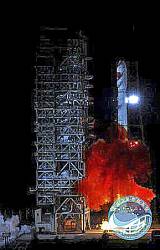
China Succeeds with Dual BeiDou-2 Compass Satellite Launch

Two Beidou-2 MEO satellites go up on a Long March rocket

China successfully launched two Compass satellites into space at 4:50 a.m. Beijing Time on Monday, April 30 (20:50 UTC, April 29).

Designated Compass M3 and M4, these are the 12th and 13th of its second-generation Beidou-2 spacecraft to reach orbit and the second and third middle-Earth-orbiting (MEO) spacecraft launched by China’s GNSS program.

Read More >

By Inside GNSS
April 27, 2012

British Military Claims Patent on GPS, Galileo Civil Signal Structure

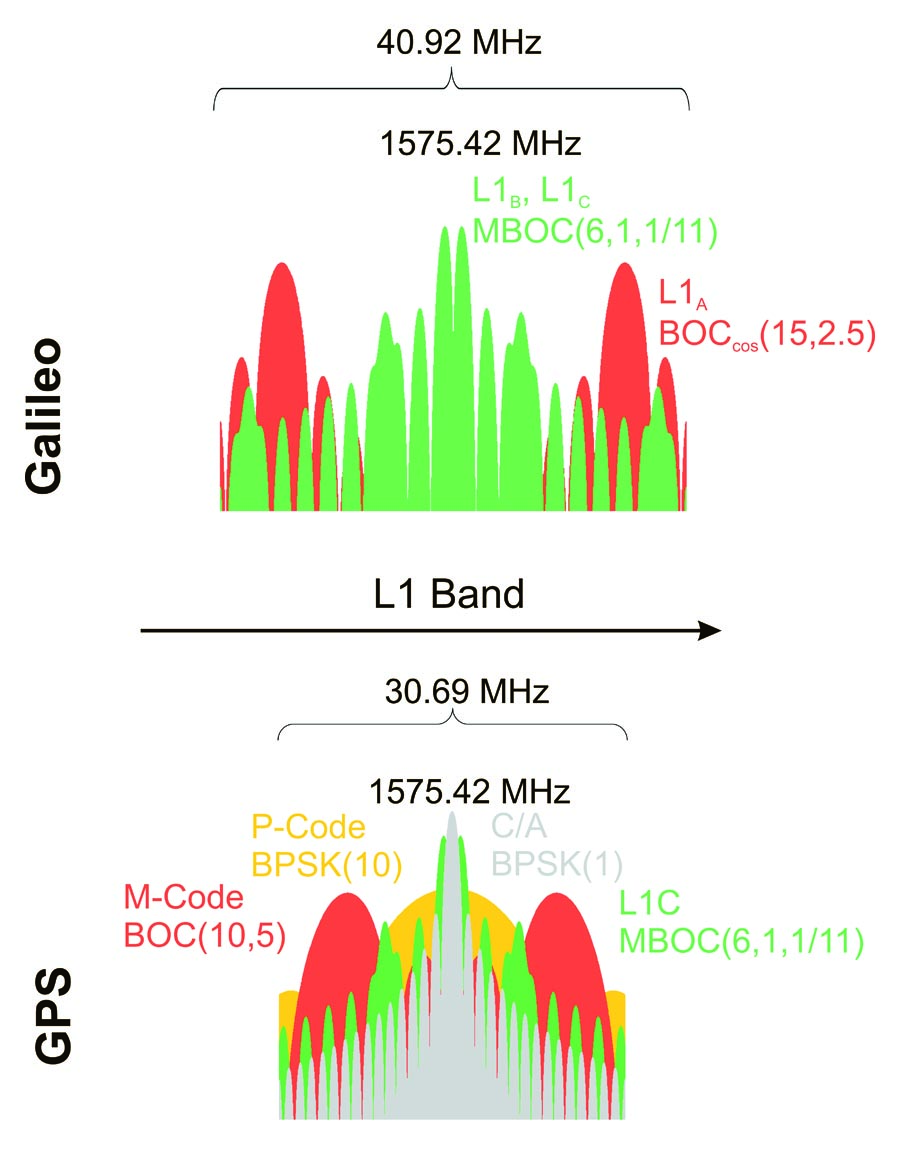
Variations on the common GPS/Galileo MBOC signal

The British military establishment is seeking royalties from GPS receiver manufacturers, asserting it holds a patent on the technology at the heart of the new GPS and Galileo civil signals.

Should U.S. manufacturers have to pay royalties, American GPS users, who have already paid for the GPS constellation and made it available to the world free of charge, could find themselves spending more to use its location capabilities. Sources said the development could undermine relations between the U.S. and the European Union (EU), which have cooperated for years to develop a common signal at the L1/E1 frequency centered at 1575.42 MHz.

Read More >

By Inside GNSS
IGM_e-news_subscribe