
Main Categories

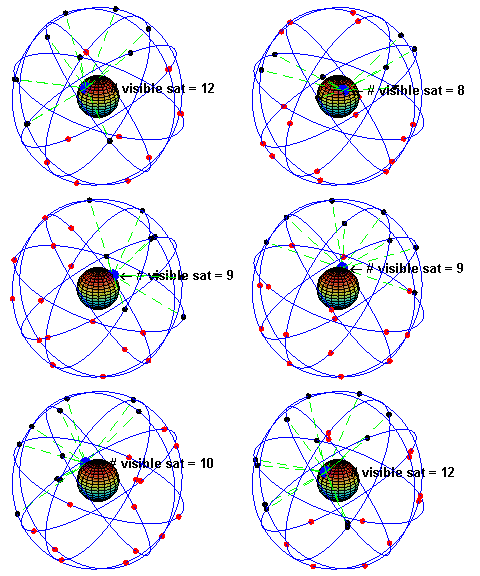
GNSS Interoperability, or Can’t We All Just Get Along Together?

Simple harmonic motion

Return to "GNSS Year in Review"

At first glance, interoperability and its implication of at least some degree of cooperation seem at odds with the idea of competing GNSS systems.

Yet the mantra of compatibility, interoperability, and even — in the terminology of GPS pioneer Brad Parkinson —interchangeability has taken on a nearly unanimous harmony in the pronouncements and deliberations of GNSS leaders.

Read More >

By Inside GNSS

GNSS Year in Review: Three Trends That Matter

Yes, it’s that time — when we try to anticipate what 2011 holds for GNSS by analyzing (or just trying to remember) the highlights of the past 12 months in our global navigation satellite system industry.

First, 2010 was a busy year. Successful launches of 13 new satellites brought the number of GNSS spacecraft in orbit to more than 60. The highest level yet for both numbers launched and in the collective GNSS constellation.

Read More >

By Inside GNSS
[uam_ad id="183541"]

Handicapping the GNSS Horse Race

Horses racing by Margret Hofheinz-Doering 1956

Return to "GNSS Year in Review"

We’ve come a long ways from the attitudes of the Cold War environment in which the Global Positioning System and GLONASS programs arose.

But that doesn’t mean that GNSS competition is a thing of the past. Indeed, the second most-read item on the Inside GNSS website during this year was a March 2009 article entired “GPS, GLONASS, Galileo, Compass: What GNSS Race? What Competition?”

Read More >

By Inside GNSS
December 30, 2010

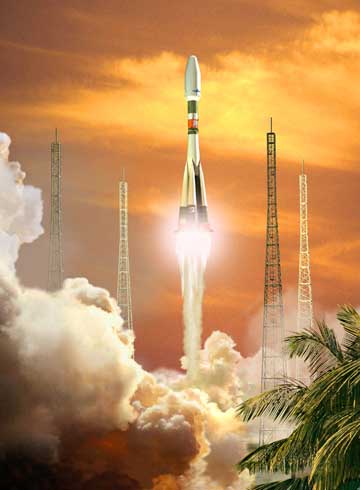
Europe’s Galileo Reaches Many 2010 Milestones – but Satellite Launches Still Delayed

Soyuz launch of IOV satellite. ESA illustration

Europe’s Galileo space-based navigation system still awaits launch of its first in-orbit validation (IOV) satellites — now set for August 2011 — but the program is rolling out a steady stream of announcements of milestones reached.

Most recently, European Commission (EC) and European Space Agency (ESA) officials inaugurated the Fucino Galileo Control Center, 130 kilometers (81 miles) east of Rome, which will be responsible for the Ground Mission Segment.

Read More >

By Inside GNSS

GPS Directorate Completes Annual AGER Review

Col. Bernard Gruber

The GPS Directorate completed its second Annual GPS Enterprise Review (AGER) on December 17, concluding that the program has achieved major milestones in developing and deploying modernized GPS capabilities.

Col. Bernard Gruber, GPS program director at the Space and Missile Systems Center, Los Angeles Air Force Base, led his team through a Defense Acquisition Board (DAB) review chaired by Frank Kendall, deputy undersecretary of defense for acquisition, technology and logistics, and attended by other senior Department of Defense (DoD) officials.

Read More >

By Inside GNSS
[uam_ad id="183541"]
December 22, 2010

GMV Will Launch Fully Hosted Software GPS Receiver at Mobile World Congress

GMV will launch the SRX-10, a software GPS receiver for mass-market applications, at this year’s GSMA Mobile World Congress, scheduled February 14–17 in Barcelona, Spain.

As a fully hosted solution, all SRX-10 receiver functions — even signal acquisition and tracking — can be hosted on a general purpose CPU with only the requirement of adding on a low cost RF front-end, according to the company.
The company cites other benefits offered by its new software receiver, particularly its substantial flexibility and upgradeability.

Read More >

By Inside GNSS
December 16, 2010

China Prepares for 7th Compass/BeiDou-2 Launch

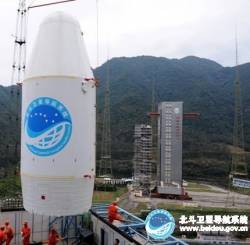
Workers place the satellite fairing for the seventh BeiDou-2 satellite atop a Long March IIIA rocket at Xichang Satellite Launch Center, in southwest China’s Sichuan Province

China is preparing for launch of another satellite in its Compass/BeiDou-2 GNSS system in the "coming days," according to an unnamed spokesperson at the Xichang Satellite Launch Center in southwest China’s Sichuan Province.

According to earlier news reports, this will be the second of five inclined geosynchronous orbiting (IGSO) spacecraft planned for the regional version of the system that China hopes to complete by 2012. The full (Phase III) constellation will contain only three IGSOs.

Read More >

By Inside GNSS
December 15, 2010

ION GNSS 2011: 24th Institute of Navigation GNSS Conference

Portland waterfront walk, west side

ION GNSS 2011 will take place at the Oregon Convention Center in Portland, Oregon from September 20-23. Tutorials will be held on September 19 and 20.

This will be the 24th international technical meeting of the Satellite Division of the Institute of Navigation. It is the world’s largest and oldest GNSS conference,
founded in 1987 as the ION GPS conference.

The headquarters hotel is Portland’s downtown Hilton and Executive Tower.

Read More >

By Inside GNSS
IGM_e-news_subscribe