IGS 2017: International GNSS Service Workshop
Arc de Triomphe, ParisThe 2017 IGS Workshop will take place from July 3 – 7, 2017 at the University of Paris-Diderot in Paris, France.
Conference details will be available shortly.
By Inside GNSS

Arc de Triomphe, ParisThe 2017 IGS Workshop will take place from July 3 – 7, 2017 at the University of Paris-Diderot in Paris, France.
Conference details will be available shortly.
By Inside GNSS
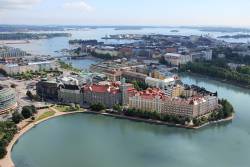
Paasitorni by the Sea, HelsinkiThe International Federation of Surveyors (FIG) FIG Working Week 2017 will take place on May 29 – June 2, 2017, at the Messukeskus Expo and Convention Centre in Helsinki, Finland.
Registration will open in November, 2016. Abstract submissions are now closed.
By Inside GNSS
The Saladin Citadel of CairoThe 10th International Symposium on Mobile Mapping Technology (MMT2017) will take place from May 6 – 8, 2017 at the Conrad Cairo Hotel, on the river Nile in Cairo, Egypt.
Online registration is available. Early bird rates end January 1, 2017.
By Inside GNSSNASA plans to launch the Cyclone GNSS (CYGNSS) hurricane mission aboard a Pegasus XL rocket on December 12 from Cape Canaveral Air Force Station in Florida. CYGNSS, which is NASA’s first Earth science small-satellite constellation, will help improve hurricane intensity, tracking, and storm surge forecasts, the agency said.
By Inside GNSSThe National Oceanic and Atmospheric Administration (NOAA) will purchase data from small commercial satellites to expand its GNSS radio occultation (RO) efforts to better predict weather.
In September NOAA, through the government’s Commercial Weather Data Pilot program, awarded contracts to San Francisco, California-based Spire Global ($370,000) and GeoOptics ($695,000), of Pasadena, California, to provide RO data. This data will be used to assess whether commercially provided information can be incorporated into the agency’s weather models.
By Inside GNSS
Aerial view of the old city, Besançon, FranceThe 2017 joint conference of the IEEE International Frequency Control Symposium and European Frequency and Time Forum will take place in Besançon, France at the Micropolis Convention Center on July 9-13.
The abstracts for this biennial event are due by March 13, 2017 (extended from March 3).
The topics are:
Group 1: Materials, Resonators & Resonator Circuits
Group 2: Oscillators, Synthesizers, Noise, & Circuit Techniques
Group 3: Microwave Frequency Standards & Applications
Group 4: Sensors & Transducers

Abstracts for the ION GNSS+ 2017 conference will be accepted online through March 10, 2017. The conference and industry exhibition covering all aspects of satellite navigation technology will take place September 25-29 at the Oregon Convention Center in Portland, Oregon USA.
By Inside GNSS
The 14th Conference on Space Weather, sponsored by the American Meteorological Society, and organized by the AMS Committee on Space Weather, will be held January 22 – 26 2017, as part of the 97th AMS Annual Meeting in Seattle, Washington, U.S.A.
Online registration is open. Pre-registration prices end December 1, 2016.
By Inside GNSS
The 11th International Navigation Forum will take place during the 9th International Navitech Exhibition at the Expocentre Fairgrounds in Moscow, Russia on April 25-28, 2017.
Registration information can be found here.
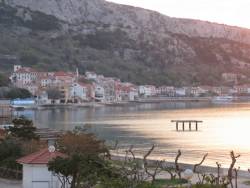
By Inside GNSSThe 11th RIN Baška GNSS Conference will take place May 7 – 9, 2017, in Baška, Krk Island, Croatia, organized jointly by The Royal Institute of Navigation (London, UK), Faculty of Maritime Studies (University of Rijeka, Croatia), and the Faculty of Transport and Traffic Sciences (University of Zagreb, Croatia), with technical co-sponsorship from Beihang University of Aeronautics and Astronautics (Beijing, China).
The abstract deadline is February 6, 2017. Please contact Renato Filjar.
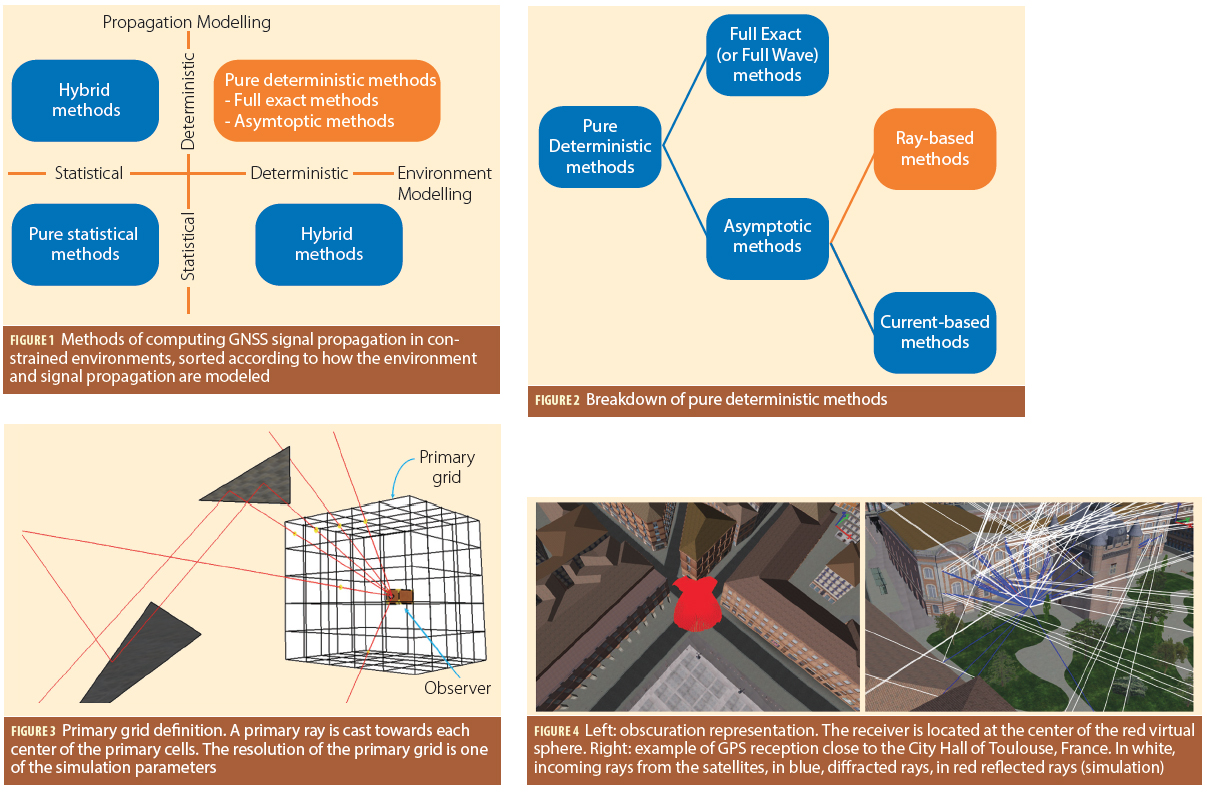
By Inside GNSSQ: What are the challenges of ray-tracing for GNSS applications?
A: Simulating the propagation and reception of GNSS signals in complex environments is a challenging task. Indeed, the user always has to trade off between the computation time and the reliability of the output. Moreover, the motion of GNSS satellites, atmospheric effects, and building geometry are always difficult to model.
By Inside GNSS
Figures 1 & 2Spacecraft in low Earth orbit (LEO), at altitudes below 3,000 kilometers, remain within the main Global Positioning System (GPS) signals’ Earth coverage. Spacecraft employing GPS at these altitudes enjoy signal availability and navigation and timing performance emulating that of terrestrial users.
By Inside GNSS
View of the Isar River, Munich, GermanyThe Munich Satellite Navigation Summit and exhibition will take place at the Residenz Muenchen in Munich, Germany on March 14 – 16, 2017.
Register here. Early bird rate until January 17, 2017.
The theme for this year’s summit is “GNSS: Is It Time for Backup?”
The technical program includes plenary discussions and updates on the
main activities in worldwide satellite navigation systems, including: