Mobile World Congress
The Mobile World Congress, described as the world’s largest gathering for the mobile industry, is organized by the GSMA and held in the Mobile World Capital Barcelona, Spain from Feb. 27 to March 2, 2017.
By Inside GNSS
Global Navigation Satellite Systems Engineering, Policy, and Design
The Mobile World Congress, described as the world’s largest gathering for the mobile industry, is organized by the GSMA and held in the Mobile World Capital Barcelona, Spain from Feb. 27 to March 2, 2017.
By Inside GNSS
Spirent Communications plc’s annual security forecast warns of the increased likelihood of disruptions this year to a wide variety of civil and military applications relying on global navigation satellite systems — GPS, GLONASS, Galileo, and BeiDou.
By Inside GNSS Tower Hall at San Jose State University. Photo source: Wikimedia Commons.
The 26th annual Workshop on Synchronization and Timing Systems (WSTS), sponsored by The National Institute of Standards and Technology (NIST) and ATIS, will take place April 3-6 at the DoubleTree in Jan Jose, California.
By Inside GNSS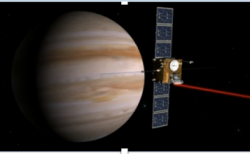 Photo source: NASA
NASA’s Space Communications and Navigation (SCaN)/Human Exploration and Operations Mission Directorate (HEOMD) announces a workshop on February 16 on “Emerging Technologies for Autonomous Space Navigation” to inform the U.S. industry on evolving positioning, navigation and timing (PNT) technologies and techniques being developed to enhance the operational efficiency and flexibility of future missions.
By Inside GNSS
Another informative joint Institute of Navigation (ION) International Technical Meeting and Precise Time/Time Interval Meeting is in the books and attendees of the event this week in Monterey, California had the opportunity to learn and share ideas on a wide array of topics and technologies.
By Inside GNSS
NASA’s Space Communications and Navigation (SCaN)/Human Exploration and Operations Mission Directorate (HEOMD) announces a workshop on February 16 on “Emerging Technologies for Autonomous Space Navigation” to inform the U.S. industry on evolving positioning, navigation and timing (PNT) technologies and techniques being developed to enhance the operational efficiency and flexibility of future missions.
By Inside GNSS
As with the notion of “disruption,” unpredictability can be useful. A move in chess or go, for instance. Or in the case of cuisine — say, when usurping Taco Thursday with chicken tagine. Even in negotiations, an unanticipated gambit can change the outcome positively.
Sometimes, of course, unpredictability is in the immanent nature of things. Despite advances in meteorological technology and science, weather continues to prove fickle. Foreknowledge of earthquakes remains difficult to pin down in space and time.
By Inside GNSS
Washington has seen a lot of transitions, so even amidst political controversy it’s generally business as usual.
For the GPS community that business, at least in the near term, will likely center on changes in federal leadership — with many key appointments, like a new Secretary of the Air Force, still to be determined. In addition — even at this early stage when new lawmakers are still trying to find their offices — there are issues and opportunities worth watching in emerging legislation.
By Dee Ann Divis

 Equations
Incorporation of real-time synchronized phasor measurements in the control of power grids can play an important role in maintaining the overall closed-loop stability of the power system. In the past, instability in the power grid caused disturbances ranging from small local perturbations to severe large scale blackouts as can be seen from Figure 1. Currently, the synchronization achieved in measurements collected using devices known as supervisory control and data acquisition (SCADA) is not robust enough for efficient monitoring the power grid.
By Inside GNSS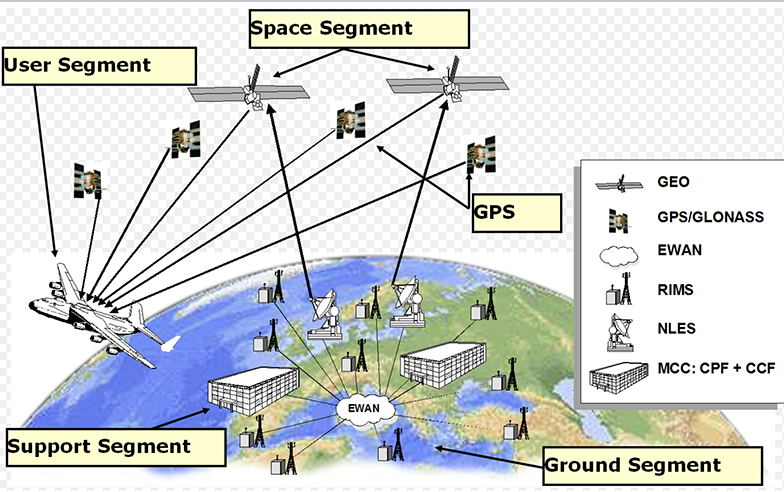
 SBAS illustration with the GNSS satellites (upper left) and the communications satellite (upper right).
With the Australian government’s announcement earlier this month that it would invest $12 million in a two-year program looking into the future of positioning technology in Australia, comes plans for testing of satellite based augmentation systems (SBAS) to be undertaken, and for future applications for all four major modes of transport in Australia, as well as for potential safety, productivity, efficiency and environmental benefits.
By Inside GNSS DT Research’s DT391GS Rugged GNSS Tablets
San Jose, California-based DT Research announced on January 9 the successful deployment of the DT391GS Rugged GNSS Tablets for the Oregon Department of Transportation (ODOT).
The DT391GS tablets with Intel Celeron Dual Core Processors are used as Inspector Positioning Tablets with the critical hardware and software needed for line and grade determination on stakeless highway construction projects.
The tablet comes with four GNSS module options including two from Hemisphere GNSS and two from Trimble. The GNSS options are:
By Inside GNSS