Galileo Leads the Way in GNSS Spoofing Protection with OSNMA
In recent years, the threat of spoofing — the transmission of false signals intended to deceive satellite navigation receivers — has become increasingly prominent.
By Inside GNSSIn recent years, the threat of spoofing — the transmission of false signals intended to deceive satellite navigation receivers — has become increasingly prominent.
By Inside GNSSCritical National Infrastructure (CNI) is vulnerable to loss of GNSS for positioning, navigation, and timing (PNT). Low Frequency (LF) systems like eLoran offer a robust alternative, especially where satellite signals are degraded or unavailable. Strong 100 kHz eLoran signals are resilient to space weather and difficult to jam or spoof.
By Peter GutierrezIn a world increasingly reliant on satellite-based positioning and timing, the vulnerabilities of GNSS are no longer just academic.
By Inside GNSSIn an increasingly interconnected world, the reliability of global navigation satellite system (GNSS) services supports critical infrastructure, from aviation and maritime navigation to telecommunications, agriculture and financial systems.
By Inside GNSSThe APNT problem statement and notional requirements for UAVs and Loitering Munitions.
By Inside GNSSIn today’s contested battlespace, positioning, navigation and timing (PNT) solutions must withstand jamming, spoofing and degraded visual conditions. For Loitering Munitions and unmanned aerial vehicles (UAVs), precision absolute PNT is mission-critical—not just ideal.
By Inside GNSSAs GNSS denial becomes a baseline condition across military and civilian operations, VIAVI Solutions is building a modular, multi-layered PNT ecosystem that integrates precision timing, inertial navigation and signal intelligence. With strategic acquisitions and field-proven technology, VIAVI is redefining resilience at the edge—where assurance is not optional, and adaptability is mission-critical.
By Inside GNSSBritish officials and French President Macron have announced collaborative efforts on a range of advanced technologies that includes resilient positioning, navigation and timing (PNT) such as eLoran.
By Dana A. GowardThe final presentation of the National GNSS Knowledge Center project, funded through the European Space Agency (ESA) NAVISP program, was recently delivered by representatives from CGI Netherlands, the Netherlands Aerospace Centre (NLR), and S&T.
By Peter GutierrezUninterrupted access to satellite navigation is essential in our modern world, but it is threatened daily by external interference, such as jamming and spoofing. New technologies and concepts can help increase the resilience of our satellite navigation solutions. The European Space Agency (ESA) and Leonardo are embarking on a joint project to explore smart antennas powered by Machine Learning to block unwanted signals.
By Inside GNSSThe European Space Agency (ESA)-funded GOOSE-VTL project, realized by TeleOrbit, Fraunhofer IIS and the University of the Bundeswehr Munich, has developed a unique software defined receiver (SDR) capable of delivering the resilience and accuracy needed for next-generation autonomous systems in GNSS-challenged urban settings.
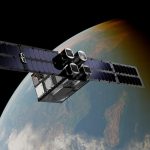
By Peter GutierrezRocket Lab Corporation, a global leader in launch services and space systems, has announced it has been selected to launch a dedicated Electron mission for the European Space Agency (“ESA”) for the first time, to deploy the first pair of satellites for a future navigation constellation for Europe, LEO-PNT.
By Inside GNSSNavCom X is a precision positioning and communication system developed by Czech company Betrian, in collaboration with the Prague-based GNSS Centre of Excellence (GCE), and with support from the European Space Agency (ESA) under the NAVISP program.
By Peter Gutierrez