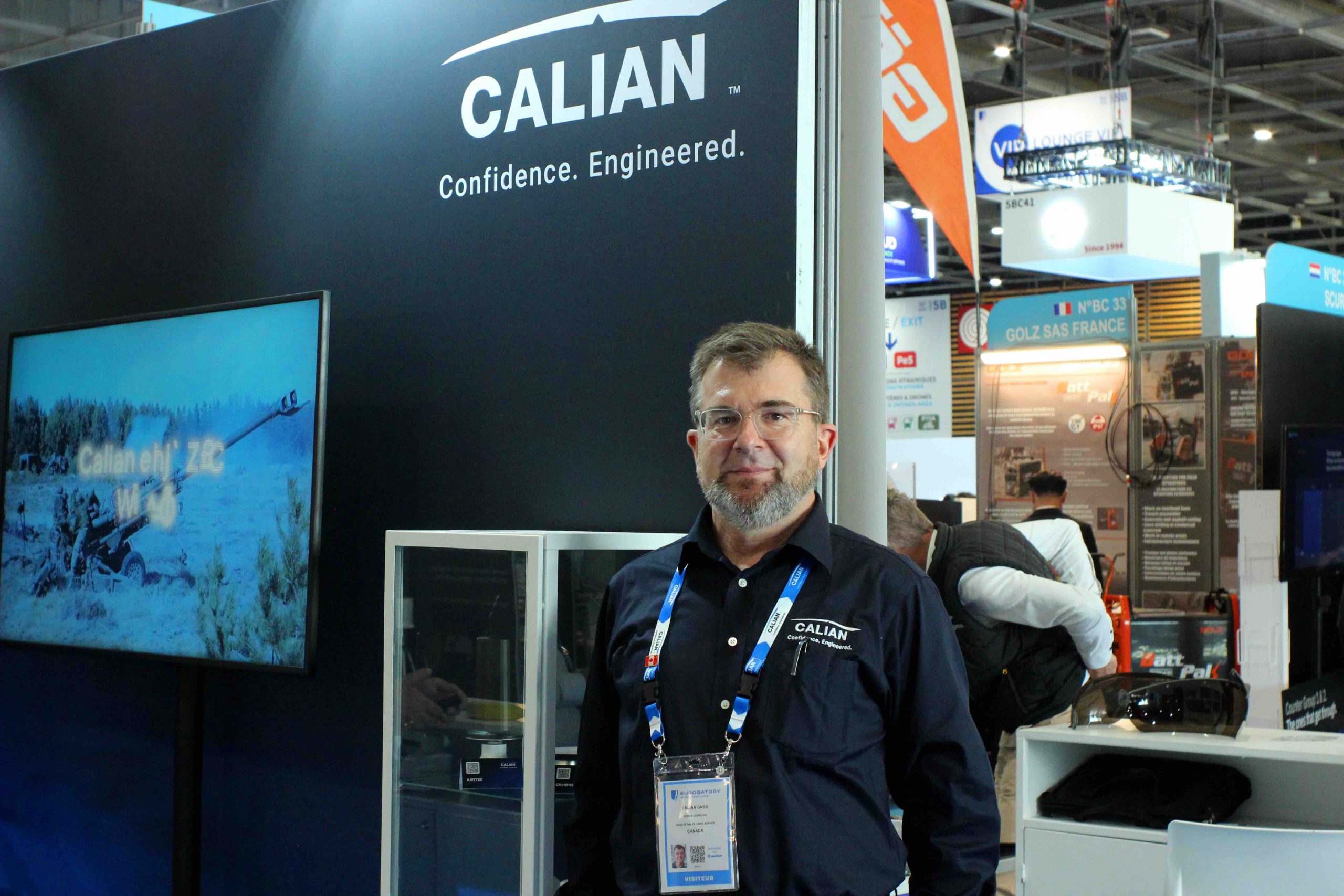
Readers will not be surprised to learn resilience was a major focus at Eurosatory 2026. Across giant exhibit halls packed with the latest military gear, companies and customers were discussing how autonomous systems, sensors and communications networks can continue operating in increasingly contested environments.
For Canada’s Calian, the answer begins with the best possible GNSS reception. Speaking with Inside GNSS at Eurosatory, Goran Jedrejčić, Head of Sales for Europe at Calian Advanced Technologies, described a company that has spent decades building high-performance GNSS antennas and is now applying that expertise to the growing challenge of jamming and spoofing.
Calian employs roughly 5,000 people worldwide and operates across sectors ranging from defense and space to healthcare and nuclear applications. Jedrejčić represents the company’s GNSS division, which traces its roots to Tallysman Wireless. “Tallysman was very well known in high-end applications and high-performance applications,” he said. “That group was taken over by Calian some four years ago, but nothing about our quality has changed.”
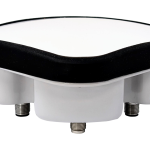
The group’s focus is research, development and manufacturing of GNSS antennas and increasingly, smart antennas with integrated receiver technology. “‘Smart’ means the receiver is already deep inside,” Jedrejčić said. The system integrates processing electronics directly within the antenna assembly. “You see a small footprint. There is no extra box you need to place somewhere, no extra cables. This is what’s coming on unmanned platforms.”
Manufacturing, ranging from small antennas to complex anti-jamming antennas, remains concentrated in Canada, something Jedrejčić views as both a quality and supply-chain advantage. He believes technical performance must be matched by dependable manufacturing and logistics. “If you think about it, the supply chain is very important,” he said. “If you’re able to be a reliable supplier and having all our manufacturing in a country like Canada, it means we can ship very fast. That’s a big deal nowadays.
“We focus mostly on L-band, on GNSS, Iridium, that kind of frequency range, and specialized high-end antennas, to deliver the best signal integrity,” he said. “We put a lot of effort into getting the best possible performance, high accuracy for positioning.” And that emphasis has naturally grown to encompass resilience.
Small size, low power, high resilience
“We have fixed radiation pattern antennas [FRPAs] which mitigate everything on the horizon,” Jedrejčić said. “So if there is a horizon-based jammer or spoofer, it will basically ignore that.” Additional protection is provided by filtering technologies designed to reject interference before it reaches the receiver. “It’s called XF+ filtering,” Jedrejčić said, “which again makes your system very, very resilient.”
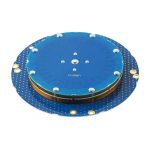
Another clear differentiator for the company, he said, is the focus on size, weight and power. “What we have that is quite unique is a specialized CRP [controlled reception pattern] antenna which is extremely light, extremely low power consumption while still showing excellent performance.” That combination is increasingly important for unmanned systems operating on limited power budgets. “Our four-element CRPA consumes 0.7-watts of power,” he said. “A comparable conventional antenna is about 15 to 20-something watts, so that’s a really big difference.”
The Calian portfolio is finding applications across a remarkably wide assortment of platforms. “You can see us from water up to space,” he said. “We are in submersible platforms, as well as on the sea surface, in many ships. We are of course on every land platform, and we’re also in satellites.”
As interference incidents continue to draw attention across Northern Europe, one particularly relevant application for Calian customers is maritime navigation in the Baltic region, where resilient PNT capabilities have become an increasingly important operational requirement.
For Jedrejčić, the company’s move into defense-oriented GNSS solutions represents less of a pivot than a natural evolution. “We have been doing high-precision antennas required in geospatial applications since the beginning, in drones doing photogrammetry, for example, where you need that high precision. We started there,” he said, “and over time we have added superior filtering and other resilience solutions.”
The company’s customers have undergone a similar transformation. “Many companies, many drone builders, have gone from civilian to defense,” Jedrejčić said. “We’ve just followed that. We’ve been with them the whole time.”