This sets the stage for the GPS IIIF satellites currently being produced by Lockheed Martin.
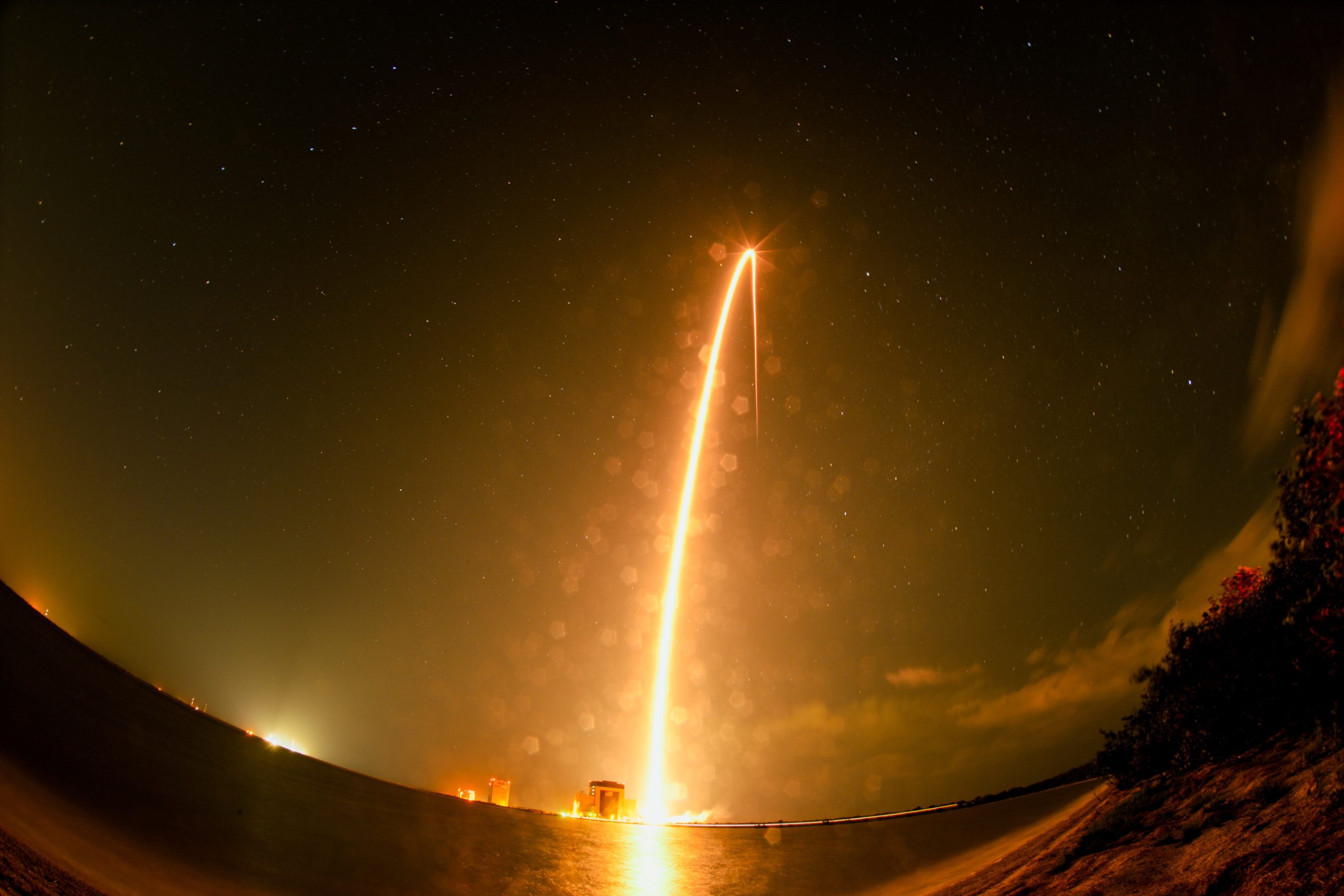
Early Tuesday morning, Lockheed Martin and the U.S. Space Force launched the final satellite in the GPS III series, GPS III Space Vehicle 10 (SV10), into medium Earth orbit (MEO) aboard the Falcon 9—marking a major milestone for the industry.
The GPS III satellite delivers “major upgrades in constellation resilience and accuracy,” according to Lockheed Martin, and includes a crosslink demonstration payload that will allow GPS satellites to directly communicate with each other in space, increasing on-orbit resiliency. This paves the way for the next-gen GPS IIIF series, which is now in production.
GPS III SV10 launched from Cape Canaveral Space Force Station at 2:53 a.m. Eastern time on Tuesday, securing signal acquisition soon after. It is being managed at Lockheed Martin’s Denver Launch & Checkout Operations Center pending formal acceptance into the GPS operational control network.
This is the fourth consecutive GPS launch on an accelerated timeline and the seventh flight for the first stage booster supporting the mission, which previously launched six Starlink missions.
Transforming the Constellation
GPS III satellites offer three times greater accuracy and eight times stronger anti jamming than legacy spacecraft, and provide secure M-Code signals for warfighters, according to Lockheed Martin. They’re also equipped with a demonstration Digital Rubidium Atomic Frequency Standard clock, an advanced atomic clock for reliable and precise time-keeping capabilities.
Together, these satellites “transform the constellation,” said Lisa Dyer, executive director of the GPS Innovation Alliance (GPSIA), supporting “an even better experience for the billions of users who rely on GPS every single day.”
“These signals,” she said, “help emergency responders and everyday travelers navigate more efficiently, increase the resilience of our transportation networks, ensure warfighters can operate in contested environments, and much more.”
Military users benefit from more dependable PNT in contested or hostile environments; civilian users get enhanced smartphone navigation and faster emergency response location; and financial and telecommunications markets have more precise timing.
Looking Ahead
The next generation of satellites, the advanced GPS IIIF, will bring strong anti-jamming capabilities for warfighters and significant improvements for civilian users. Deploying these “next‑generation spacecraft is essential for preserving reliable global coverage, and the IIIF block will add a new suite of capabilities that further harden the constellation’s resilience,” according to Lockheed Martin.
The spacecraft is being produced in Lockheed’s Denver facility. The company has integrated technologies like augmented reality and digital twins to speed up production of the 12 GPS IIIF satellites it is under contract to build.
GPS IIIF will feature Regional Military Protection as one of its upgrades, delivering more than a 60‑fold boost in anti‑jamming performance for warfighters, an increase in resistance to hostile interference that will help U.S. forces stay ahead of EW threats.
Tuesday’s launch gets us one step closer to that.
“The final GPS III deployment is an important milestone as we continue strengthening the GPS constellation,” said Fang Qian, vice president of GPS at Lockheed Martin. “By launching SV10 into orbit, we’re not only adding to the resiliency of today’s GPS capabilities—we’re opening the door to the next generation of GPS IIIF satellites that will provide greater resiliency and serve as the backbone of the GPS constellation for years to come.”