At this year’s Munich Satellite Navigation Summit, Xona co-founder and CTO Tyler Reid did something that funding announcements rarely do on their own: he made the company’s case feel immediate.
Speaking the day after Xona announced its oversubscribed $170 million Series C, Reid did not dwell on venture optics. He talked instead about signal power, indoor penetration, interoperability and deployment. That matters, because for years the case for low Earth orbit PNT has been technically compelling but not yet commercially proven at scale. Xona’s new raise suggests that may be changing, and Reid’s comments in Munich made clear that the company wants the market to understand this moment not as another capital event, but as the transition from concept to operational proof.
The Burlingame, California-based company says the round was led by Mohari Ventures Natural Capital and included participation from Craft Ventures, ICONIQ, Woven Capital, NGP Capital, Samsung Next and Hexagon. The money, Xona says, will fund both constellation deployment and manufacturing scale-up at its new factory in Burlingame. On its own, that is a significant financing story. But heard against the backdrop of Munich, the announcement sounded less like a startup celebrating a raise and more like a company trying to establish that resilient positioning, navigation and timing is finally being recognized as an infrastructure market rather than an engineering niche.
That is the larger significance of the round. Xona is arguing that the next era of navigation will not be built simply by modernizing legacy GNSS at the margins. It will come from a new PNT architecture—commercially manufactured, rapidly deployed and designed from the outset for stronger signals, authentication and integration with today’s installed receiver base.
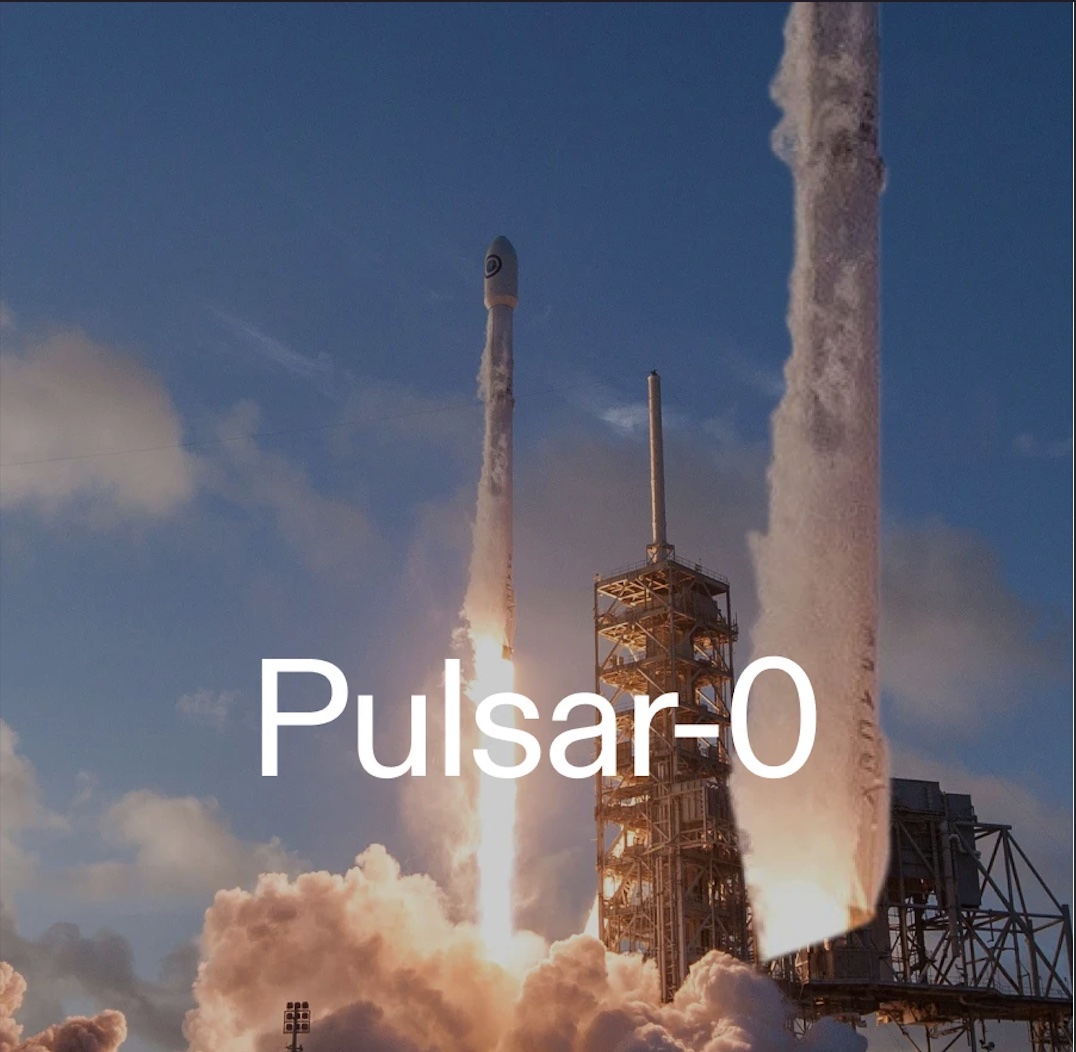
At the center of that vision is Pulsar, Xona’s LEO PNT system. In its product materials, the company describes Pulsar as a backward-compatible service that broadcasts alongside existing GNSS signals, with compatibility across receivers using L1 or L5 and, in many cases, an upgrade path through firmware rather than entirely new hardware. Xona says Pulsar’s X1 and X5 signals are intended to deliver 2 cm by 4 cm positioning accuracy, less than 10 nanoseconds of timing, and received power up to 100 times stronger than GPS L1 C/A.
In Munich, Reid gave that headline claim a more grounded form. “We typically are seeing at that apex about 20 dB difference compared to us versus GNSS,” he said. “So that 20 dB is 100 times stronger signal.” This statement reinforces one of the most important aspects of Xona’s thesis: stronger signals are not just about better nominal performance. They are about resilience, penetration and utility in places where conventional GNSS becomes fragile.
Reid pushed that point further when he described what Xona has already been seeing from its early on-orbit testing. “We’ve shown that we can penetrate indoors and you can get as good as a three-meter level position with just the one satellite in space,” he said. Even allowing for the caveats he included—that this reflects a stationary user and observations from multiple looks during a satellite pass—the implication is noteworthy.
That compatibility claim remains central to the company’s overall strategy. Alternative PNT concepts often falter not because the performance case is weak, but because the transition cost is too high. Xona is trying to remove that barrier by presenting LEO PNT not as a replacement that forces the market to start over, but as an adjacent upgrade that works with the GNSS ecosystem already in the field. The company says more than a dozen commercial receiver partners are already tracking Pulsar signals, with testing underway in sectors including critical infrastructure, construction, agriculture and IoT.
Here again, Reid’s Munich comments help sharpen the point. Speaking in response to a question about time scales and interoperability, he said, “We have that defined in our ICD to support multiple timescale offsets so that these systems do become interoperable.” That is an important detail. It suggests that Xona understands one of the fundamental barriers to adoption: the market does not want an isolated new layer. It wants a service that can integrate with existing timing references, existing receivers and existing workflows without imposing a wholesale reset on infrastructure operators and equipment makers.
The timing of the funding announcement also gives it added weight. In the release, Xona explicitly ties its case to the growing fragility of GNSS-dependent infrastructure, citing interference in the Strait of Hormuz, the vulnerability of GPS to jamming and spoofing, and the difficulty governments have had in adding resilience through conventional acquisition cycles. The company points as well to slow and over-budget modernization efforts in the United States. That framing is, of course, self-interested. But it also aligns with a broader shift in the PNT community: resilience is no longer a secondary requirement. It is increasingly becoming the requirement that defines system value.
Xona’s answer is scale. The company says its Burlingame facility will support deployment of the full approximately 300-satellite Pulsar constellation “in just a few years,” a pace it contrasts with traditional aerospace contracting. Xona is selling a model in which navigation infrastructure is built more like a modern commercial platform than a classic sovereign space program.
That shift may ultimately be the most consequential part of the story. For decades, GNSS has been defined by exquisite but slow-moving national systems, where capability improvements arrive over long timelines and resiliency upgrades can take years to materialize. Xona is making the opposite argument: that navigation can be manufactured, iterated and replenished at commercial speed. In the release, the company says its model could produce more navigation satellites per week at full production than the United States currently produces in a year.
Reid’s comments in Munich reinforced that execution message. “We announced yesterday that we’re fully funded to deploy the first tranche of satellites to get the first commercial service,” he said. In a sector that has seen no shortage of elegant architecture slides, that line may be as important as any performance metric. It moves the conversation from theoretical constellation economics toward a near-term operating plan. Reid added that Xona will launch six satellites this year, followed by another dozen or more next year, with an initial service phase aimed in part at industrial time transfer. Those details make the financing round feel consequential in a way that venture announcements often do not. The capital is not being raised to continue talking about the future of PNT. It is being raised to start building that future at scale.
The company is also trying to show that this is not a U.S.-only play. Alongside the Burlingame buildout, Xona says it is expanding in Montreal and growing a London office, while partnerships with Furuno and Topcon are meant to extend the company’s reach into timing, industrial and international markets. That global framing is important. The demand for resilient timing and positioning is not limited to defense or autonomous vehicles. It increasingly reaches into telecom, power systems, industrial automation and any sector where precise synchronization and trusted location have become operational dependencies.
The Furuno partnership is particularly revealing because it highlights timing as an early commercial beachhead. In that announcement, Xona says the collaboration will focus on incorporating Pulsar capabilities into Furuno’s existing product domains with an initial emphasis on industrial timing. Xona argues that stronger signals and nanosecond-level precision can be brought into systems already trusted today, suggesting that timing may emerge as one of the first markets where LEO PNT proves immediate value before full navigation-scale deployment is complete.
Even so, this round feels like more than another venture milestone. Seen from Munich, and heard through Reid’s remarks on stronger signals, indoor penetration, interoperability and deployment readiness, it marks a moment when the LEO PNT conversation appears to be shifting from architecture diagrams and simulation arguments toward factories, launches and market timing. For a field that has spent years talking about vulnerability, backup and modernization, that is a meaningful change. Xona’s bet—and now its investors’ bet—is that the future of PNT will belong not simply to the strongest legacy signal, but to the systems that can deliver precision, trust and resilience at the speed the modern world now expects.