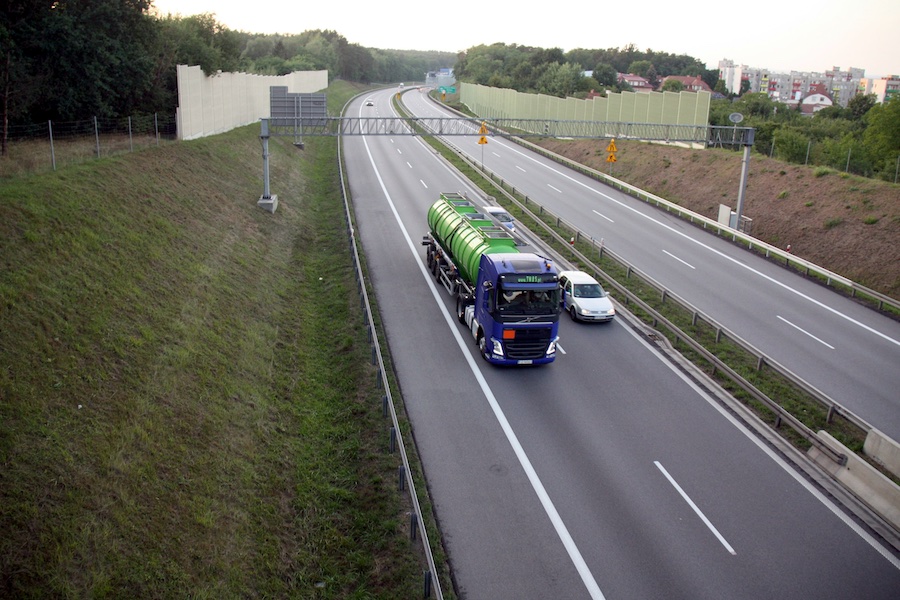
The Netherlands is preparing to implement a distance-based tolling system for heavy goods vehicles (HGVs) exceeding 3.5 metric tons, scheduled to start on July 1, 2026. The initiative aims to modernize road user charging by employing GNSS-based technology to monitor vehicle movements and calculate tolls per kilometer driven.
The toll will apply to all motorways and select provincial and municipal main roads across the Netherlands. Vehicles affected include both domestic and foreign HGVs – vehicle categories N2 and N3. Notably, emission-free vehicles up to 4,250 kg are exempt from the charge.
Current truck transport in the Netherlands relies on flat or weight-based charges, lacking precise distance measurement. This limits fairness, efficiency, and environmental accountability, while growing freight volumes strain infrastructure and increase emissions.
The new toll rates will vary based on the vehicle’s Euro emission class, with lower rates for vehicles emitting less CO2, encouraging the adoption of cleaner technologies within the freight sector. To facilitate accurate tolling, trucks will be required to install certified OBUs that utilize GNSS to track distance traveled. Truck operators will be responsible for contracting with authorized service providers to obtain and maintain the necessary equipment.
The Dutch vehicle authority, RDW, has appointed Triangle, a consortium including Via Verde Portugal, Ascendi O&M, and Yunex GmbH, as the primary service provider for the new system. The net proceeds from the toll will be reinvested into the transport sector, focusing on sustainability and innovation. This includes subsidies for the acquisition of zero-emission vehicles and the development of charging infrastructure, aligning with the Netherlands’ broader environmental objectives.
Implementation timeline
The official start is set for 1 July 2026. By then, all affected vehicles will need to have a functioning OBU and a contract with an accredited service provider.
Dutch officials say the initiative represents a significant step towards modernizing road user charging in the Netherlands, leveraging GNSS to create a more efficient and environmentally friendly freight transport system.
GNSS-based tolling generates high-resolution, anonymous traffic data that can help authorities optimize infrastructure planning, anticipate congestion, improve road safety, and coordinate maintenance more efficiently than conventional schemes.
The initiative also aligns with broader European trends toward GNSS-based road pricing, reflecting similar initiatives in Germany, Austria, and France that integrate GNSS for smart, sustainable freight management.