
Main Categories

February 10, 2012

GNSS Vulnerability: Present Dangers and Future Threats

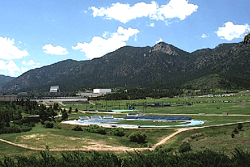
National Physical Laboratory entrance

This free one-day event at the British National Physical Laboratory in Teddington (London) on Wednesday, February 22 will present results of current jamming detection, and consider emerging threats such as meaconing and spoofing.The seminar runs from 9:30 a.m. to 5:30 p.m.

Interested participants must pre-register online.

Todd Humphreys, director of the Radionavigation Laboratory at the University of Texas-Austin will deliver the keynote, "PVT security: privacy and trustworthiness."

Read More >

By Inside GNSS
2012 Joint Navigation Conference begins on Tuesday, June 12, one day later than planned

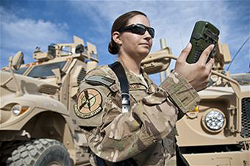
Air Force Capt. Bryony Veater in Kandahar, Afghanistan with a Defense Advanced GPS Receiver in November 2011. She trains U.S. and coalition forces in GPS, its limitations and alternatives on the battlefield.(USAF photo/David Carbajal)

The 2012 Joint Navigation Conference, previously scheduled to begin at the Crowne Plaza in Colorado Springs on Monday, June 11 will instead open on Tuesday, June 12 and run through Friday, June 15.

The change was made to accommodate the classified sessions that now will take place on Friday at the United States Air Force Academy.

Read More >

By Inside GNSS

[uam_ad id="183541"]
February 8, 2012

Aviation Subcommittee Hearing Moves Beyond LightSquared to GPS Spectrum Protection

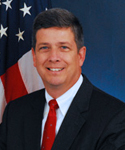
John Porcari, US DoT Deputy Secretary

U.S. Deputy Secretary of Transportation John Porcari told a congressional committee today (February 8, 2012) that the expenditure of “substantial federal resources” in assisting LightSquared to gain approval for its terrestrial wireless broadband system was “unusual” yet “merited,” but that “further investment cannot be justified at this time.”

Read More >

By Inside GNSS
February 1, 2012

OHB and SSTL Win Second Round of Contracts for 8 Galileo FOC Satellites

The European Space Agency (ESA) today (February 2, 2012) signed a contract to build a further eight Galileo satellites, alongside other agreements to modify Europe’s Ariane 5 launcher to carry four navigation satellites at a time.
 
The signing took place at the European Commission’s center in London, England, in the presence of European Commission Vice-President Antonio Tajani and UK Universities and Science Minister David Willetts.
 

Read More >

By Inside GNSS
January 28, 2012

Big Solar Storm, Little GPS Effect

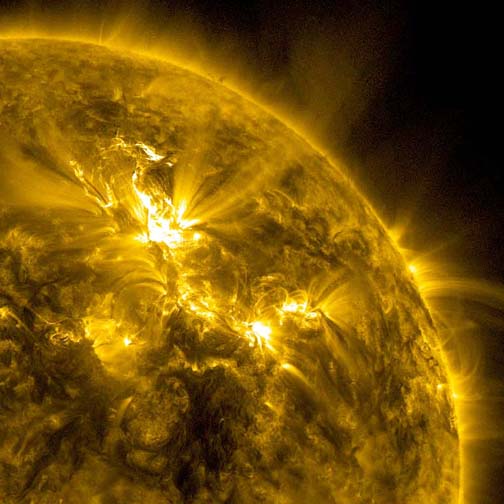
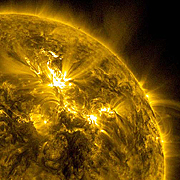
Solar flare viewed January 23, 2012. NASA Solar Dynamics Observatory image.

Although it was billed as the strongest for the past eight years and coincided nicely with the American Meteorological Society (AMS) annual meeting in New Oreans, this week’s solar storm apparently had a limited effect on GPS receivers and users.

Read More >

By Inside GNSS

[uam_ad id="183541"]
January 27, 2012

$655 Million for GLONASS in 2012

Russia’s GNSS program plans to launch three more satellites in the first half of 2012 as part of a 20.55 billion ruble (US$655 million) federal target program budget for the coming year, the Roscosmos space agency announced on January 17.

Read More >

By Inside GNSS

LightSquared GPS Interference Controversy: Senate Investigation Won’t End with FCC Decision

A Senate investigation into how the Federal Communications Commission (FCC) handled a request to rezone spectrum adjacent to GPS frequencies for LightSquared’s powerful wireless network will continue whether the FCC nixes the plan or not.

Sen. Chuck Grassley, R-Iowa, has been looking into whether the FCC fast-tracked its review of the Virginia firm’s proposal to build a 4G broadband network with signals that would be, tests now show, powerful enough to interfere dramatically with GPS receivers.

Read More >

By Inside GNSS

The Return of SVN49

In an effort to improve constellation sustainment, on or about Feb. 1, 2012, SVN-49 will resume transmitting an L-band signal using PRN24 as a test asset, according to the U.S. Air Force Space Command. Upon completion of the test event, SVN-49 will once again be decommissioned from active service.  PRN24 will then once again be available for future satellite service.

Read More >

By Inside GNSS

DoD Strategic Guidance “Protects” GPS Modernization

GPS and other space systems fare well in the Department of Defense (DoD) strategic budget initiative outlined today (January 26, 2012) by U.S. civil and military officials.

The comments reflected policy decisions laid out in “Defense Budget Priorities and Choices,” an introduction to a strategic guidance intended to plot the course of the Pentagon over the next five years. Modernization of the Global Positioning System will be “protected” financially, according to the document.

Read More >

By Inside GNSS
January 26, 2012

Supreme Court Ruling on GPS-Aided Monitoring Leaves Issues Unresolved

istock photo

A U.S. Supreme Court opinion released this week (January 23, 2012) ruled that warrantless GPS-aided monitoring of a suspect violated the Constitution’s Fourth Amendment protection against “unreasonable searches and seizures."

But it will probably not be the court’s last word on the subject and may, in fact, provide Congress and state legislatures with enough incentive to address the subject more fully than they have to date.

Read More >

By Inside GNSS
January 19, 2012

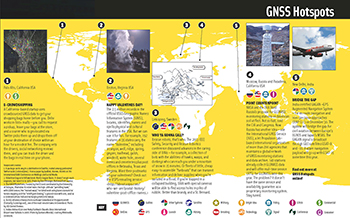
GNSS Hotspots | January 2012

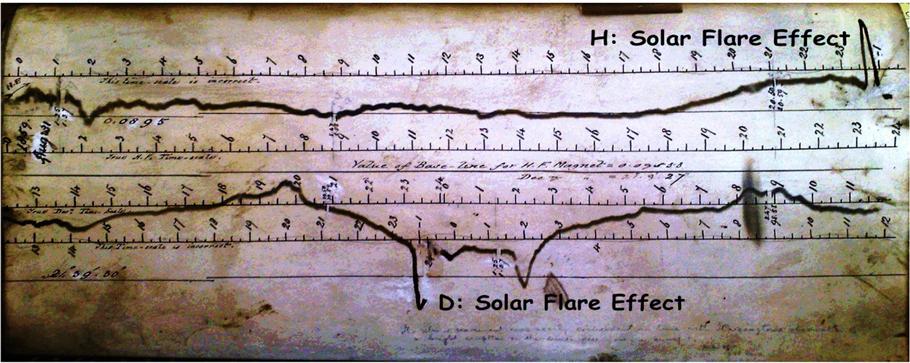
One of 12 magnetograms recorded at Greenwich Observatory during the Great Geomagnetic Storm of 1859
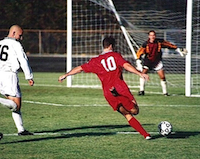
1996 soccer game in the Midwest, (Rick Dikeman image)
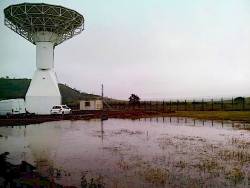
Nouméa ground station after the flood
A pencil and a coffee cup show the size of NASA’s teeny tiny PhoneSat
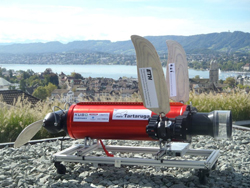
Bonus Hotspot: Naro Tartaruga AUV
Pacific lamprey spawning (photo by Jeremy Monroe, Fresh Waters Illustrated)
“Return of the Bucentaurn to the Molo on Ascension Day”, by (Giovanni Antonio Canal) Canaletto
The U.S. Naval Observatory Alternate Master Clock at 2nd Space Operations Squadron, Schriever AFB in Colorado. This photo was taken in January, 2006 during the addition of a leap second. The USNO master clocks control GPS timing. They are accurate to within one second every 20 million years (Satellites are so picky! Humans, on the other hand, just want to know if we’re too late for lunch) USAF photo by A1C Jason Ridder.
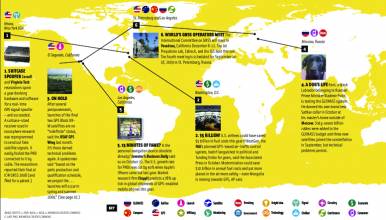
Detail of Compass/ BeiDou2 system diagram
Hotspot 6: Beluga A300 600ST

1. ICE BREAKER
Nome, Alaska USA

√ Two 2 1/2 pound GPS-guided UAVs that tolerate extreme cold helped bring fuel to snowbound Nome, Alaska over two weeks in January. On daily photographic missions, the Aeryon Scouts helped University of Fairbanks researchers map ice thickness in the frozen harbor so a Coast Guard icebreaker could slowly guide a Russian fuel tanker close enough to pump the fuel to shore.

Read More >

By Inside GNSS
IGM_e-news_subscribe