Successful Liftoff: Ariane 5 Rocket Payload Carries 4 Galileo Satellites
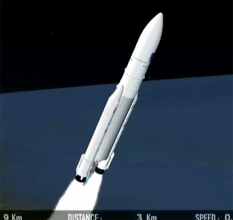
Viewers watching Arianespace’s live video webcast Tuesday witnessed a successful launch that began at approximately 1820 GMT (1:20 p.m. EST).
By Inside GNSSViewers watching Arianespace’s live video webcast Tuesday witnessed a successful launch that began at approximately 1820 GMT (1:20 p.m. EST).
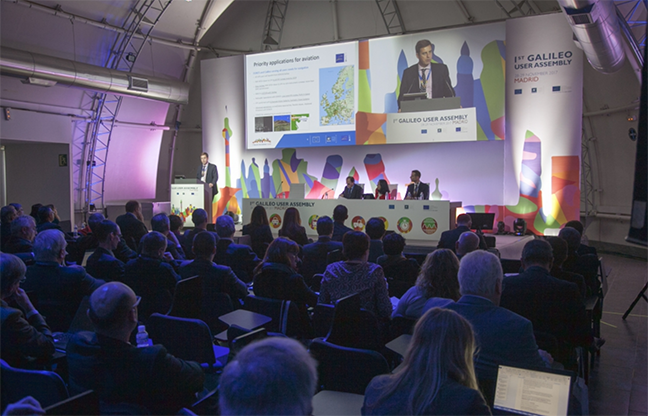
By Inside GNSSClose to 300 users attended the 1st Galileo User Assembly, held in Madrid, Spain on November 28-29. The users, along with several expert presenters, came together for the first EGNSS User Consultation Platform to share their experience, discuss their needs and provide feedback on Galileo performance, one year after the launch of Galileo Initial Services.
By Inside GNSSUPDATE: Today’s the day. Check back to the Inside GNSS website for updates on today’s launch.
A European Ariane 5 rocket followed dual rail tracks across the Guiana Space Center in South America on Monday on the way to its launch complex Monday, a day before today’s scheduled blastoff with four satellites to expand the Galileo navigation network. Also, you can follow the launch live at Spaceflight.com.
By Inside GNSSAt the lavish European Satellite Navigation Competition Awards Ceremony, we caught up with Carlo des Dorides, general director of the European GNSS Agency (GSA), who updated us on the status of the much-anticipated Galileo Commercial Service (CS).
“On the CS, we are dialoging extensively with EU member states, because there is a more and more consolidated view that there could be an advantage to providing the service for free,” des Dorides said.
By Peter GutierrezThe SORUS system, designed to enable user receivers to calculate Galileo PRS positions at predefined points in time including robustness against jamming and spoofing, picked up top honors at the 2017 European Satellite Navigation Competition (ESNC).
By Inside GNSS
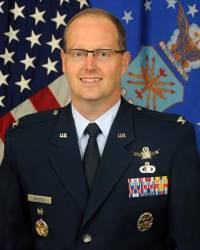
Col. Steven Whitney, the director of the GPS Directorate. Air Force photo.Though lawmakers have made clear their interest in having U.S. military receivers incorporate European navigation signals, an agreement to use the encrypted Galileo signal remains elusive and the normal military requirements process could substantially delay implementation.
By Inside GNSS
Photo Credit: ssuaphotos/Shutterstock.comEsterline CMC Electronics and NovAtel Inc. just announced a new strategic partnership, extending their collaboration in Global Navigation Satellite System (GNSS) positioning technology that started in the late 1990s. The partnership will see NovAtel’s industry-leading GNSS measurement technology integrated into a new Esterline CMC-designed multi-constellation, multi-frequency (MCMF) chipset for certified aviation use.
By Inside GNSS
Photo courtesy of GPS.gov. House and Senate authorizers are forcing a reorganization of the Pentagon’s management of military space programs, giving authority to a soon-to-be-named official to prioritize space budgets across services and setting planning in motion for a possible new department. They also approved spending the full amounts requested for the military GPS programs and mandated that defense officials both test a backup to GPS and look at incorporating European and Japanese GNSS signals into military user equipment.
By Inside GNSS
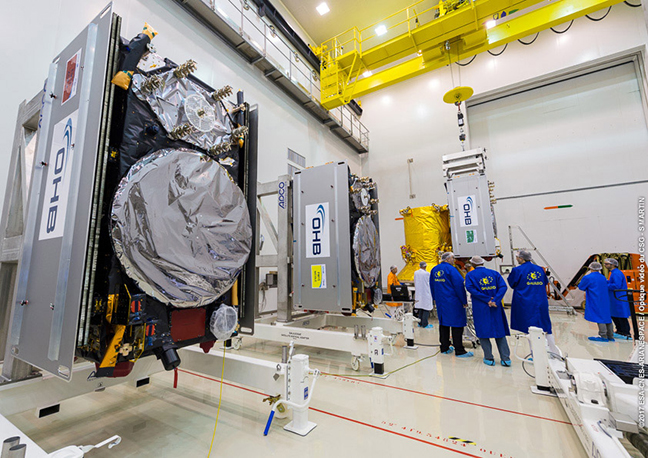
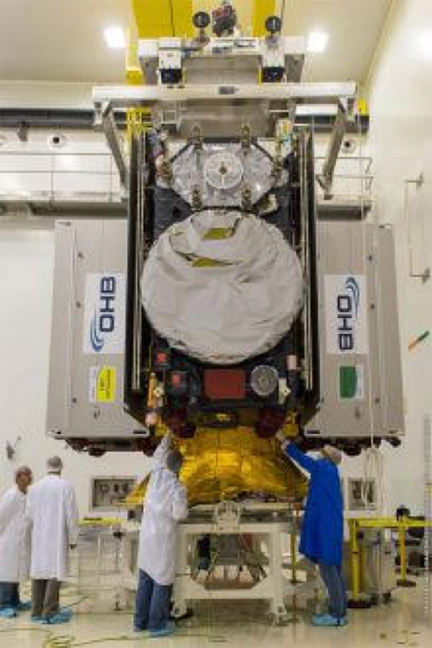
Four satellites assembled by OHB System AG were launched in November 2016. ?Photo: ESA/CNES/ARIANESPACE.Galileo’s navigation system is continuing to make strides toward a satellite constellation designed to gradually improve the system’s performance and availability worldwide.
Earlier this month, the European Commission (EC) announced it had exercised one of its contractual options for the European Galileo navigation system and ordered four additional satellites from OHB System AG. In June 2017, the Bremen-based satellite producer had been awarded a contract for eight Galileo satellites under the Batch 3 tender.
By Inside GNSS
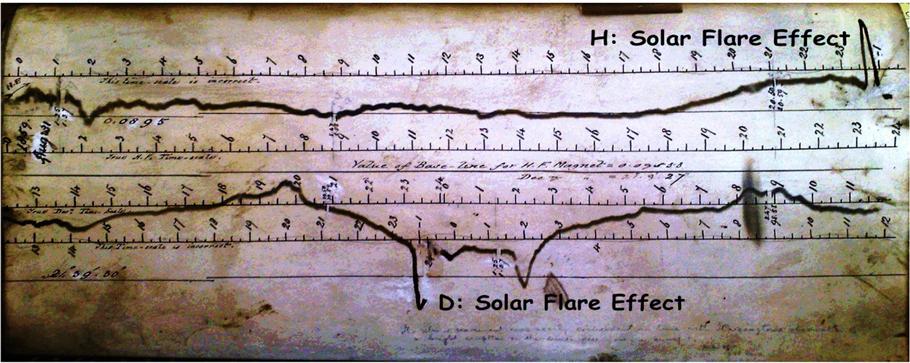
One of 12 magnetograms recorded at Greenwich Observatory during the Great Geomagnetic Storm of 1859
1996 soccer game in the Midwest, (Rick Dikeman image)
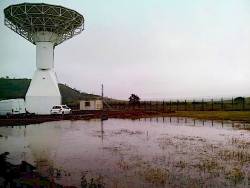
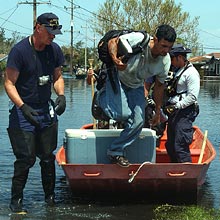
Nouméa ground station after the flood
A pencil and a coffee cup show the size of NASA’s teeny tiny PhoneSat
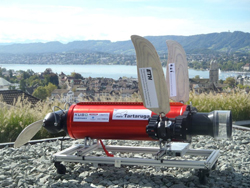
Bonus Hotspot: Naro Tartaruga AUV
Pacific lamprey spawning (photo by Jeremy Monroe, Fresh Waters Illustrated)
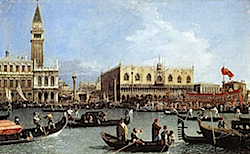
“Return of the Bucentaurn to the Molo on Ascension Day”, by (Giovanni Antonio Canal) Canaletto
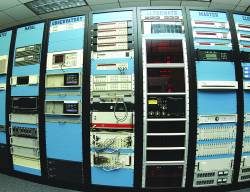
The U.S. Naval Observatory Alternate Master Clock at 2nd Space Operations Squadron, Schriever AFB in Colorado. This photo was taken in January, 2006 during the addition of a leap second. The USNO master clocks control GPS timing. They are accurate to within one second every 20 million years (Satellites are so picky! Humans, on the other hand, just want to know if we’re too late for lunch) USAF photo by A1C Jason Ridder.
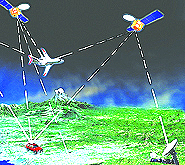
Detail of Compass/ BeiDou2 system diagram
Hotspot 6: Beluga A300 600ST

1. Mangrove Tree-Planting Drones
Myanmar (Southeast Asia)
Bernhard Richter, Leica Geosystems GNSS business director
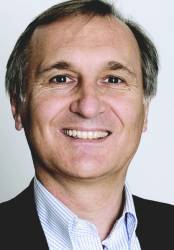
Enrico Salvatori, Qualcomm Europe
Carlo Bagnoli, STMicroelectronicsMultinational semiconductor and telecommunications company Qualcomm is a world leader in the design and marketing of 3G, 4G and next-generation wireless technologies. Headquartered in San Diego, California, Qualcomm has been widening its footprint in the Europe, Middle East and Africa (EMEA) region, with a core focus in Europe.
“We expect to grow Qualcomm’s presence in Europe, becoming a major EU (European Union) player in the digitization of European industries,” said Qualcomm senior vice president and president of Qualcomm Europe, Enrico Salvatori.
By Inside GNSSFour of the latest set of Galileo navigation satellites will be launched on Ariane 6 rockets as the European Space Agency has announced it will become Arianespace’s first customer for Europe’s new vehicle.
The launches are scheduled between the end of 2020 and mid-2021, using two Ariane 62 rockets – the configuration of Europe’s next-generation launch vehicle that is best suited to haul the two 750-kilogram navigation satellites that operate in a 23,000-kilometer medium-Earth orbit.
By Inside GNSS